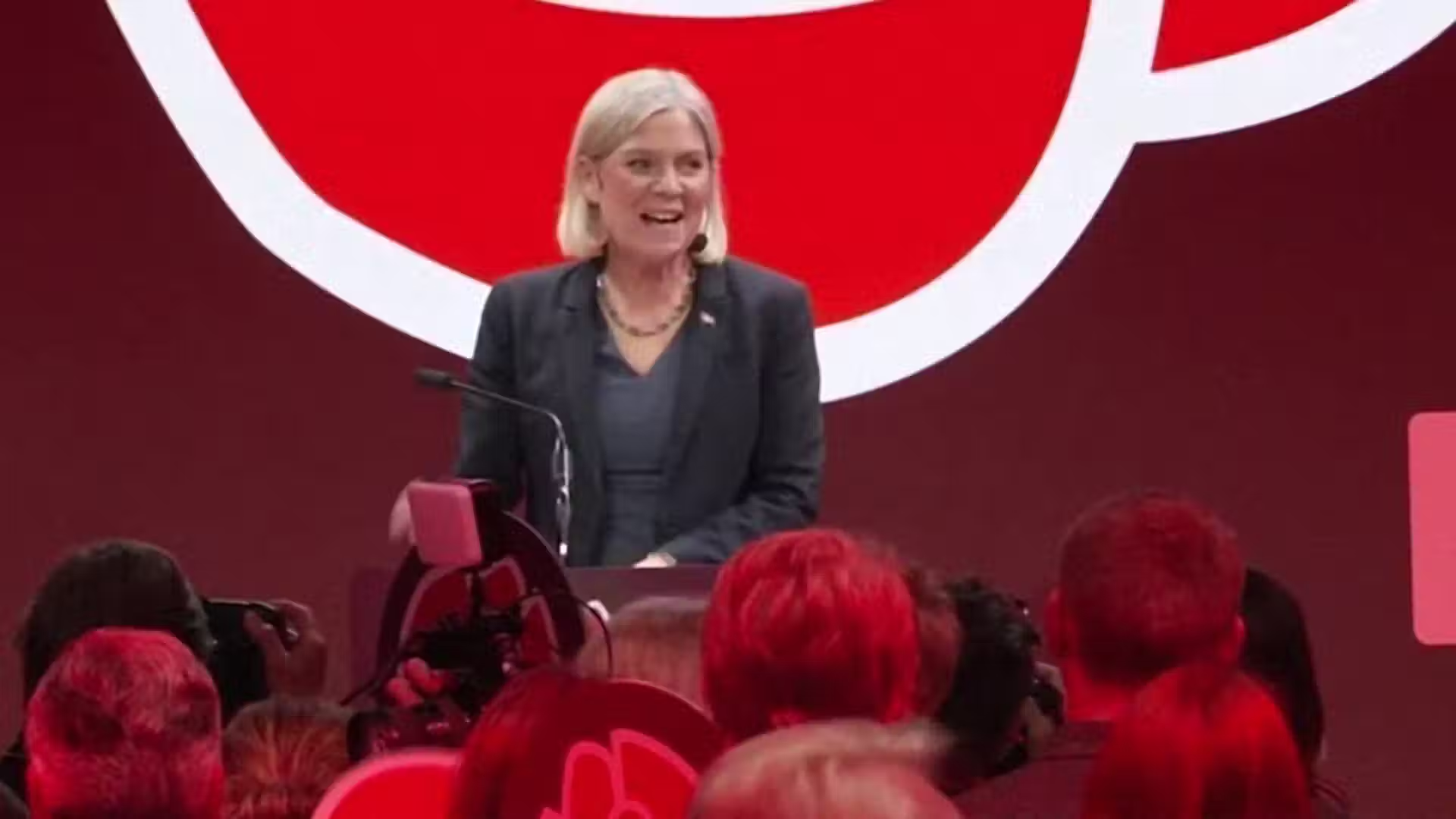
Sweden faces an extended period of political uncertainty following Monday's general election, with preliminary results indicating a narrow victory for the centre-left opposition but final confirmation still days away.
With nearly 95 percent of districts counted from Sweden's 6,312 election precincts, the Swedish Election Authority reported that four opposition parties led by Social Democrats leader Magdalena Andersson were heading for 176 seats in the 349-seat Riksdag. The four parties making up or supporting Prime Minister Ulf Kristersson's outgoing conservative-led government were set to receive 173 seats, giving the opposition a three-seat advantage.
"If this result holds, Sweden will have a new government," Andersson told supporters after preliminary results were released.
The razor-thin margin reflects a deeply polarized electorate. Officials cautioned that the final outcome remains uncertain, with early votes and overseas ballots scheduled to be counted on Wednesday. The Swedish Election Authority indicated it could be considerably longer before a definitive picture emerges, potentially delaying government formation for an extended period.
The election outcome defies a broader rightward trend sweeping across Europe. The result was driven largely by losses for the Sweden Democrats, the far-right anti-immigration party that had previously contributed to Sweden adopting some of Europe's strictest migration policies, marking a departure from the country's historically liberal stance.
Despite the opposition's projected victory, a centre-left government would not necessarily signal a return to more open immigration policies. Preliminary assessments suggest that Sweden's shift toward stricter migration rules over recent years has gained broader political support across the ideological spectrum, potentially constraining any policy reversal.
The election outcome is unlikely to alter Sweden's pro-Western and pro-Ukraine foreign policy orientation. However, it could determine whether Kristersson's push toward stricter migration policies continues or accelerates under new leadership.