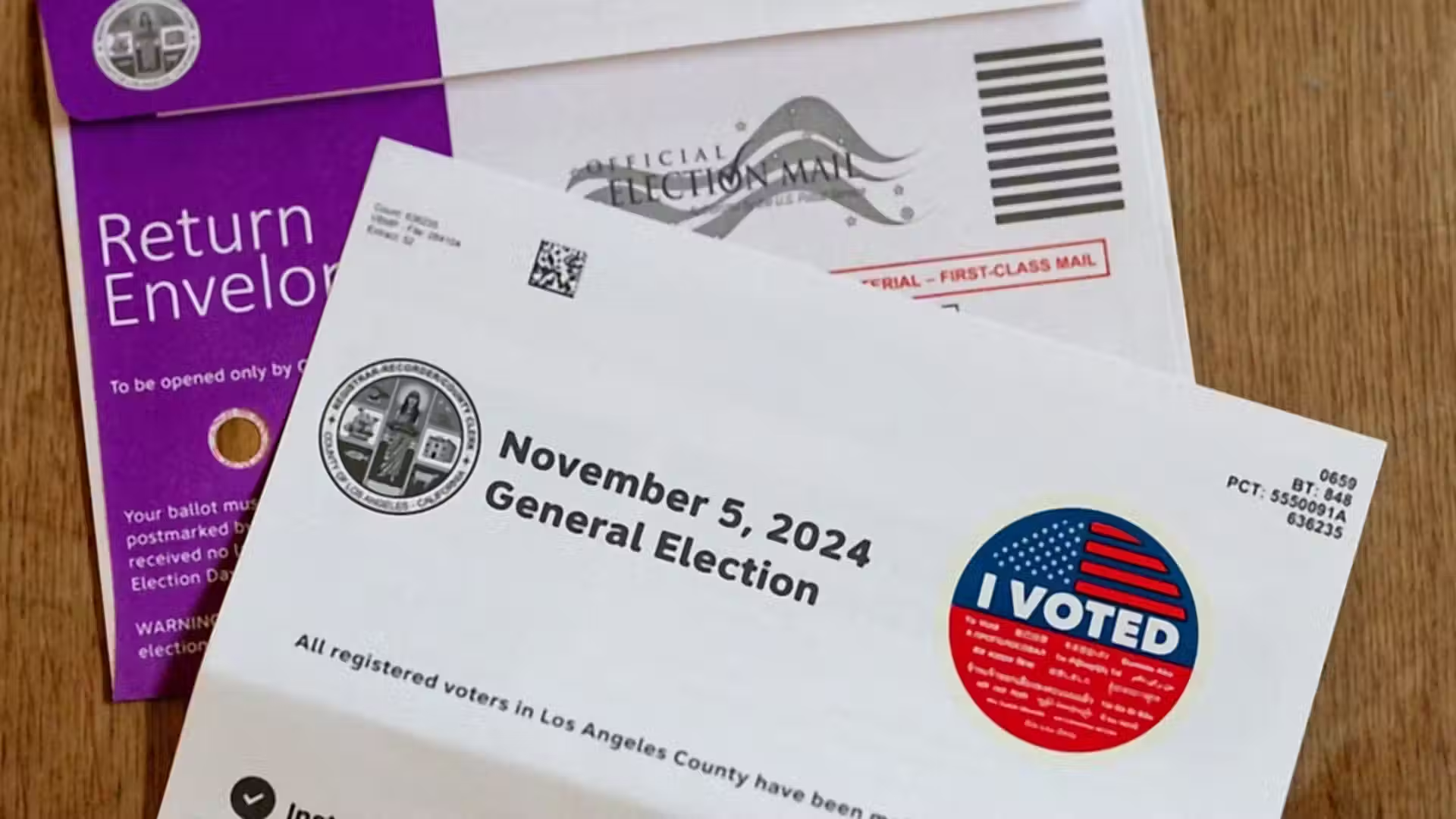
The Trump administration asked the Supreme Court on Monday to clear the way for an executive order restricting mail-in voting ahead of November's midterm elections, escalating a legal dispute 99 days before voters decide control of Congress.
The Justice Department filed an emergency request asking the justices to halt lower court decisions blocking the sweeping changes in nearly half the country. The appeal came after a federal appeals court on Sunday upheld a ruling that blocked implementation of key provisions of the president's order in 23 states and Washington, DC.
President Trump issued the executive order in March, directing the federal government to create a "state citizenship list" of eligible voters and requiring the U.S. Postal Service to deliver mail ballots only to people on that list. The order also directs the Homeland Security Department to create lists of eligible voters.
Democratic officials in 23 states and the District of Columbia sued, arguing the Constitution gives states and Congress the authority to set voting rules. A federal judge blocked the order's implementation in those jurisdictions while legal challenges proceed. The federal appeals court, in a 2-1 decision, found that states must prepare now for potentially disruptive election changes and that the lower court's injunction was necessary to prevent what it called a threat to disenfranchise eligible voters and sow confusion.
Solicitor General D. John Sauer argued in the emergency filing that the district court's injunction is "extraordinary" because it prevents federal agencies from taking steps to implement the president's directive. Sauer characterized the order as "merely sets forth general policy guidance" aimed at promoting election integrity.
The Justice Department asked the Supreme Court to allow the proposed changes to move ahead while lawsuits play out. A response from the court is due by August 3.