President Donald Trump said Tuesday that the United States will not invest money in Iran after a memorandum of understanding was agreed with Tehran, addressing what he called a "ridiculous" rumor that had circulated the previous day.
"We are not investing any money in Iran, by the way, and that rumor got out there yesterday was ridiculous," Trump told reporters on the sidelines of the G7 summit in Évian-les-Bains, France. "We have the right to go in some day and do, if I want to do something, or if somebody wants to do something, but we are not investing any money."
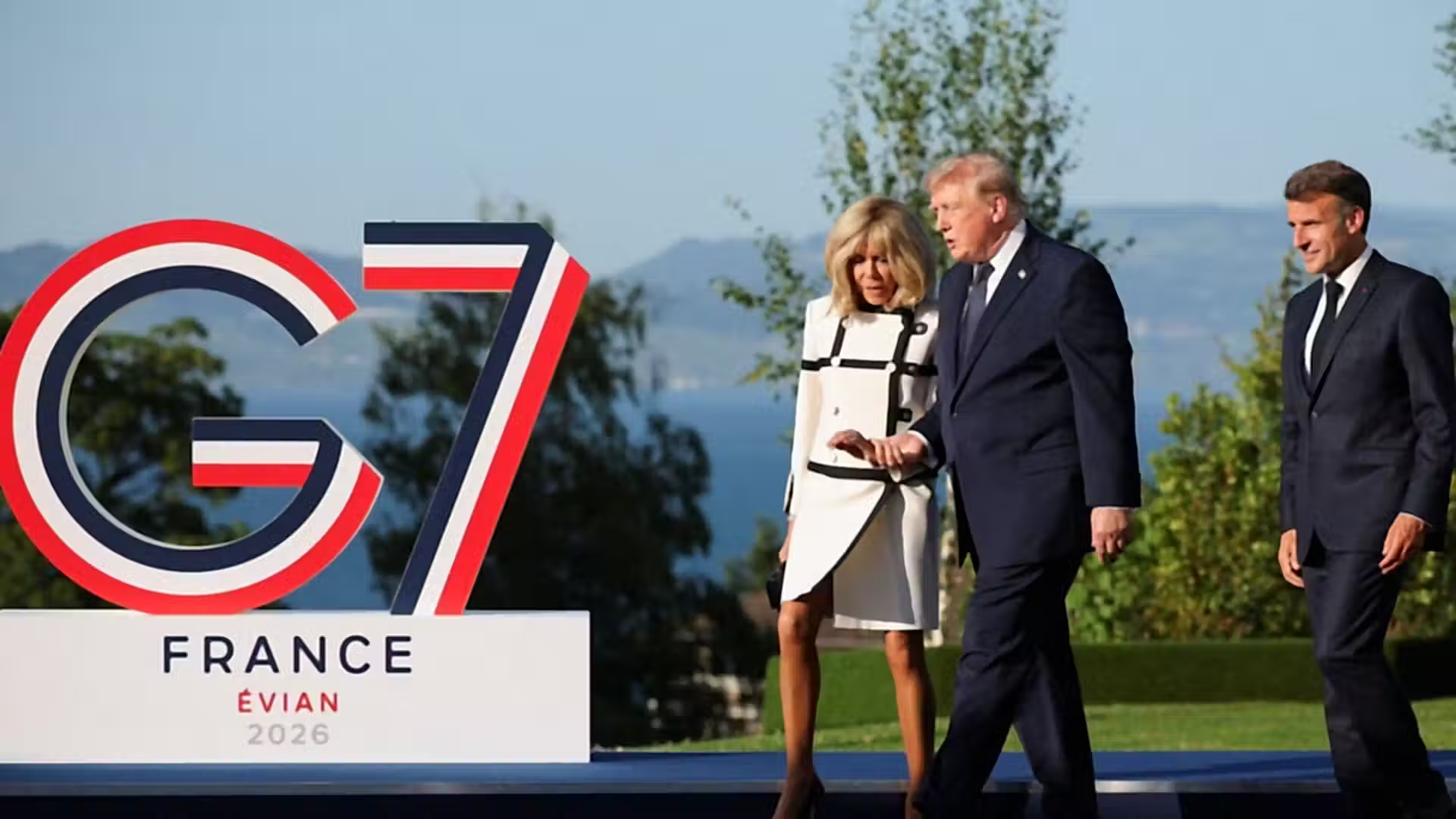
Trump is attending the 2026 G7 summit after the U.S. secured the peace deal with Iran. During his time at the summit, he also addressed the possibility of Iranian nuclear weapons development, warning that severe consequences would follow if Iran pursued such a path.
In separate remarks at the summit, Trump rebuked Israel over its military operations in Lebanon, offering unusually critical comments about Prime Minister Benjamin Netanyahu. Trump said he had a "great relationship" with Netanyahu but added that the Israeli leader "has to be more responsible with respect to Lebanon."
Trump told reporters that Israel had been fighting Hezbollah "too long and too many people are being killed." The comments came ahead of a bilateral meeting Trump held with Netanyahu during the summit.
Trump also met with the emir of Qatar, Sheikh Tamim bin Hamad Al Thani, on the sidelines of the summit. Additionally, Trump said he would push for peace in Ukraine after meeting with Ukrainian President Volodymyr Zelenskyy at the G7 gathering.
French President Emmanuel Macron and his wife Brigitte Macron walked with Trump during the summit at Hotel Royal Evian on June 15, 2026.