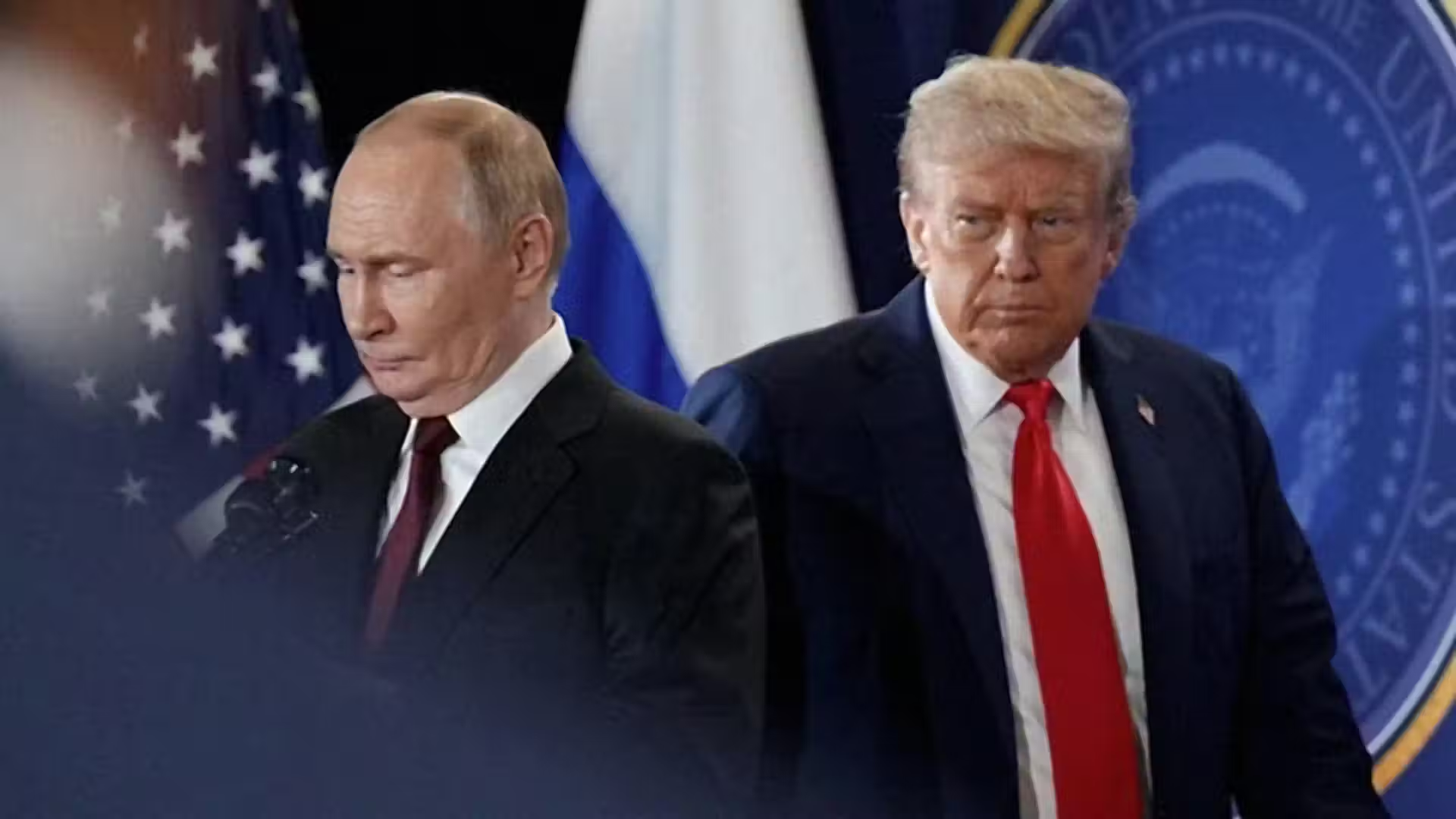
The United States has authorized Russian diesel exports following a telephone agreement between President Donald Trump and Russian President Vladimir Putin on October 9, a move that has triggered a diplomatic confrontation with Ukraine and raised questions about American priorities in the ongoing conflict.
Russia announced on October 10 that it would partially lift its ban on diesel exports, initially allowing 500,000 metric tons to reach global markets. Deputy Prime Minister Alexander Novak outlined a phased schedule: 300,000 metric tons in October, 500,000 metric tons in November, and 1 million metric tons in December, with long-term volumes potentially reaching 3 million metric tons per month. The U.S. Treasury Department authorized imports of Russian diesel, which had been prohibited since 2022. Trump announced that the agreement would supply 4.8 million metric tons of Russian diesel fuel to American and global markets.
Russia had maintained its export ban to prevent domestic shortages after drone attacks damaged refineries. Three of Russia's six largest diesel producers had significantly reduced or halted output following these strikes. Novak stated that the decision would not harm Russian consumers, asserting that domestic production volumes are sufficient to supply both the domestic market and the announced export volumes.
Ukrainian President Volodymyr Zelenski immediately objected to the arrangement, warning that allowing the United States to purchase Russian diesel would provide Moscow with funds to continue its war in Ukraine. "Gifts to Putin will not bring peace or any benefit to the civilized world," Zelenski wrote. "Russia will 'pay' for diesel with further terror and betrayal." He characterized the deal as "an investment in the war that needs to be ended, not prolonged."
Trump responded sharply on Saturday, departing the White House to say that Ukraine should have "a new leader who is capable of making a deal." He criticized Zelenski for approving attacks on Russian oil refineries, saying such strikes create difficulties globally. "It would be better if he stopped doing that," Trump said, according to BBC reporting. Trump stated that Ukraine had been told: "You can do whatever you want to Russia, but don't attack the refineries." He also suggested Zelenski could "make a lot of deals, but for some reason never does."
The disagreement reflects a fundamental tension in Trump's approach to the conflict. While the diesel agreement signals a willingness to engage Russia economically, Zelenski views any arrangement that generates revenue for Moscow as counterproductive to ending the war. Germany reaffirmed its commitment to maintaining sanctions against Russia over the conflict, signaling that not all Western allies support the Trump-Putin arrangement.
Russia and Ukraine have recently intensified attacks on each other's energy infrastructure, with both sides targeting refineries and fuel supplies as strategic assets in the prolonged conflict.