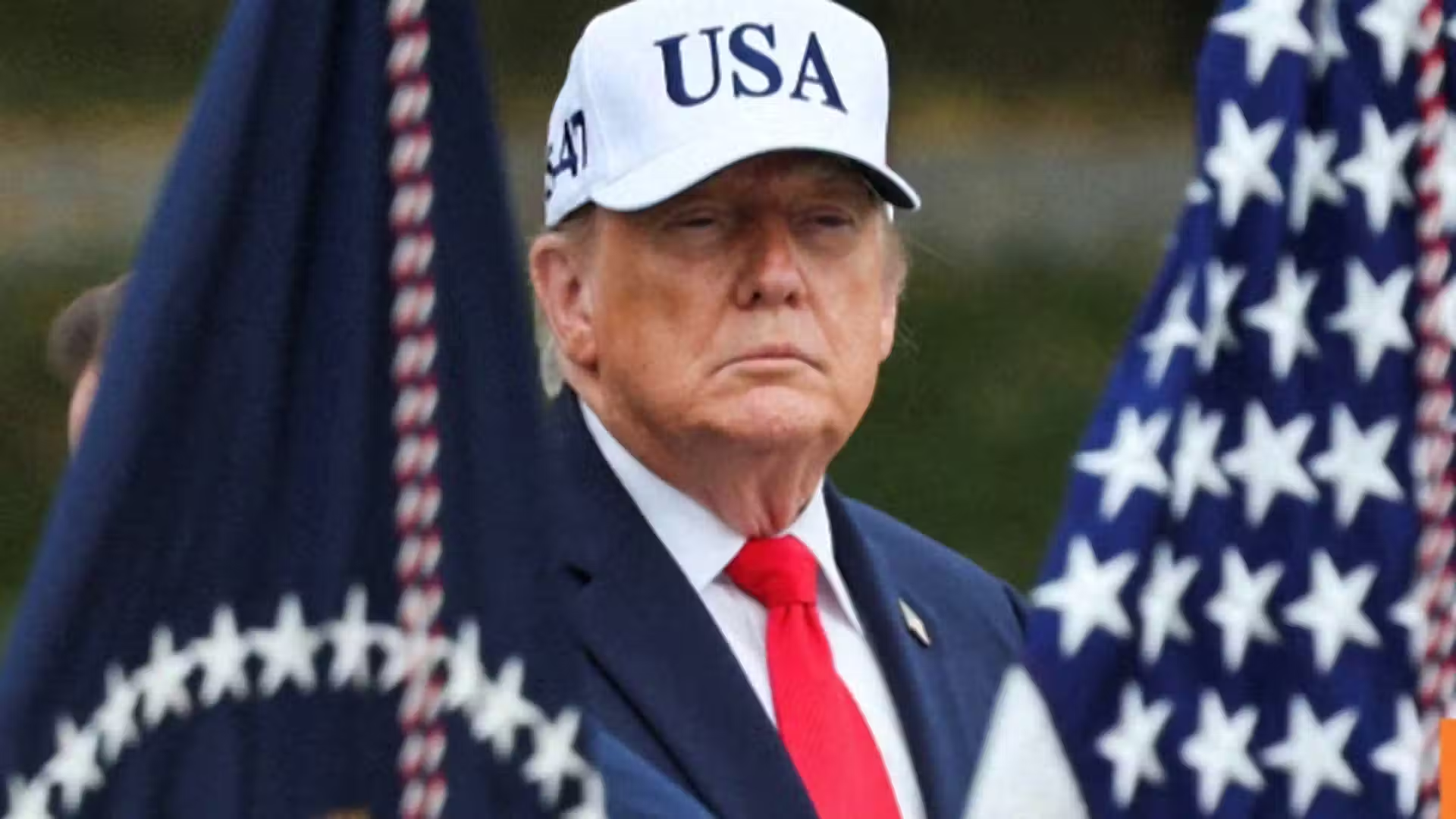
President Donald Trump declared on November 9 that the war with Iran is militarily "effectively over," marking a significant shift in his rhetoric following a meeting with Qatar's prime minister in Washington.
In a surprise briefing at the White House, Trump told reporters: "Iran militarily is effectively over. We're just keeping it the status quo." He added that Iran has been "decapitated" but emphasized he is still seeking a long-term solution to ensure Iran's nuclear program is neutralized.
The statement came after Trump met with Qatar's Prime Minister Sheikh Mohammed bin Abdulrahman bin Jassim Al Thani, who has been mediating negotiations between Washington and Tehran. Trump described the meeting as "excellent" on his Truth Social platform.
Trump's comments represent his most definitive statements yet about moving away from threats to resume strikes on Iran following the U.S. midterm elections on November 3. The president suggested he is not prepared to resume the bombardment that has devastated the Islamic Republic and caused significant reverberations across the global economy.
"We're doing that really at the behest of countries that are their neighbours," Trump said, referring to maintaining the status quo. He indicated that Middle Eastern nations including Qatar, Saudi Arabia, the United Arab Emirates, Bahrain and Kuwait prefer to maintain the current situation rather than escalate hostilities.
Trump noted that a long-term solution would involve ensuring Iran's nuclear program is defanged, suggesting ongoing diplomatic efforts remain central to U.S. strategy. He stated that military action "doesn't seem to be something particularly necessary" if a durable agreement can be reached.
The president's shift in tone follows the Republican Party's loss of both chambers of Congress to Democrats in last week's elections. Some Republicans have blamed the Iran war for contributing to significant electoral losses, and Trump himself acknowledged that his deportation policy "might have been too tough" for voters.
Qatar's prime minister confirmed the diplomatic engagement, stating on social media that he discussed the regional situation and possibilities for advancing negotiations between the United States and Iran with Trump and Vice President J.D. Vance. "I am grateful for the positive discussions on achieving an agreement and establishing peace in the region," he wrote.
The diplomatic efforts appear to be building on earlier proposals discussed between Qatar and Pakistan aimed at reviving serious negotiations. Those proposals reportedly include arrangements for International Atomic Energy Agency inspectors to return to Iran and potential reductions in Iranian uranium enrichment levels, with the United States having permitted Iran to enrich uranium at 3.67 percent, which Iran has accepted.
Trump's declaration that the military phase of the conflict is effectively concluded suggests a recalibration of U.S. strategy in the region, though he maintained that the United States retains the capability and willingness to resume military action if necessary.