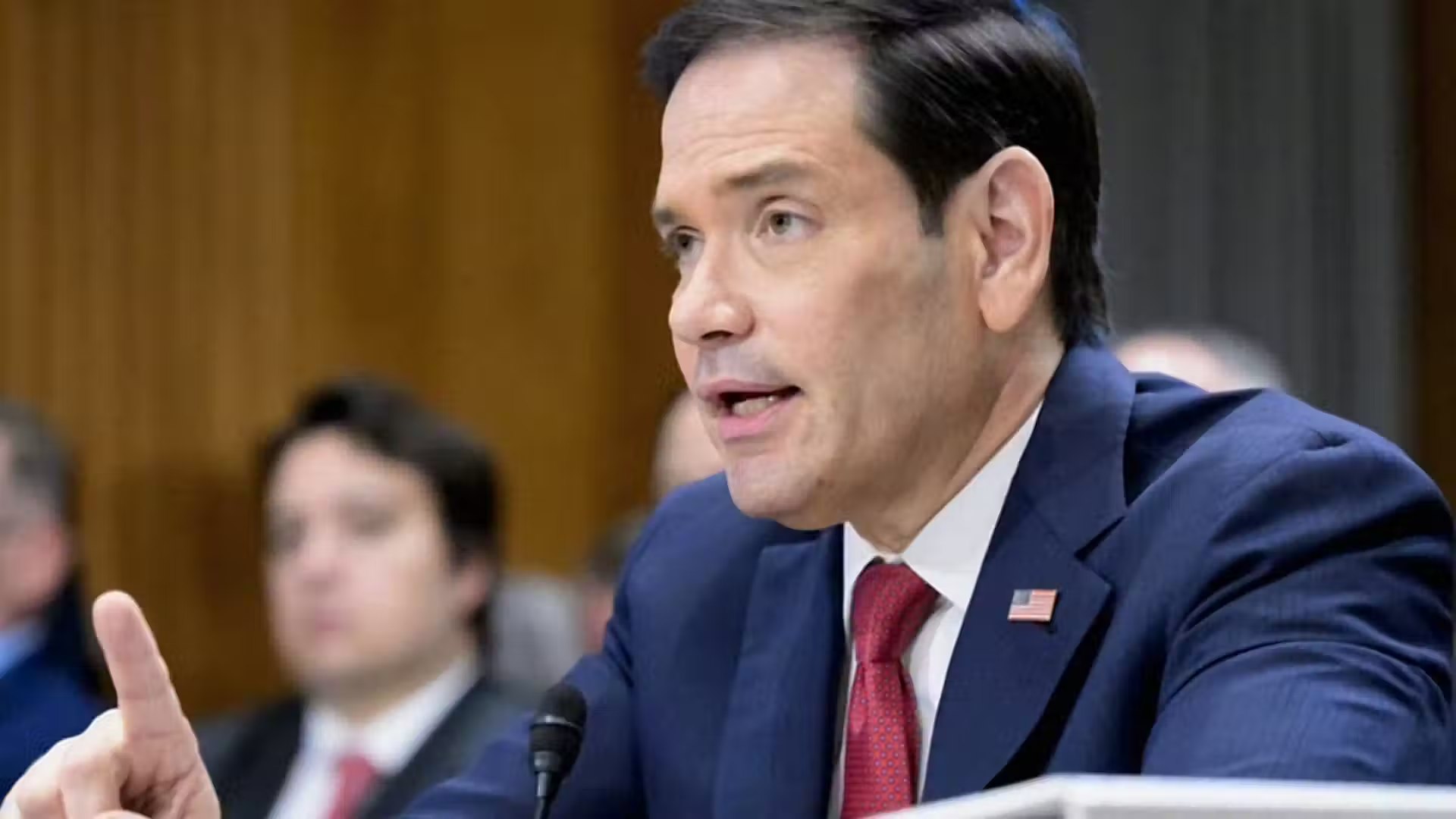
The U.S. government launched a campaign against the International Criminal Court on Monday, accusing the Hague-based tribunal of threatening American sovereignty and announcing it would pursue a range of actions against its members, including sanctions.
The State Department, led by Secretary of State Marco Rubio, said in a statement that the ICC "represents an intolerable threat to U.S. sovereignty, as it arrogates to itself the authority to prosecute and even imprison U.S. military and officials acting in defense of the national interest of the United States."
The campaign aims to disrupt the ICC's ability to "operate, pursue U.S. military or officials," according to the statement. The administration said it would consider a broad array of measures against ICC member states as part of the effort.
The U.S. government indicated it wants to "systematically disable" the international criminal court, according to statements made public on Monday.
The European Union rejected the Trump administration's characterization of the ICC on Tuesday. Anouar El Anouni, an EU spokesperson, said: "We stand firm in our support for the international criminal court. Attacks or threats against the court, elected officials, personnel or those cooperating with the court are simply unacceptable."
El Anouni added that the ICC "does not target sovereign states, nor does it constitute a threat to their sovereignty."
The ICC, established by the Rome Statute, operates as an independent international institution with jurisdiction over crimes of genocide, crimes against humanity, war crimes, and the crime of aggression. Member states voluntarily submit to its authority through treaty obligations.
The U.S. is not a signatory to the Rome Statute and has not ratified the treaty establishing the court. The country has historically maintained a position of opposition to the ICC's jurisdiction over American citizens.