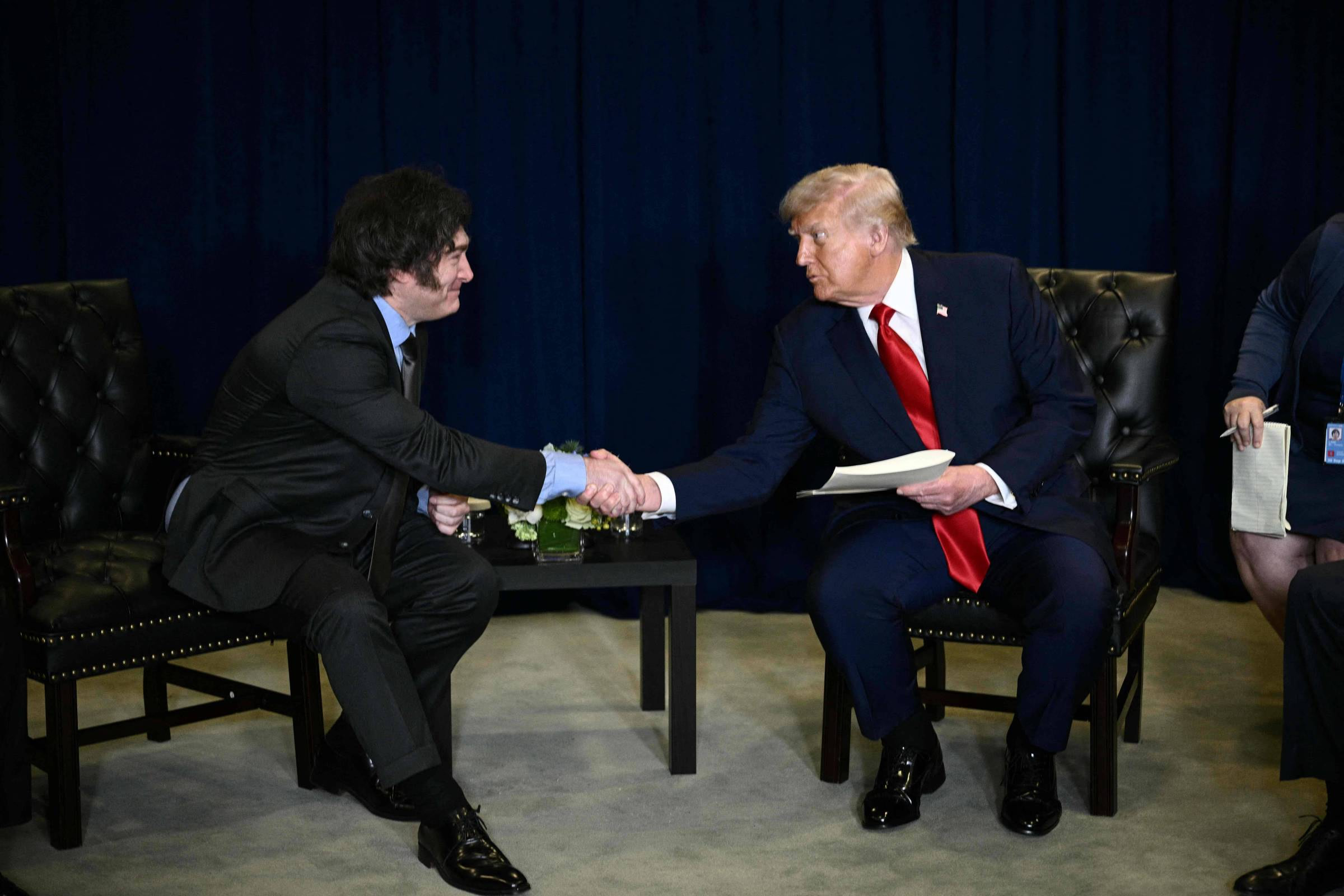
WASHINGTON.- U.S. Treasury Secretary Scott Bessent has sharply criticized China's recent export restrictions on rare earth minerals, accusing Beijing of attempting to drag down the global economy. The strong words from the influential Treasury official come just before an anticipated meeting between Argentine President Javier Milei and U.S. President Donald Trump in Washington.
Bessent, who has been a key architect of U.S. financial support for Argentina, characterized China's actions as a sign of economic weakness. "This is a display of the weakness of their economy, and they want to drag everyone else down with them," Bessent told the Financial Times. He suggested that China's strategy stems from its own economic struggles, describing the nation as being in a "recession-depression" and attempting to export its way out.
The timing of Bessent's comments is significant. China's announcement last week imposing broad controls on exports of rare earth minerals and critical components essential for semiconductors, electric vehicles, and military hardware prompted Trump to threaten a 100% tariff on imports from China. Bessent questioned China's approach, stating, "Perhaps there's some Leninist business model where hurting your customers is a good idea, but they are the world's largest supplier."
Argentina, with its significant reserves of resources like lithium, copper, uranium, and rare earths, is viewed with increasing interest by the U.S. The Argentine government has expressed enthusiasm about attracting substantial investments from American companies in these strategic sectors. U.S. officials under the Trump administration have indicated that they see Argentina's current government as committed to welcoming American businesses and being a reliable partner.
These trade and investment discussions, particularly concerning China's role, are expected to be central to the meeting between Milei and Trump. Benjamin Gedan, an expert from Johns Hopkins University and former director for South America on the National Security Council, noted that Trump has previously sought critical minerals in challenging locations and suggested Argentina could offer a more predictable investment climate, despite its complexities.
Bessent's previous statements have also linked U.S. financial assistance to Argentina to a broader geopolitical strategy aimed at counteracting China's growing influence in Latin America. He had stated that Milei is "committed to getting China out of Argentina," referencing the pervasive presence of Chinese enterprises across the region.
However, Argentine Chief of Staff Guillermo Francos has sought to temper Bessent's remarks, downplaying the idea that a withdrawal from China is a condition of U.S. aid. Francos stated that there is no reason to sever ties with China, a key trading partner, and that commercial relations are separate from other interests. He indicated that while Argentina might deepen ties with the U.S. on specific issues of interest, commercial matters are distinct.
The Chinese Embassy in Buenos Aires responded strongly to Bessent's comments, calling them "provocative" and indicative of a "Cold War mentality." The embassy accused the U.S. of employing "hegemony and bullying" tactics and engaging in "interventionism." They asserted that Latin America and the Caribbean are not any nation's "backyard" and that China's cooperation with the region is deep and not intended to harm third countries.
Despite the heightened trade tensions, Bessent indicated that he still anticipates a potential summit between Trump and Xi Jinping later this month in South Korea, while emphasizing that all options remain open for retaliatory measures against China's export restrictions.
Meanwhile, the financial markets are closely watching the developments. Investors are anticipating details about the financial assistance package the U.S. will provide to Argentina. The Argentine peso has remained stable, and the Buenos Aires stock market has seen gains. The dollar MEP and the dollar contado con liquidación (CCL) have experienced slight declines, narrowing the gap with the official wholesale dollar. The informal dollar, or "blue dollar," has also seen a modest drop.
Société de bourse Delphos Investment highlighted that the meeting is expected to bring clarity on trade, investment, and financial strategies, potentially helping Argentina regain access to voluntary debt markets. The S&P Merval index and Argentine stocks trading on the New York Stock Exchange (ADRs) have shown positive performance.