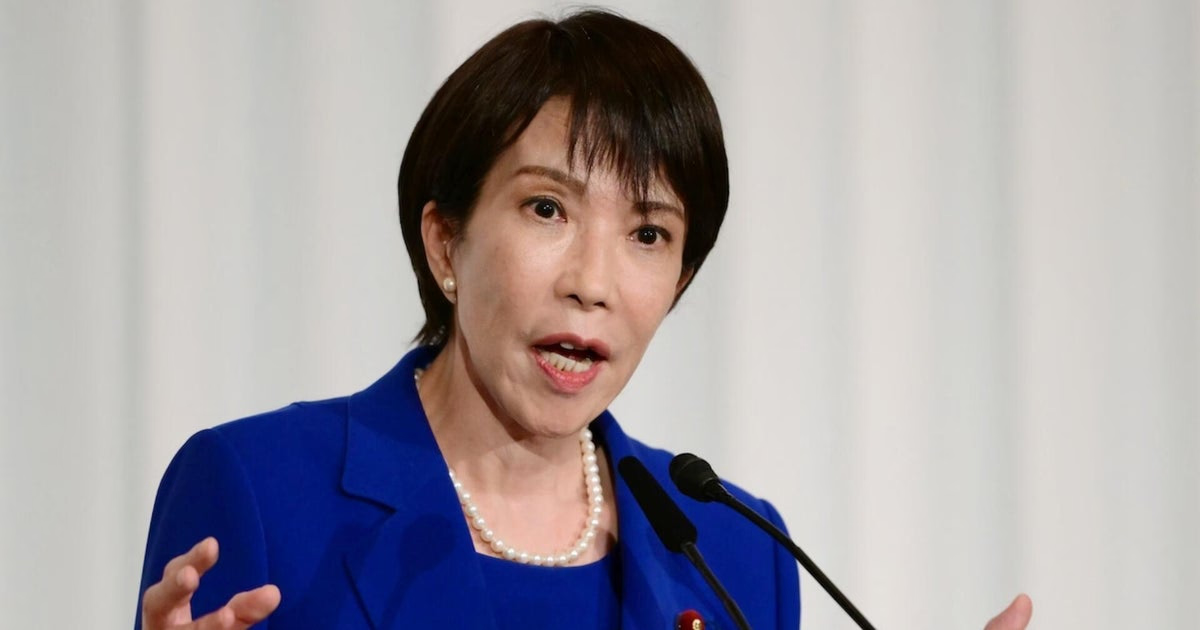
Japan’s parliament elected Sanae Takaichi as the country’s first female prime minister on Tuesday, ending a three-month political vacuum following the resignation of Shigeru Ishiba. Takaichi, a hawkish ultraconservative and protégé of the late former Prime Minister Shinzo Abe, won the parliamentary vote a day after her ruling Liberal Democratic Party (LDP) formalized a coalition agreement expected to pull the governing bloc further to the right.
Takaichi, 64, replaces Ishiba, who resigned with his Cabinet after lasting only a year in office. Her ascent comes after the LDP suffered consecutive election defeats, largely attributed to public frustration over high prices and a lax response to a series of slush fund scandals.
The Fragile New Coalition
The LDP secured Takaichi’s premiership by forming a last-minute alliance with the Osaka-based right-wing Japan Innovation Party (JIP), also known as Ishin no Kai. This move was necessitated after the LDP’s longtime partner, the Buddhist-backed Komeito party, abruptly exited the coalition earlier in the month, citing concerns over the LDP’s scandal response and Takaichi’s revisionist views on Japan’s wartime past.
The LDP-JIP agreement, which includes support for JIP policies such as reducing parliamentary seats and pausing the food consumption tax, ensures Takaichi’s victory as the opposition remains disunited. However, the untested alliance still falls short of a majority in both houses of parliament, increasing the risk of an unstable and potentially short-lived government. To pass legislation, the new administration will need to court other opposition groups.
While the LDP and JIP signed a policy agreement, officials familiar with the negotiations indicated that the JIP will not immediately take up ministerial posts, choosing instead to support the government from the outside. JIP leadership stated they would wait until they were confident about the partnership before committing to Cabinet positions.
Addressing the political instability, Takaichi stressed the need for consensus. “Political stability is essential right now,” she said at the signing ceremony. “Without stability, we cannot push measures for a strong economy or diplomacy.”
Hawkish Policies and Economic Focus
Expected to emulate the policies of Mr. Abe, Takaichi’s platform emphasizes a stronger military, constitutional revision away from postwar pacifism, and aggressive economic stimulus measures often labeled as “Abenomics.” Japanese stock markets reportedly cheered her victory, pricing in the prospects of looser monetary policy and large fiscal spending packages, leading to a rise in the Nikkei 225 index.
Takaichi faces immediate pressure to tackle rising prices and compile economy-boosting measures by late December to address widespread public frustration. She is also slated to meet with President Trump next week as part of regional summits.
On social issues, Takaichi maintains a staunchly conservative stance, despite her historic status as the nation’s first female leader. She has resisted measures promoting gender equality, supports the imperial family’s male-only succession, and opposes both same-sex marriage and allowing married couples to use separate surnames.
Her hardline views also extend to geopolitics, where she has called for a tougher stance toward China. She has frequently drawn protests from Beijing and Seoul for her regular visits to the controversial Yasukuni Shrine, which honors Japan’s war dead, including convicted war criminals. However, she appeared to temper her rhetoric recently, sending a religious ornament to the shrine last Friday instead of making an in-person visit.
A Path From Nara to the Pinnacle of Power
Takaichi grew up in humble circumstances near the ancient capital of Nara. Her mother worked for the police and her father for a car parts maker. As a young woman, she commuted long hours to university and was known for her interests in heavy metal music and Kawasaki motorcycles, even being an amateur drummer who idolizes bands like Iron Maiden and Deep Purple.
After graduating, she interned in Washington in the late 1980s for former Democratic U.S. Rep. Patricia Schroeder, an ardent feminist, before beginning her own political career in 1993. She quickly forged an alliance with Mr. Abe, bonding over shared nationalistic views and goals, including increasing military spending and revising history textbooks.
During her early years in the Diet, Takaichi publicly acknowledged the immense difficulty and isolation faced by women in Japan’s male-dominated political circles. She became one of the most visible women in Japanese politics when Mr. Abe appointed her to his Cabinet in 2006. Takaichi later won the LDP leadership race in September, succeeding in her third attempt at the party’s top job. After her victory, Takaichi told supporters: “The battle begins now.”