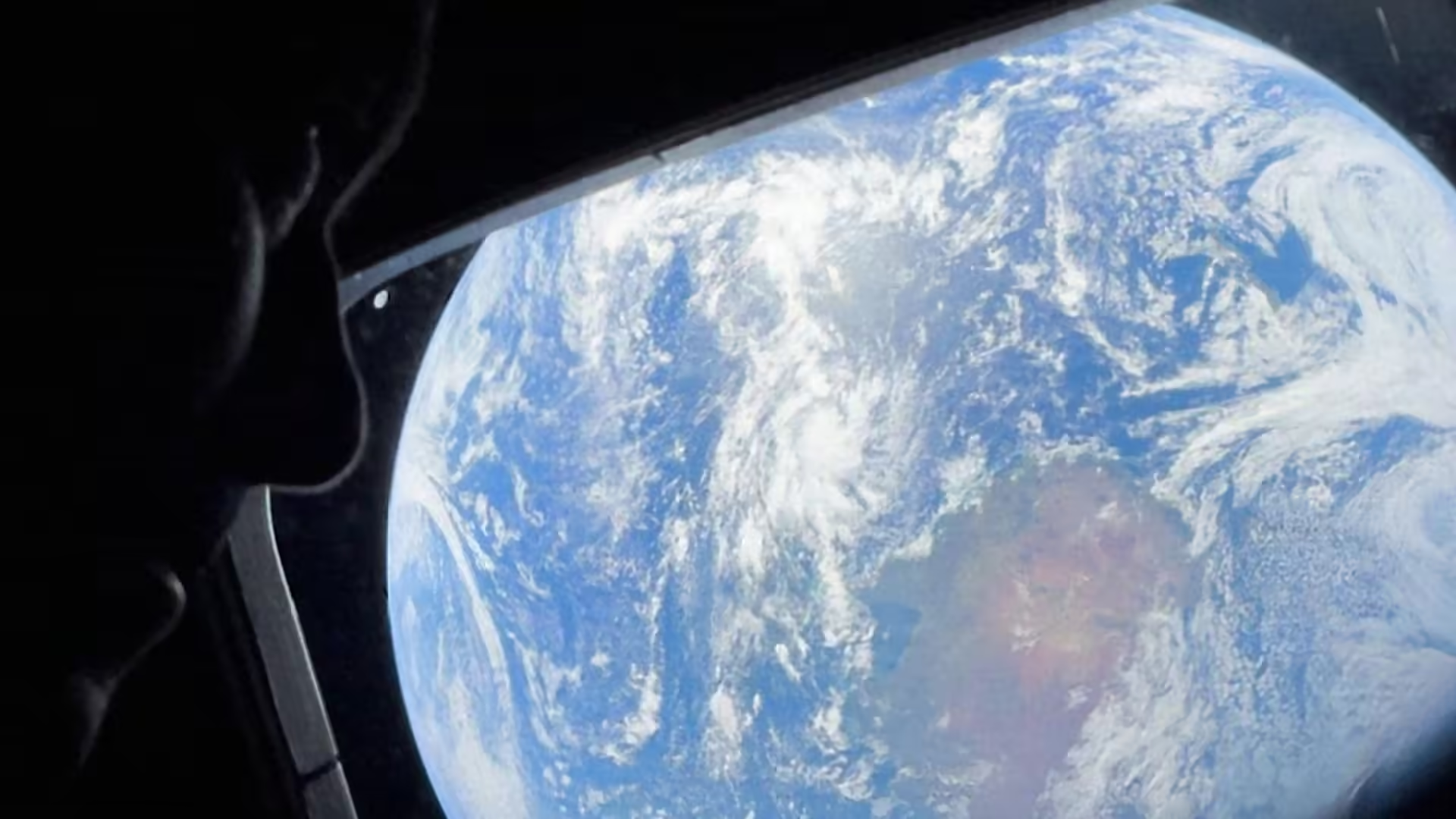
Artemis II astronauts break Apollo 13 distance record from Earth
Four crew members surpassed the 248,655-mile mark set by Apollo 13 in 1970, reaching 252,757 miles during lunar flyby.
10:43 PM
NASA's Artemis II mission set a new record Monday for the farthest distance humans have traveled from Earth, surpassing a benchmark established more than 56 years ago.
The four astronauts aboard the Orion spacecraft — three Americans and one Canadian — exceeded Apollo 13's previous record of 248,655 miles at approximately 1:56 p.m. Eastern time. The crew continued traveling outward as their spacecraft completed a flyby around the moon's far side, eventually reaching a maximum distance of 252,757 miles from Earth.
The Apollo 13 record had stood since April 1970, when the troubled spacecraft used the moon's gravity to return safely to Earth after an oxygen tank failure. Jim Lovell, who flew on both Apollo 8 and Apollo 13, recorded a message for the Artemis II crew ahead of Monday's milestone. "It's a historic day, and I know how busy you'll be, but don't forget to enjoy the view," Lovell said.
The Artemis II crew — Jeremy Hansen, Reid Wiseman, Christina Koch, and Victor Glover — will not land on the lunar surface but will observe portions of the moon's far side from approximately 4,000 miles away. These observations include lunar surface features never before witnessed by human eyes, as well as surveys to identify possible landing locations for future missions.
The six-hour flyby represents the highlight of NASA's first crewed return to the moon since the Apollo era. The mission is part of a broader program aimed at landing astronauts near the moon's south pole within two years.
During the flyby, the crew will lose all radio contact with Earth for approximately 40 to 41 minutes as the moon blocks signals. The spacecraft will then begin its return journey to Earth via a "free-return trajectory," a path expected to take about four days to complete.
The Artemis II astronauts challenged future generations to ensure the distance record is "not long-lived," indicating expectations for continued human space exploration beyond this mission.