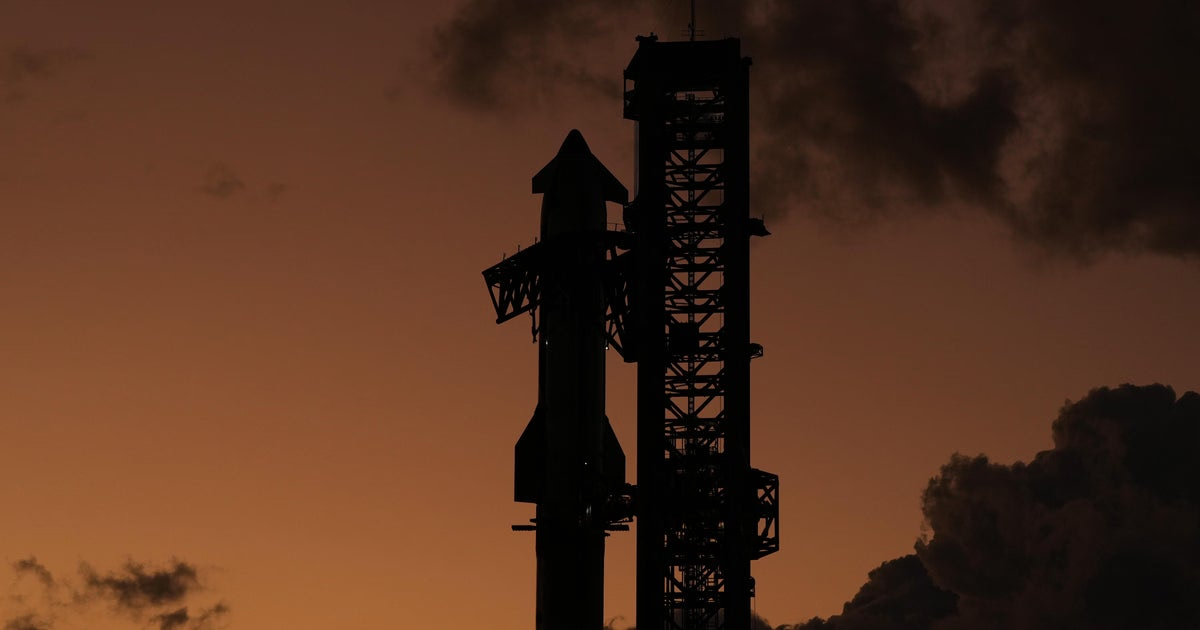
SpaceX achieved a significant milestone on Monday with the successful completion of the 11th integrated flight test of its Starship rocket. The launch, which occurred early in the opportunity window at 8:23 p.m. Brasília time, marks the second fully successful test of the current Starship iteration, following a series of earlier failures.
The colossal rocket, the largest and most powerful ever built, thundered into the evening sky from Starbase in Texas. Shortly after liftoff, the first stage, known as the Super Heavy booster, separated. While it was not recovered from the launchpad as in some previous tests, the booster was used to test a landing maneuver intended for future versions, culminating in a controlled descent into the Gulf of Mexico.
The second stage, the Starship spacecraft itself, continued on its trajectory, reaching orbital velocity and performing tests that included deploying mock Starlink satellites and firing one of its engines. This maneuver is considered essential for future orbital missions. The spacecraft then began its re-entry over the Indian Ocean, a phase that is crucial for testing the vehicle's heat shield – a key component for its reusability.
This successful flight builds upon the progress made in the previous test flight in August, which also marked a success after a series of failures. This latest mission incorporated additional maneuvering tests for the spacecraft during its atmospheric re-entry, preparing for future landings back at the launch site.
The success of this test flight paves the way for the development of the third version of Starship, which is expected to feature further upgrades, more engines, and larger propellant tanks. SpaceX aims to conduct the first flight of Starship 3 by the end of the year.
Looking ahead, SpaceX plans to demonstrate the recovery of the second stage and orbital refueling in the coming year. These capabilities are vital for Starship's role in NASA's Artemis program, which aims to return astronauts to the Moon. While the Artemis 3 mission, targeting a lunar landing, was initially slated for 2027, SpaceX indicated that it plans to begin commercial cargo transport to the lunar surface in 2028, implicitly pushing back the crewed landing date.
Beyond lunar missions, SpaceX also intends to offer cargo transport services to Mars starting in 2030. These ambitious timelines are contingent on the continued success of the Starship test program.
The United States is engaged in a space race with China for lunar exploration, with NASA's Artemis 2 mission scheduled to fly next year, taking humans to lunar orbit for the first time since 1972, though without a landing. China, meanwhile, is developing its own lunar vehicles with the goal of a crewed landing before 2030.
In addition to SpaceX, Jeff Bezos's Blue Origin is contracted to provide lunar lander modules for later Artemis missions, with internal studies also exploring the possibility of adapting a cargo module for crewed landings to potentially beat Chinese timelines.