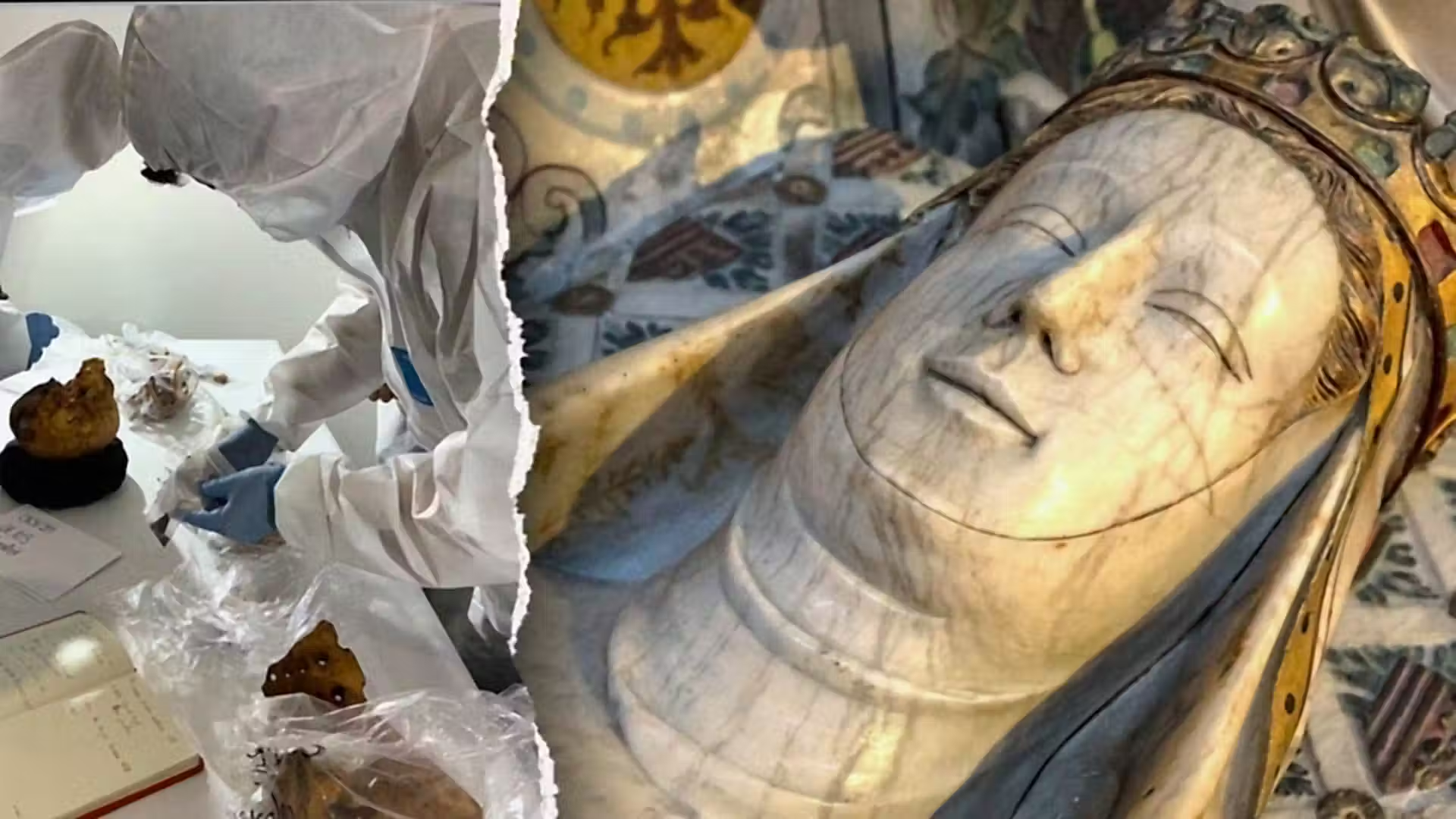
Researchers in Barcelona have uncovered a significant discrepancy in centuries-old royal tombs at the Royal Monastery of Santa Maria de Pedralbes, finding that several tombs contain remains not belonging to the people historically assigned to them.
The exhumations took place at the nearly 700-year-old Gothic monastery, which was founded in 1326 by Queen Elisenda of Montcada, wife of King James II of Aragon. To commemorate the monastery's 700th anniversary, local officials commissioned a multidisciplinary investigation into its medieval tombs.
The three-year excavation and research project concluded recently, with officials releasing initial findings. Among the discoveries was the revelation that many of the remains did not correspond to the identities historically attributed to the tombs. According to officials, "One of the project's most significant findings is that the opening of several tombs showed that the identities historically assigned to them do not necessarily correspond" to the actual remains found within.
The monastery, located in Barcelona, Spain, stands as a Gothic structure with deep historical roots in medieval Iberian royal history. The investigation represents a comprehensive effort to verify the contents and historical records of the tombs through modern archaeological and scientific methods.
The findings raise questions about record-keeping practices in medieval religious institutions and the accuracy of historical documentation regarding burial assignments within the monastery. The research team's multidisciplinary approach allowed for detailed examination of the remains and comparison with historical records maintained by the monastery.
Local officials have shared the initial results of the project, though further analysis of the excavation data may yield additional findings as the research continues.