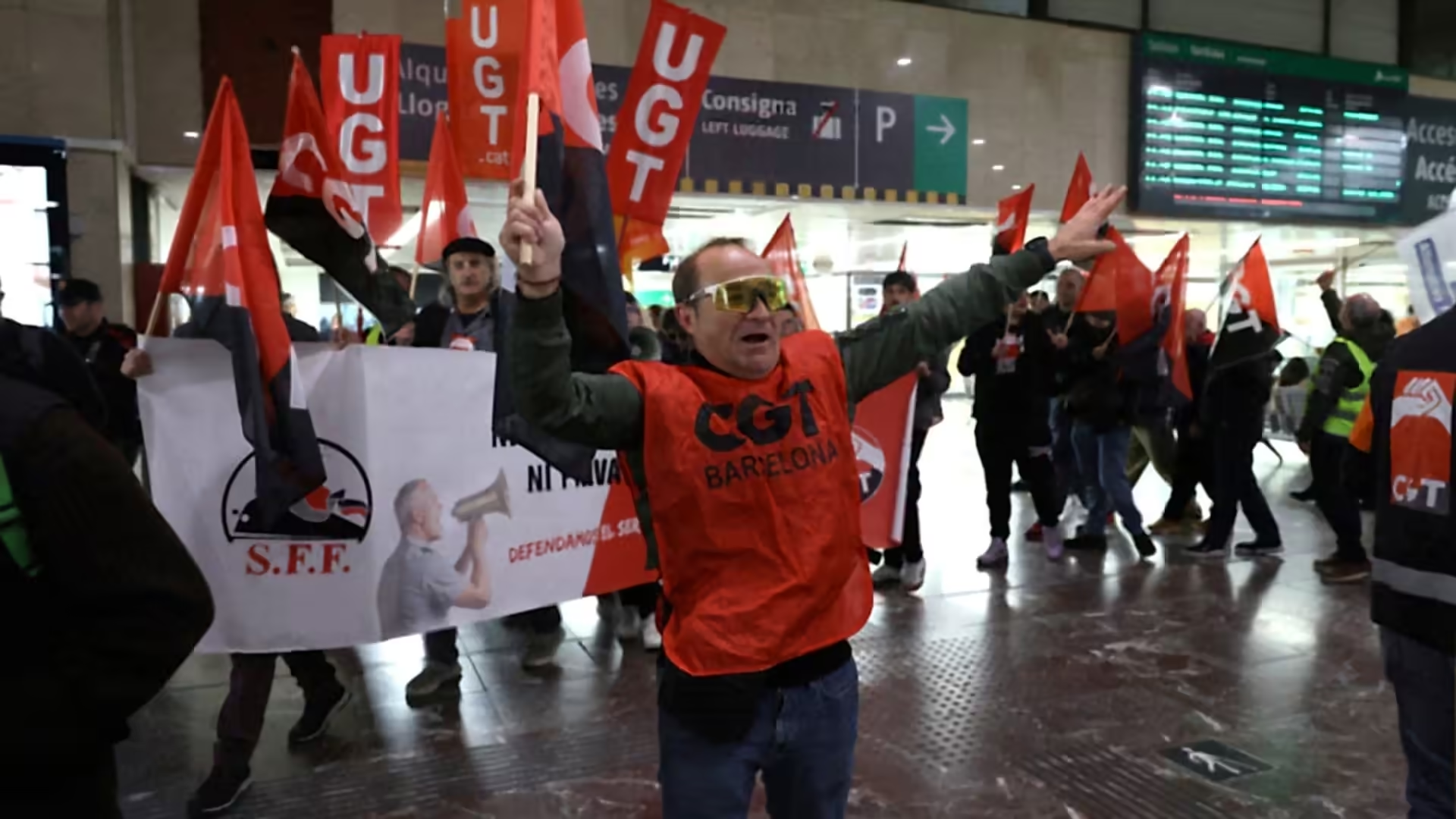
Spanish train drivers launch three-day strike over safety concerns following fatal accidents
Train drivers in Spain began a nationwide strike Monday demanding improved safety measures and investment after two deadly rail accidents in January killed at least 47 people.
18 min ago
Spanish train drivers launched a three-day strike Monday in protest against safety failures and lack of investment in the country's rail network, following two fatal accidents in January that claimed at least 47 lives.
The strike, led by the SEMAF train drivers union, began on February 9 and is centered on demands for improved safety guarantees, increased staffing, and greater investment in track maintenance. Union representatives say the railway network is experiencing "constant deterioration" and cite safety inspection failures identified in the weeks following the January accidents.
The deadliest incident occurred on January 18 in Adamuz in southern Andalusia, when a high-speed train derailed and collided head-on with another train traveling in the opposite direction, killing 46 people. Two days later, near Barcelona, a containment wall collapsed onto the tracks following heavy rains, derailing a commuter train and killing one driver while seriously injuring four passengers.
Under Spanish law, essential services must continue during strikes, limiting the number of workers permitted to walk out at any given time. The Ministry of Transport ordered that up to 73 percent of long-distance trains continue operating nationwide. State-owned railway company Renfe set lower minimum service levels for local and regional trains, with authorities requiring 75 percent of short-distance trains to run during peak hours and 50 percent during other times.
Madrid's Atocha station experienced significant disruptions Monday morning, particularly between 7 a.m. and 8 a.m., when thousands of passengers attempting to travel to suburbs or reach the capital faced delays and lack of information. Passenger platforms became so crowded that access had to be controlled. CCOO union pickets distributed leaflets asking for "understanding and support" from passengers.
Transport Minister Oscar Puente held weekend talks with unions in an attempt to avert the strike, but negotiations failed to reach agreement.