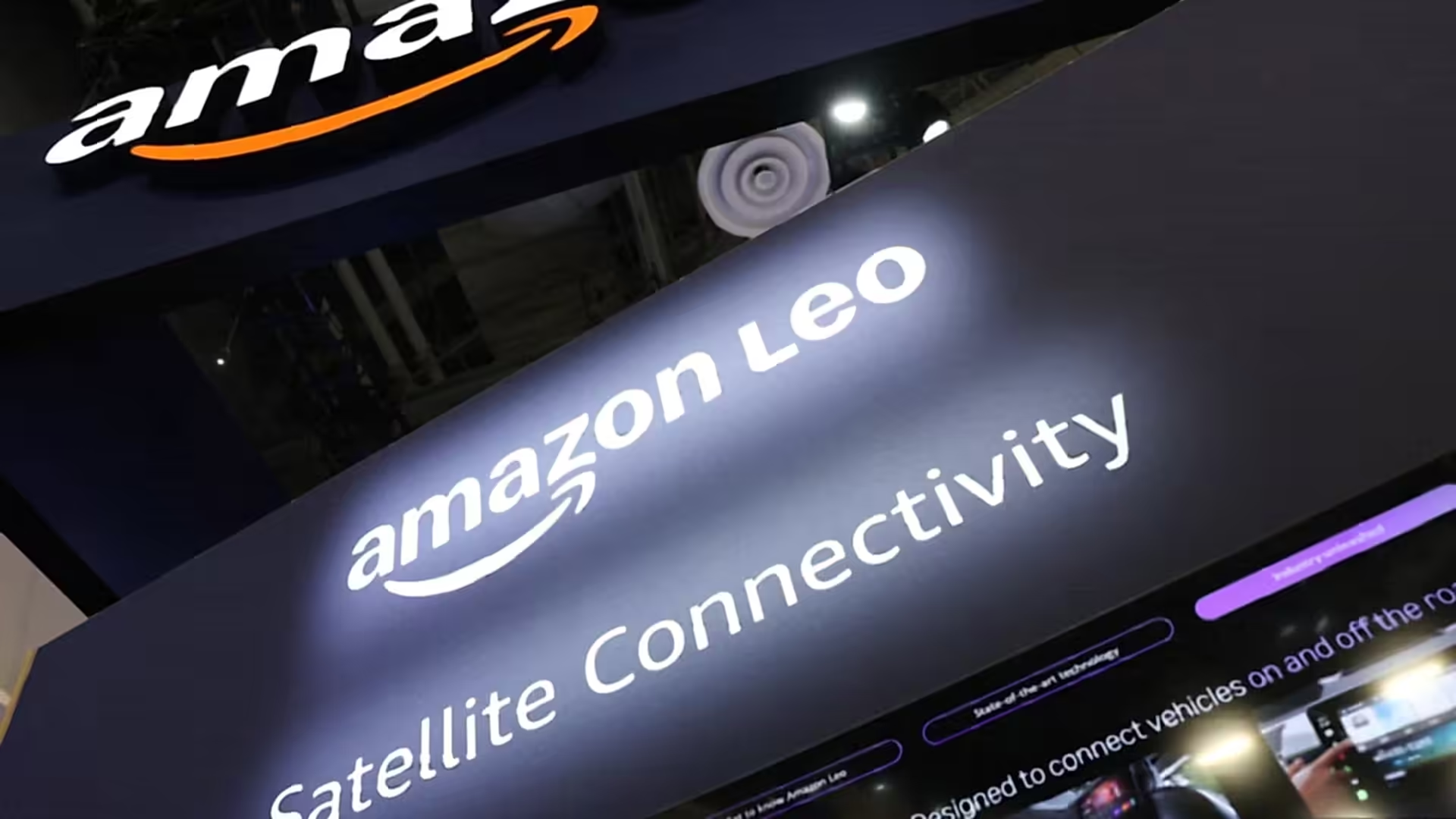
Amazon announced Tuesday an $11.57 billion acquisition of Globalstar, a move designed to accelerate the company's satellite internet and mobile phone service ambitions through its Amazon Leo project.
The deal will allow Amazon to deploy thousands of satellites into low-earth orbit, according to the company. Amazon said the Globalstar takeover aligns with its "long-term vision for space-based connectivity" and that it will deploy a "next generation" satellite system in 2028.
Amazon Leo currently has approximately 200 satellites in orbit. The project, which previously operated under the name Project Kuiper, represents the company's multi-year effort to establish a satellite-based communications network.
The acquisition positions Amazon in direct competition with Starlink, the satellite-based internet and phone service launched by Elon Musk in 2019. Starlink, which is privately held, already operates more than 10,000 active satellites, giving the company a significant head-start in the market.
In November 2025, Amazon introduced Leo Ultra, an advanced satellite antenna designed for enterprise and government sectors. The company described Leo Ultra as "the fastest antenna in its field," featuring full-duplex architecture to optimize data transmission and reception. Leo Ultra leads a product family that also includes Pro and Nano models, though Amazon has concentrated its initial strategy on the high-performance Ultra version.
The Leo Ultra antenna targets sectors where service stability, security, and integration with critical systems are essential. By launching this product line, Amazon sought to establish itself as a significant competitor in a market previously dominated almost entirely by Musk's company.
Amazon also announced plans to begin offering satellite-based communication services in Japan starting in 2026, providing connectivity to mountainous and previously unreachable areas. The company plans to deploy approximately 3,200 satellites as part of this expansion.
The satellite internet market has grown increasingly competitive as multiple companies pursue low-earth orbit connectivity solutions. Amazon's investment in Globalstar represents a substantial financial commitment to accelerate its timeline for deploying operational satellite services and closing the gap with Starlink's established network.