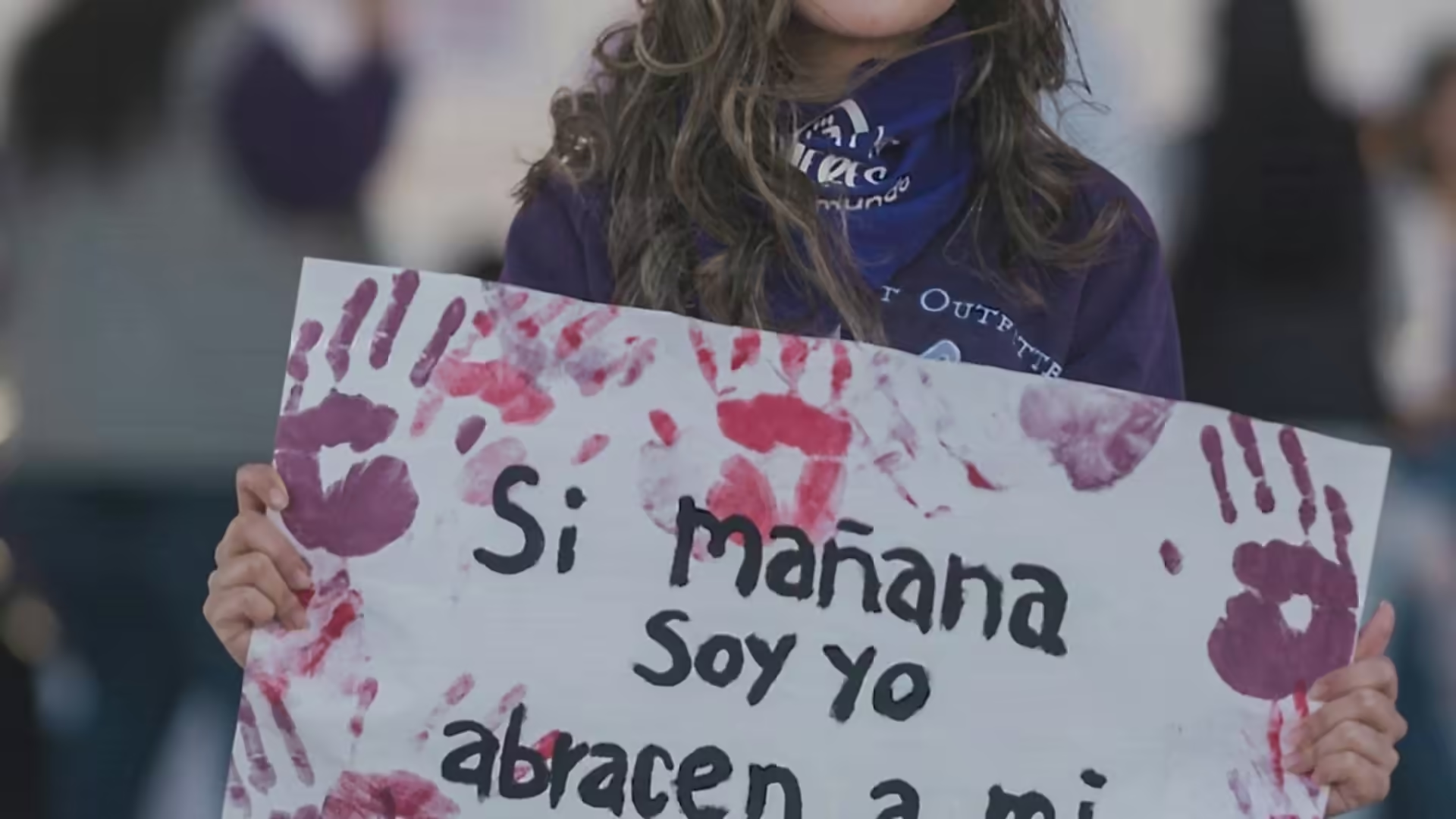
Thousands march across Latin America on International Women's Day
Feminist demonstrations took place in Sevilla, Mexico City, Buenos Aires, and Chile on March 8, with organizers calling for gender equality and action on violence against women.
16 min ago
Thousands of women took to the streets across Latin America and Spain on Sunday to mark International Women's Day, with coordinated marches addressing longstanding demands for gender equality and justice.
In Sevilla, Spain, two separate feminist demonstrations filled the city streets with purple on March 8. The Asamblea Feminista Unitaria began at noon from Torre Sevilla, heading toward Plaza Nueva, while a second march organized by Sevilla's feminist movement departed from Plaza Nueva toward the Alameda de Hércules. The first march drew support from organizations including Amama, the unions CCOO and UGT, and political parties IU and Podemos. The second march was backed by various women's associations and the PSOE. Families, groups of friends, and veteran activists participated, carrying handmade signs with messages including "Sex without consent is rape" and "I am not dying, I am being killed."
In Mexico City, thousands of women gathered for marches that converged on the Zócalo, the capital's central plaza, which authorities had barricaded in anticipation of large mobilizations. Multiple marches began from different points across the city, with general convocations set for 11:30 a.m., with marches beginning around noon. Some mobilizations started as early as 9 a.m. Organizers established specific contingents for mothers searching for missing relatives and people with disabilities. The Mexican demonstrations focused particularly on femicide and the decriminalization of abortion nationwide.
In Argentina, Buenos Aires hosted activities at the Usina del Arte on March 8, with programming running from 11 a.m. to 9 p.m., including live music, workshops, cooking classes, talks, and visual exhibitions. However, the main march was scheduled for Monday, March 9, a decision made during a transfeminist assembly that included feminists, social organizations, unions, and political leaders. The shift to Monday was intended to ensure greater participation, though it drew criticism on social media from those concerned about taking time off work on a weekday. Some groups organized separate marches on March 8 itself, viewing the original date as more significant.
In Chile, the Coordinadora Feminista 8M organized more than 42 events between Friday and Monday. The main march was called for Sunday at 10 a.m. at Plaza Italia, known as "Plaza Dignidad" since the 2019 social uprising, with marching to begin at 11 a.m. A second march was scheduled for 6 p.m. from Metro Protectora de la Infancia toward Plaza de Puente Alto. The organizing collective's spokesperson, Margarita Peña, called for women of all ages and occupations—formal and informal workers, students, and residents—to participate. The march's slogan was "not one step back, one hundred steps forward."
The United Nations established International Women's Day on March 8 in 1975 to commemorate the historical struggle for women's rights and visibility. The date is linked to a 1908 strike by textile workers at the Cotton factory in New York, who demanded reduced working hours, equal pay with men, and improved working conditions.