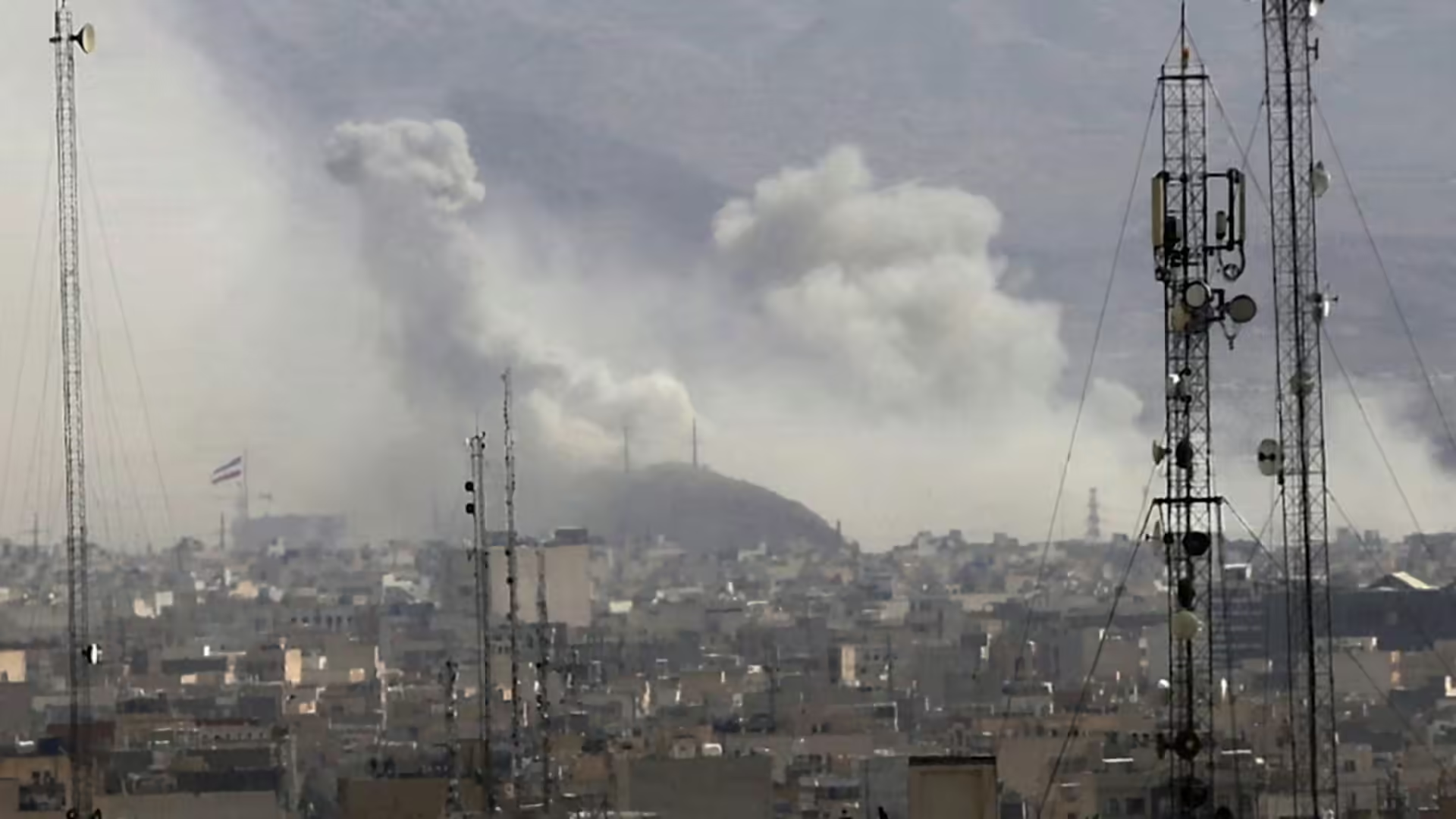
U.S. and Israel launch major attack on Iran; Trump confirms "major combat operations"
Joint U.S.-Israeli strikes targeted Iranian military sites Saturday as airspace closures disrupted regional air traffic and Iran vowed retaliation.
12 hrs ago
The United States and Israel launched a major coordinated attack on Iran on Saturday, with President Donald Trump confirming that "major combat operations" were underway.
Explosions were reported across multiple Iranian cities, including Tehran, Isfahan, Qom, Karaj and Kermanshah, according to the official Islamic Republic News Agency. An Israel Defense Forces spokesman said "dozens of military sites" were attacked in the joint offensive.
Israeli Defense Minister Israel Katz described the operation as a "preemptive strike against the Islamic Republic" with the mission to "eliminate threats against the country of Israel." Trump stated that the U.S. military objective was to "defend the American people by eliminating imminent threats from the Iranian regime."
In response to the strikes, Iran promised a "crushing" retaliation. State TV reported that Iran was preparing to "take revenge" on Israel and deliver a "strong response."
The attack prompted widespread disruptions to regional air traffic. Iran, Iraq and Israel closed their airspaces to civilian traffic, according to Agence France-Presse. Part of Syria's airspace along the country's southern border with Israel was also closed for 12 hours, the French news agency reported, citing Syria's Civil Aviation Authority.
Air France canceled its Saturday flights to and from Beirut, Lebanon, as well as flights to and from Tel Aviv, citing the security situation at the destination. Lufthansa also suspended flights to and from cities across the region.
According to Israeli media sources, the initial phase of the joint attack was expected to last four days. Reported targets included radar bases, missile arsenals, Revolutionary Guard command centers and military infrastructure. Israeli sources also indicated that facilities associated with the Iranian presidency and supreme council were among the objectives, though Iranian regime sources stated that Supreme Leader Ayatollah Khamenei had been moved to a secret underground bunker and was not in Tehran.
The operation followed months of escalating tensions. In late February, the United States authorized the departure of non-essential government employees and their families from Israel, while China urged its citizens in Israel to remain highly vigilant and strengthen emergency preparedness. Nine U.S. tanker aircraft arrived at Tel Aviv airport during the night as part of a broader military reinforcement of American forces in the Middle East, according to Israeli media citing flight-tracking data.
Democratic Senator John Fetterman of Pennsylvania expressed support for the strikes on social media, stating that "President Trump has been willing to do what's right and necessary to produce real peace in the region."
Israeli Prime Minister Benjamin Netanyahu released a video statement thanking Trump for his "historic leadership" and describing the operation as removing "the existential threat represented by the terrorist regime." Netanyahu referenced the Iranian regime's 47-year history of anti-American and anti-Israeli rhetoric and cited historical incidents including the 1979 U.S. embassy takeover in Tehran and the 1983 Marine Barracks bombing in Beirut that killed 241 American military personnel.
Alerts were activated across Israel following the strikes, and Iranian missiles were reported to have been launched toward Israel.