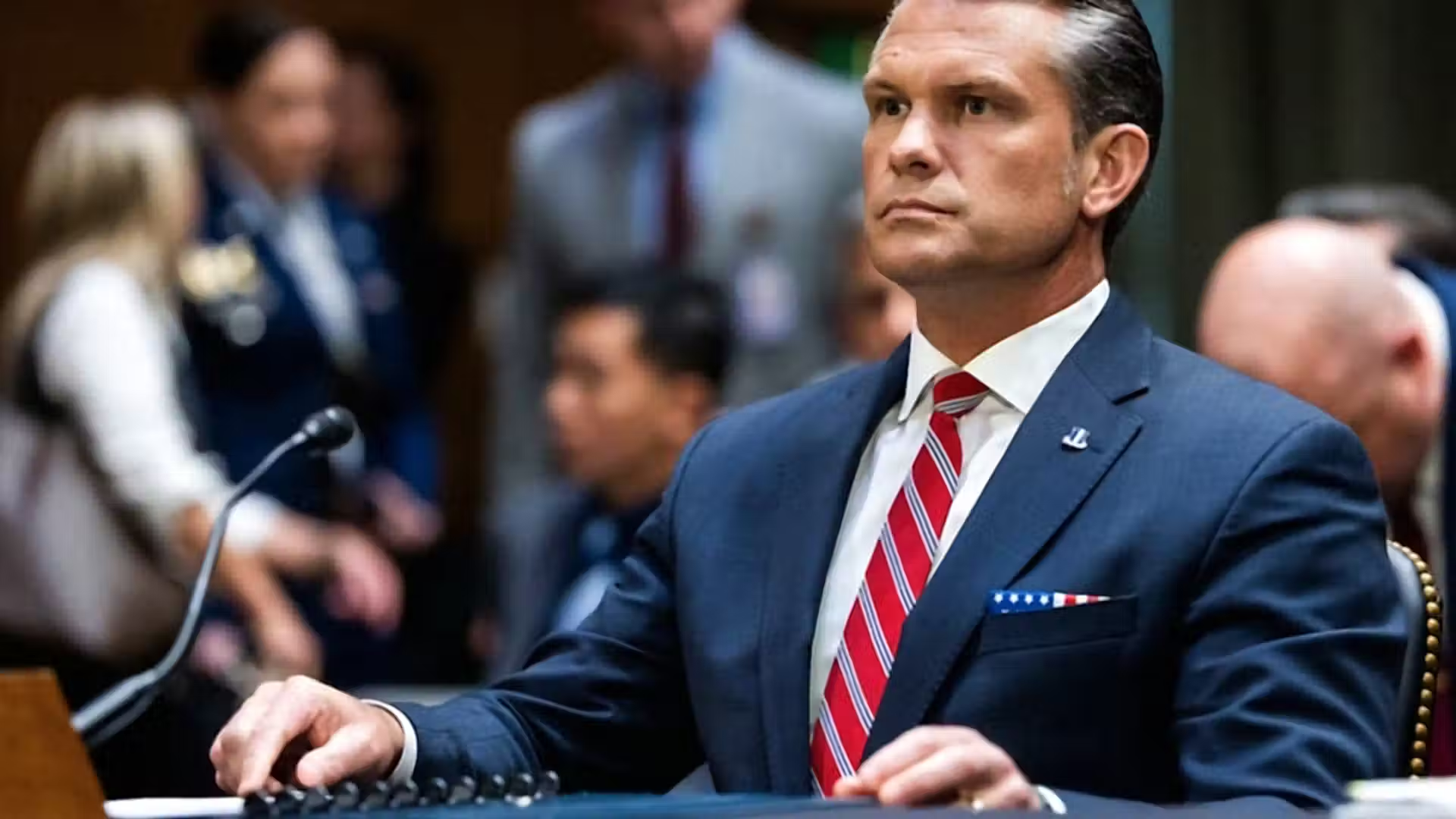
Defense Secretary Pete Hegseth testified before the Senate Appropriations Committee on Tuesday to defend the Trump administration's $87.6 billion supplemental funding request, with $67.1 billion earmarked specifically for the ongoing war effort against Iran.
Hegseth and Gen. Dan Caine, chairman of the Joint Chiefs of Staff, faced lawmakers as the Pentagon reported it was running low on cash to sustain operations. The hearing came days after the Pentagon announced that three additional American service members had died in the conflict, bringing the total death toll to 17, with more than 100 injured since early July.
During his testimony, Hegseth stated that the U.S. war against Iran has cost $37.5 billion so far, an estimate higher than earlier accounts provided by the administration. He characterized the supplemental war funding as an "urgent, necessary" injection of resources and described President Donald Trump's proposed $1.5 trillion defense budget as a generational investment in the military.
In his opening remarks, Hegseth did not mention Iran directly but emphasized the need for funds to replace equipment used in recent operations. He stated that $21 billion of the supplemental request would be allocated to readiness. "Rest assured that every dollar appropriated to the Department of War will be focused on building the lethality of our joint force, and reinforcing peace through strength," Hegseth said.
The broader $95 billion GOP budget package under consideration also includes aid to farmers and voting law changes that are top White House priorities.
Hegseth's testimony was interrupted multiple times by protesters carrying signs who shouted slogans as he attempted to continue his remarks. The disruptions underscored tensions surrounding the conflict's popularity among the American public.
Hegseth argued that the additional funding was necessary given what he described as crucial circumstances facing the Pentagon. "We cannot afford inaction," he stated, adding that the financing was essential to prepare for "new demands this year" and to accelerate military development efforts.
The hearing marked the first sustained appearance by Hegseth and Caine before the Senate Appropriations Committee, chaired by Susan Collins of Maine, to address the escalating costs of the Iran conflict.