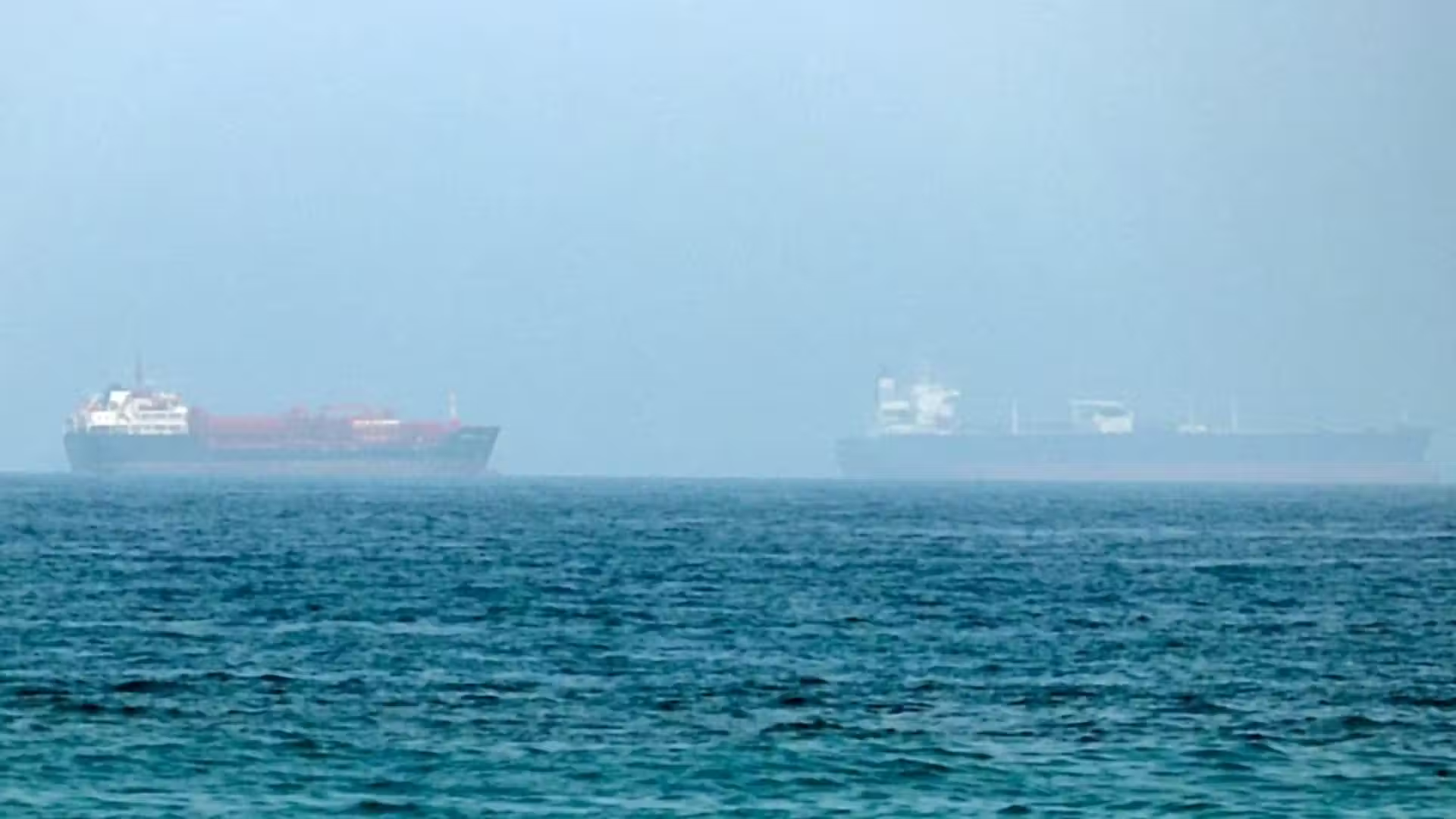
US President Donald Trump said on Friday that he intends to declare the Strait of Hormuz a territory of the United States, reiterating comments he made earlier in the week during remarks at a police academy near New York City.
"After we finish defeating Iran, which is being very badly defeated, pretty soon I'll be declaring the Hormuz Strait a territory of the United States," Trump said at the Nassau County Police Academy Center for Training and Intelligence in Garden City, New York, on August 14.
On Sunday, Trump elaborated on the proposal when asked by journalists to clarify his earlier statement. "I just think it's a great idea," he said. "We control it with the blockade, and I like the idea of declaring it a territory. We have total control over the Strait."
Trump stated that the strait is currently open and suggested that declaring it US territory might either halt or increase the flow of oil through the passage. "Maybe that will stop, or maybe it'll open up even further. But we're taking out millions of barrels of oil a week," he said.
The president added that oil prices are declining and will continue to do so unless the United States takes action that is "far more drastic," though he did not specify what such measures might entail.
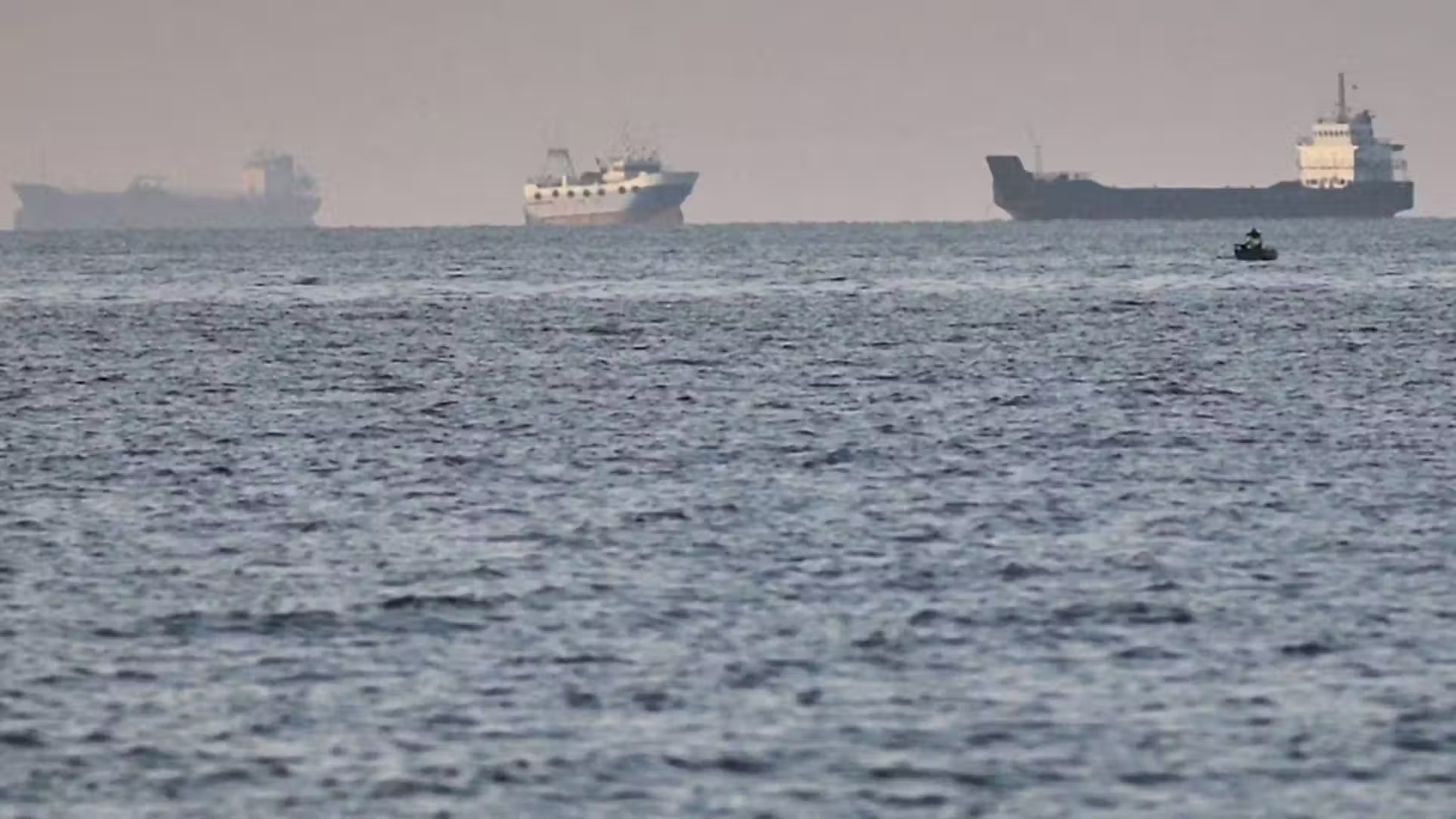
The Strait of Hormuz is a critical chokepoint for global trade, with approximately one-fifth of the world's seaborne oil and gas supplies typically passing through the waterway between Oman and Iran. The waterway has been largely closed since the outbreak of conflict between the United States, Israel, and Iran in late February 2026.
Trump emphasized US military control of the passage, stating, "We have the blockade. No ships get through unless we want them to." He also noted that the US has established what he described as a "steel wall" in the region.
Iran has rejected Trump's assertions. On Saturday, Iran's deputy foreign minister, Kazem Gharibabadi, called the president's remarks "fanciful delusions" and stated that the Strait of Hormuz "has been Iranian, is Iranian, and will remain Iranian." Gharibabadi added that "this strait will only be closed and opened under Iran's command."
A memorandum of understanding signed between the United States and Iran in June was set to expire on Sunday, August 18, amid the ongoing military and diplomatic deadlock over the waterway's status.
Trump acknowledged the economic effects of the nearly six-month conflict but argued that preventing Iran from developing nuclear weapons justified the costs. "When you have to pay a little bit more, you're at $4. It's okay," he said regarding gasoline prices.
According to reporting, the number of ships passing through the Strait of Hormuz per day in July was five times lower than before the conflict began.
Related Articles
Iran reasserts control over Strait of Hormuz amid stalled US talks
Iran warned foreign vessels will be targeted if they do not comply with passage regulations through the strategic waterway.
U.S. and Iran reach peace deal; Strait of Hormuz to reopen
President Trump announced a completed agreement with Iran ending three months of conflict, with the Strait of Hormuz reopening and the U.S. naval blockade lifted.
Strait of Hormuz becomes central issue in Iran negotiations
Pakistani ambassador says opening the waterway is now the main topic in talks, though it was not initially on the agenda.
Trump orders Navy to shoot boats laying mines in Hormuz Strait
President Trump directed the U.S. Navy to use lethal force against vessels placing mines in the Strait of Hormuz and to triple mine-clearing operations.
Iran closes Strait of Hormuz to all vessels, says armed forces
Iran's military announced a complete closure of the strategic waterway in response to U.S. strikes, warning of military action against vessels attempting passage.
U.S. warships transit Strait of Hormuz as Iran fires missiles
Two U.S. military vessels crossed the Strait of Hormuz under Project Freedom, an operation to clear blocked commercial shipping, as Iran claimed missile strikes.