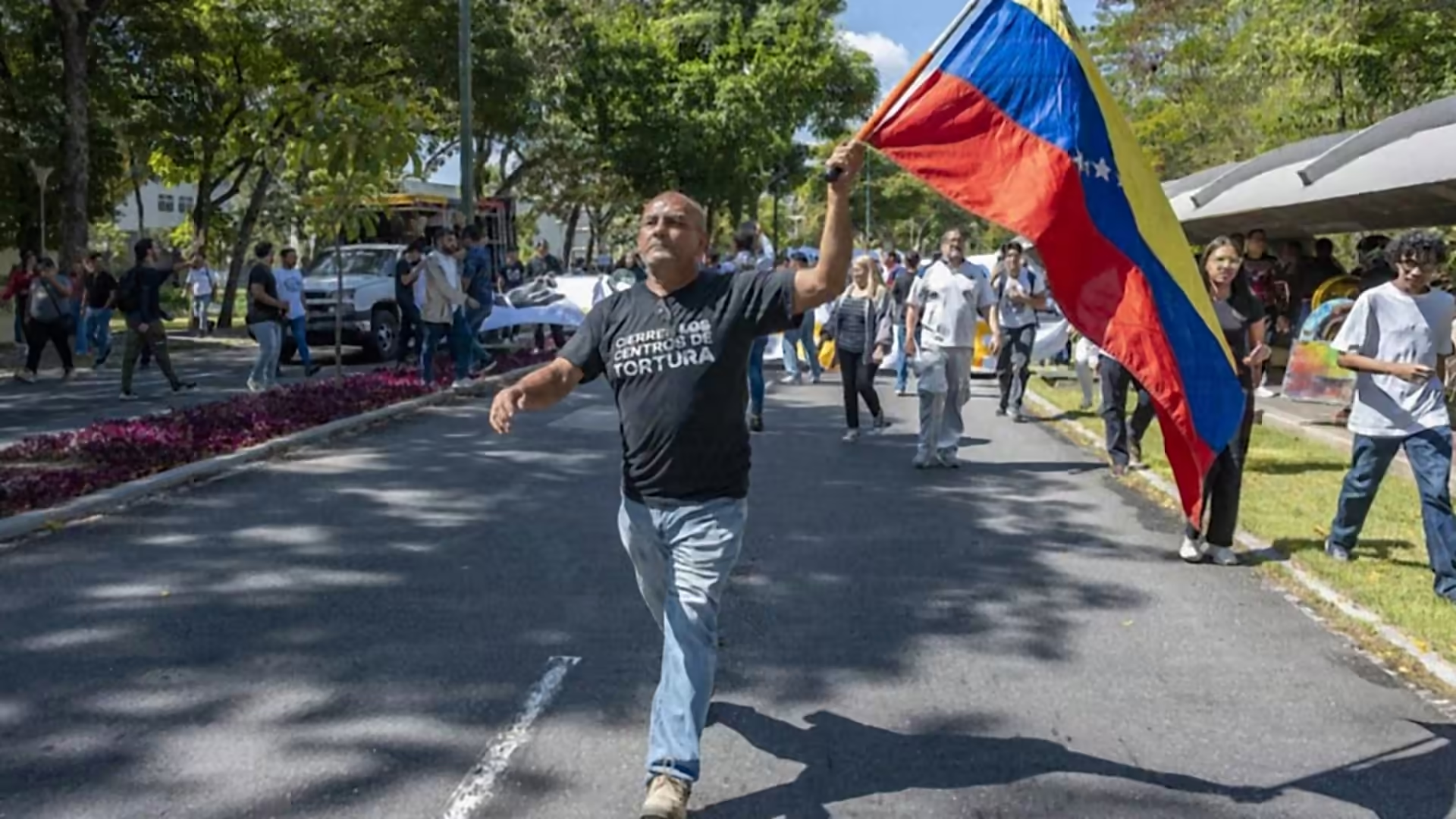
Venezuela's parliament postpones amnesty law vote over disagreement on key article
Lawmakers unanimously approved six articles but deadlocked on the seventh, which defines who qualifies for the amnesty covering political prisoners detained over 27 years of chavismo rule.
2 hrs ago
Venezuela's National Assembly postponed Thursday's final vote on an amnesty law for political prisoners until next week, citing disagreement among deputies over a crucial article that would determine the scope of the legislation.
The parliament, led by Assembly president Jorge Rodríguez, unanimously approved six articles of the proposed Law of Amnesty for Democratic Coexistence during a session lasting one hour and 27 minutes. The vote stalled on Article 7, which addresses the conditions under which beneficiaries of the amnesty would be eligible for release.
The disputed article requires amnesty beneficiaries who were convicted and subsequently exiled due to chavista repression to place themselves "at the disposal of the pertinent authorities" to acknowledge their alleged crimes. The disagreement centers on the wording and scope of this provision, which specialists and civil society groups have identified as substantive in determining whether the law aims to pardon criminals or to free those they characterize as unjustly persecuted.
The amnesty law was proposed by interim president Delcy Rodríguez, who assumed power following the capture of Nicolás Maduro on January 3 during a U.S. military operation. The legislation would cover individuals accused of crimes including "treason," "terrorism," and "incitement to hatred"—charges commonly applied to political prisoners—spanning the entire 27-year period of chavismo rule from 1999 through January 2026.
The governing chavista bloc holds a parliamentary majority sufficient to pass the law unilaterally but has expressed a preference to secure support from the opposition's limited number of votes. Officials said the assembly would resume discussion of the amnesty law during its next ordinary session the following week.
The proposal, which was unanimously approved in a first reading, would potentially result in the release of hundreds of detained opposition figures and previously imprisoned individuals held under conditional liberty. The law also includes provisions to convert the Helicoide prison in Caracas into a center for sports and social services.
Human rights organizations have raised concerns that the amnesty could extend to regime authorities, though the sources do not specify which organizations or provide details of their stated concerns beyond this general warning.