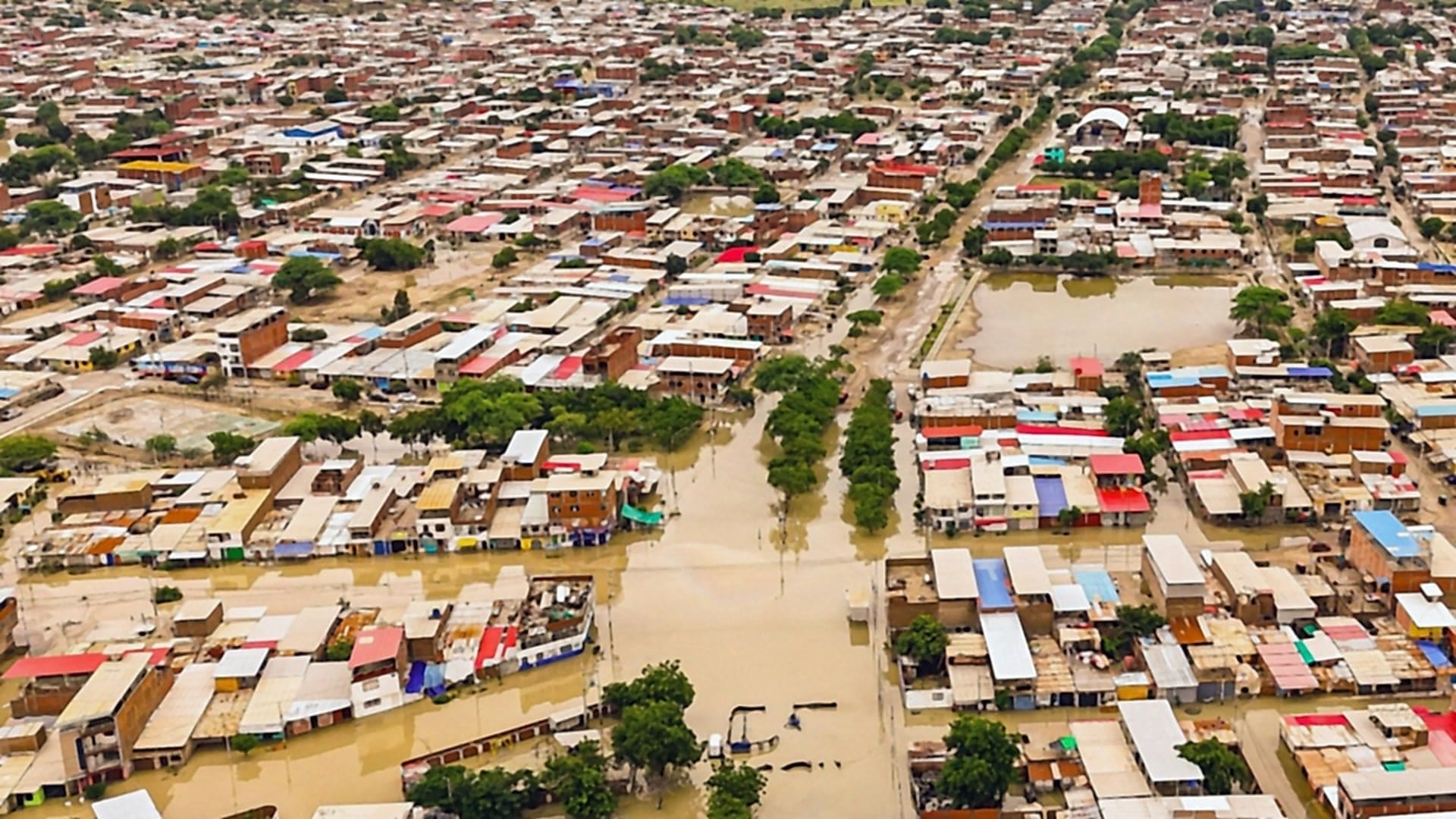
Several cities in Peru and Ecuador faced major flooding after downpours linked to an exceptionally strong El Niño phenomenon.
In Piura, capital of the Piura region in northern Peru, waist-high water filled streets following 12 hours of heavy rains that began Thursday. Some 2,000 families were affected in Piura, according to National Institute of Civil Defense chief Luis Vasquez.
Floodwaters forced authorities to relocate patients from the respiratory infections ward at Piura's Jose Cayetano Heredia Hospital to its auditorium, with more serious cases transferred to intensive care. The flooding also affected the Plaza de Armas in central Piura, along with many businesses and public buildings.
Peru's armed forces deployed personnel and pumping equipment to remove accumulated water from affected neighborhoods. Some residents complained of delays, with some machines stopping due to lack of fuel. Peru's National Meteorology and Hydrology Service warned that moderate to heavy rainfall could continue in parts of the region over the following four days.
Peruvian President Keiko Fujimori postponed a trip to Colombia to deal with the crisis and said she plans to travel to the affected areas.
In Ecuador, the National Secretariat for Risk Management reported that 34 people had died and 47,000 had been affected by heavy rains linked to El Niño. In the western city of Manta, residents waded through chest-deep water and floated on mattresses after two rivers broke their banks. Fernanda Navarrete, 41, said she had not seen flooding on such a scale for a very long time and lost furniture, clothing and appliances. "We've been soaking in mud for four days," she said. "To top it all off, the sewers burst; the stench is awful."
Ecuador's National Secretariat for Risk Management reported 32 overflowing tributaries nationwide, with 17 others under watch for rising water levels. Most flooding occurred on Ecuador's coast. The strongest El Niño event since 1950 in Ecuador was in 1997-1998, which killed nearly 300 people and affected about 20,000, according to official figures.
Peru and Ecuador are among several Latin American countries that have declared national emergencies because of El Niño. The natural phenomenon involves a rise in sea surface temperatures in the central and eastern equatorial Pacific Ocean, causing worldwide changes in wind and rain patterns. This year's episode is projected to be the strongest on record and has already been linked to severe weather across the continent.