Afghanistan and Pakistan have agreed to an immediate ceasefire following talks in Doha, Qatar, aimed at de-escalating the worst flare-up of tensions between the neighbors in years. The truce, mediated by Qatar and Turkey, is intended to pause hostilities that have killed dozens of people and injured hundreds throughout the month.
Defense Minister Mullah Mohammad Yaqoob Mujahid, representing Afghanistan’s Taliban government, and Pakistan’s Defence Minister Khawaja Muhammad Asif met in the Qatari capital on Saturday to formalize the agreement. The Qatari Ministry of Foreign Affairs confirmed that during the negotiations, both sides agreed to the immediate ceasefire and the establishment of mechanisms to consolidate lasting stability.
Terms of the Agreement
Under the bilateral agreement, both countries pledged to refrain from hostile actions against the other. According to officials familiar with the terms, this includes refraining from targeting security forces, civilians, or critical infrastructure.
Pakistan’s Defence Minister Khawaja Asif confirmed the deal, emphasizing that a key requirement was halting militant activity emanating from Afghan territory.
“Cross-border terrorism from Afghan territory will cease immediately,” Asif wrote on social media, adding that both countries committed to respecting each other’s sovereignty and territorial integrity.
Zabihullah Mujahid, the chief spokesman for the Taliban government, confirmed the positive outcome, stating that the agreement stipulated that neither country would support groups carrying out attacks against the other. Both ministers thanked Qatar and Turkey for their role in facilitating the talks.
Context of Escalation
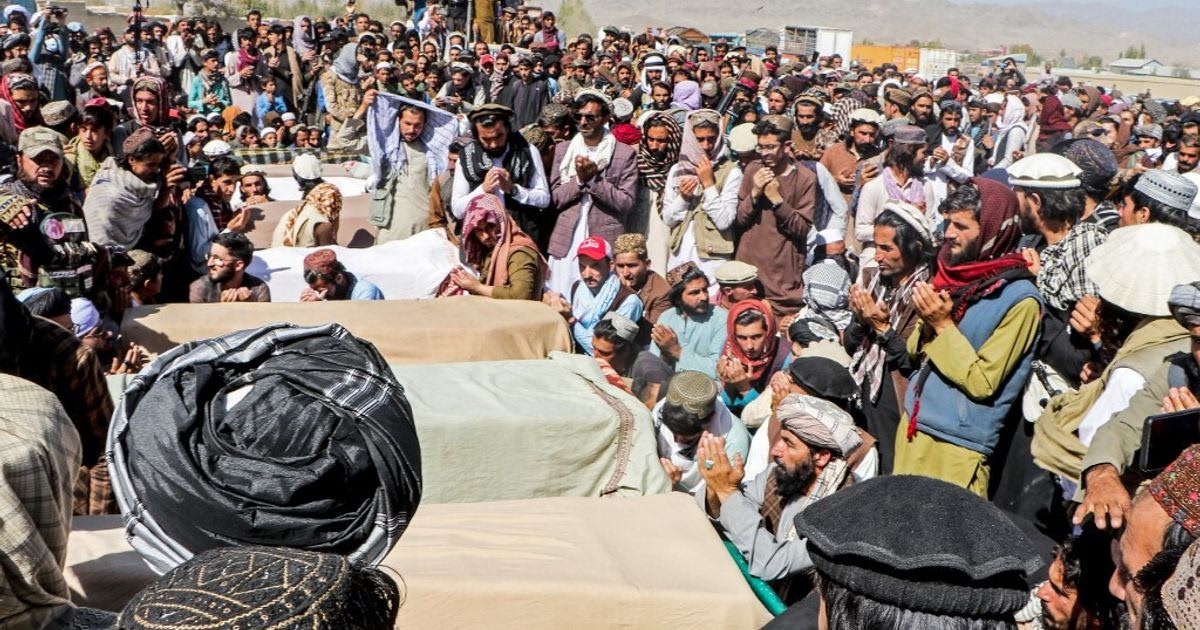
The ceasefire comes after nearly two weeks of intense military exchanges. Violence spiked earlier this month following a T.T.P. (Tehrik-i-Taliban, or Pakistani Taliban) attack that killed 11 Pakistani soldiers. Pakistan subsequently conducted airstrikes into Afghanistan, targeting what military officials described as militant groups. Afghanistan, in turn, blamed Pakistan for airstrikes that hit Kabul and eastern provinces, and responded with cross-border raids that killed at least 23 Pakistani soldiers.
Pakistan carried out further airstrikes late last week after an initial 48-hour ceasefire expired, actions which Afghanistan claimed killed several civilians, including cricket players—a charge Pakistan denied, insisting only militants were targeted.
Analysts note that the underlying dispute remains centered on Pakistan’s long-standing complaint that the Afghan Taliban government harbors the T.T.P., allowing the militant group to launch attacks on Pakistani soil. While the Afghan government denies hosting militants, attacks by the T.T.P. have surged since the Taliban reclaimed power in 2021.
Independent experts have previously suggested that the T.T.P. receives financial support and training within Afghanistan, often with ties to groups like Al Qaeda. However, Afghanistan’s Taliban leadership views the T.T.P. as closely aligned with their own identity, complicating any strong measures against the group.
Despite the immediate cessation of violence, analysts suggest that without strong measures to curb the T.T.P., the peace remains fragile. Pakistan helped create the Taliban in the 1990s, but relations have soured significantly in recent years as Islamabad’s efforts to engage Kabul over the Pakistani Taliban yielded few results.
Both delegations are scheduled to meet again in Istanbul, Turkey, on October 25 to discuss the matters in further detail and formalize the implementation mechanisms.