The Central Bank of Argentina (BCRA) formalized a currency stabilization swap agreement worth up to US$20 billion with the US Treasury Department on Monday, signaling a new level of economic support from the United States. The agreement, intended to reinforce the country’s international reserves and temper exchange rate volatility, was announced just a week before Argentina’s national legislative elections.
Simultaneously, US President Donald Trump indicated that the United States was preparing to increase its imports of Argentine beef, a measure he said would help control inflation by lowering meat prices for American consumers.
Formalizing the Financial Stabilization Pact
The agreement, signed by the BCRA, headed by Santiago Bausili, established the terms for bilateral currency swap operations that allow the bank to access additional dollar liquidity. The BCRA stated that the objective is to "contribute to the macroeconomic stability of Argentina, with special emphasis on preserving price stability and promoting sustainable economic growth."
Officials noted that the $20 billion swap is an exercise in monetary and exchange policy tools, differing technically from Argentina’s swap agreement with China. The funds from the US Treasury’s Exchange Stabilization Fund (ESF) are of free availability once activated, though the specific financial conditions and terms of the deal remain confidential, a standard practice for such bilateral agreements.
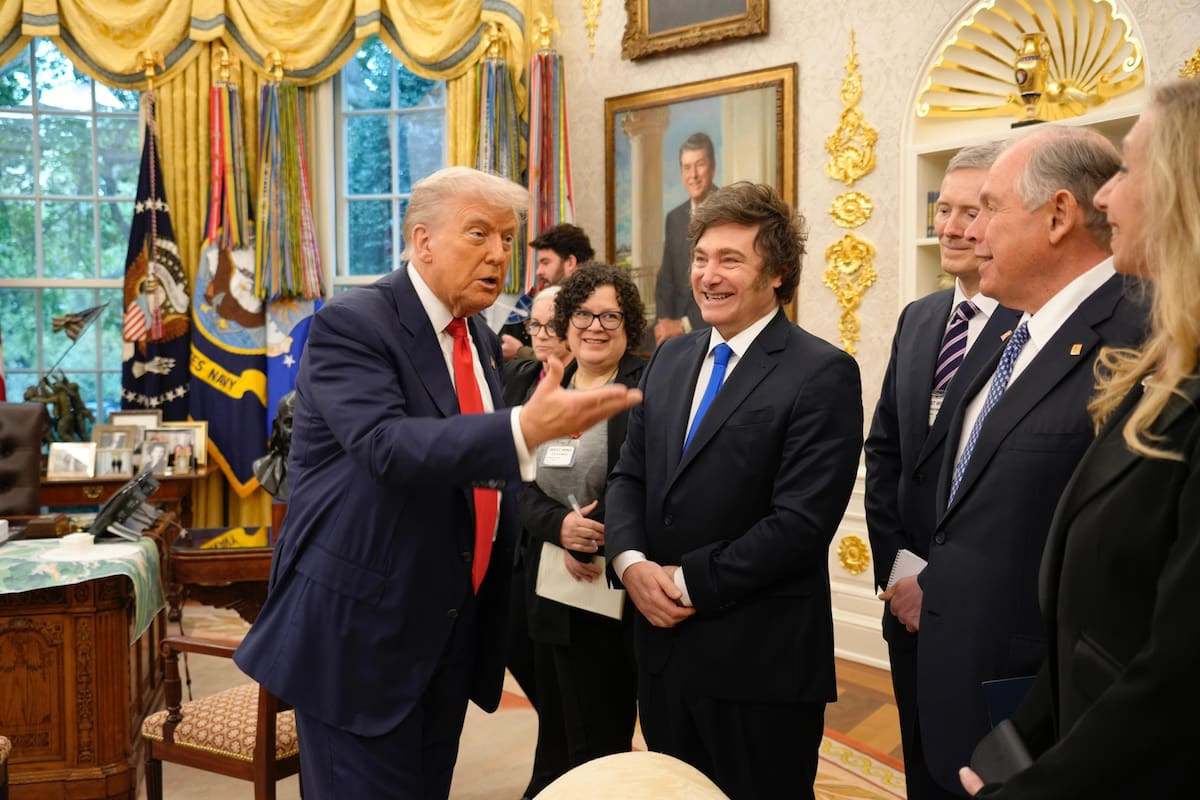
The formalization follows a high-level meeting on October 14 between President Javier Milei and President Trump in Washington, which secured the financial aid package. In the days leading up to the announcement, US Treasury Secretary Scott Bessent confirmed that the US had actively intervened in the Argentine currency market by purchasing pesos, demonstrating a strong signal of support to prevent the exchange rate from escalating.
Increased Access for Argentine Beef
Speaking to reporters on a flight from Florida, President Trump announced the potential increase in US beef imports from Argentina. "We would buy some of Argentina’s meat," Trump reportedly said, adding that such a move would help reduce US beef prices, which have faced upward pressure due to domestic drought conditions and persistent declines in the US cattle stock.
For Argentina, the US is currently the third-largest market by volume for its beef exports, accounting for 6.9% of shipments between January and August of this year, trailing China (63%) and Israel (9%). Exporters believe a trade agreement could potentially triple Argentina’s tariff-reduced quota for beef exports to the US, raising it from 20,000 to 60,000 annual tons.
Analysts noted that while increased exports to the US would benefit the Argentine cattle industry, which saw overall export volumes rise 24% year-over-year through August, the move is unlikely to significantly impact domestic consumer prices. The local market consumes between 70% and 75% of production, primarily focusing on cuts with bone, while exports focus on high-value cuts for Europe and low-value cuts (like *osobuco*) mainly for China.
Political Rationale and Domestic Criticism
President Trump justified the extensive financial and commercial aid package by emphasizing Argentina’s economic hardship. When asked about the aid, he stated that Argentina is an important ally, but "they have no money, they have nothing," and insisted they were "dying" economically.
However, the support package has drawn criticism from US agricultural producers. US farmers have expressed frustration that the aid coincided with the Milei government eliminating export taxes (DEX) on grains. This move was leveraged by China to increase its purchase of soybeans from Argentine ports, further straining trade relations between US producers and Beijing, which began after the US raised tariffs on imports from the Asian nation. The prospect of increasing competition in the beef market further aggravated these concerns.