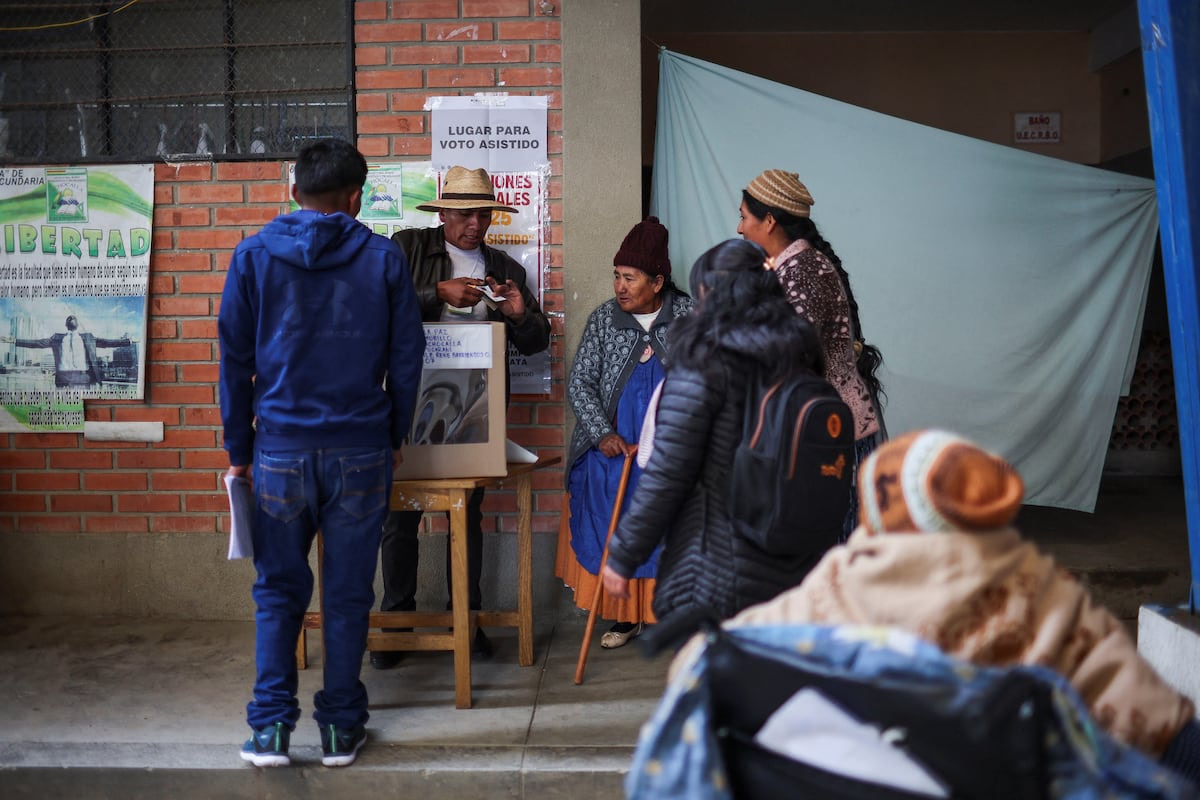
More than 7.5 million Bolivians went to the polls on Sunday for a presidential runoff election, a vote that confirms a major shift in the country's political landscape after nearly two decades of leftist governance under the Movement Toward Socialism (MAS).
The election pits conservative former President Jorge “Tuto” Quiroga against Rodrigo Paz, a right-leaning centrist and son of a former president. Both candidates represent the right of the political spectrum, having defeated all progressive rivals in the first round of voting in August.
The unprecedented runoff follows a period of economic deterioration marked by a severe scarcity of U.S. dollars and acute shortages of fuel, including gasoline and diesel, which have generated queues lasting up to eight hours at service stations across the country. Analysts note that whoever wins will inherit a “firefighter government,” obligated to immediately address the nation's compounding crises.
Economic Crisis Dominates Campaign
The central issue driving widespread voter discontent is the economy. Bolivia is facing its first recession in 40 years, fueled by a sharp decline in revenues from natural gas exports and years of state mismanagement and lack of investment in exploration.
The rising cost of living, difficulties importing goods, and the high cost of government-financed fuel subsidies have placed immense pressure on the state budget. The core challenge for the next administration is stabilizing the economy and replenishing international reserves, which have been depleted due to the decline of the gas industry boom that previously financed social programs and redistribution projects.
Both Quiroga and Paz have proposed measures aimed at stimulating exports, encouraging foreign investment, and reducing the size of the state. However, their methods differ significantly.
Contrasting Economic Plans
Paz, who surprised pollsters by leading the first round with 32 percent of the vote, has advocated for a more gradual approach to economic recovery. He has pledged to protect social programs popular with the working class and former MAS voters, while promising to streamline public administration and cut an estimated $1.5 billion in “superfluous” state spending.
His strategy, which he terms “capitalism for all,” aims to liberalize the economy for small businesses and self-employed citizens, promising measures like tariff reductions to curb illegal smuggling and a possible tax amnesty to mobilize capital. Paz has sought to avoid relying on international organizations like the International Monetary Fund (IMF) early in his term, preferring to “order the house” using recently approved loans first.
Quiroga, by contrast, proposes a rapid and profound adjustment. An internationally experienced leader educated in the United States, he appeals strongly to the urban business sector. Quiroga has argued that the house is already “on fire” and needs immediate intervention—or “green water” of dollars—via swift, necessary reforms.
His platform includes privatizing the energy sector, which was nationalized two decades ago by the MAS government, and making Bolivia a world leader in lithium production to replace diminishing gas royalties. Quiroga recognizes the pain his program entails, including the reduction of subsidies and potentially cutting state benefits, but argues it is necessary to save the country from collapse.
Voter Dynamics and Political Fault Lines
While both candidates lean right, they draw support from different regions and demographics. Paz has managed to appeal to Indigenous, rural, and less affluent voters, many of whom value the MAS focus on disadvantaged communities but are now seeking change.
Quiroga generally commands the vote in the eastern, agro-industrial part of the country, as well as among urban professionals and business leaders who support his liberal economic policies. Analysts note that ethnic identity still plays a role, with Paz strong in the western, Andean regions, while Quiroga is favored in the lowlands.
The race has also highlighted deep political divisions, particularly concerning the running mates. Paz’s vice-presidential candidate, Edman Lara, a popular former police captain known for his outspoken anti-corruption stance, was instrumental in attracting voters in the first round. Quiroga’s running mate, Juan Pablo Velasco, an entrepreneur, has faced scrutiny over social media posts from 15 years ago containing verified racist comments targeting highland Indigenous Bolivians, underscoring persistent issues of race and class in the nation.
The Shadow of Evo Morales
Although the MAS party is out of the presidential race, the next government must contend with the influence of former President Evo Morales, who lives under continuous watch by supporters outside his official residence after an arrest warrant was issued against him on charges of statutory rape.
Quiroga has stated he would execute the arrest warrant against Morales, escalating their long-standing political feud. Paz, on the other hand, largely avoided the topic during his campaign. Political analysts suggest that while Morales may still incite protests, his inability to run for president diminishes his long-term political viability, forcing the MAS to eventually seek new leadership.