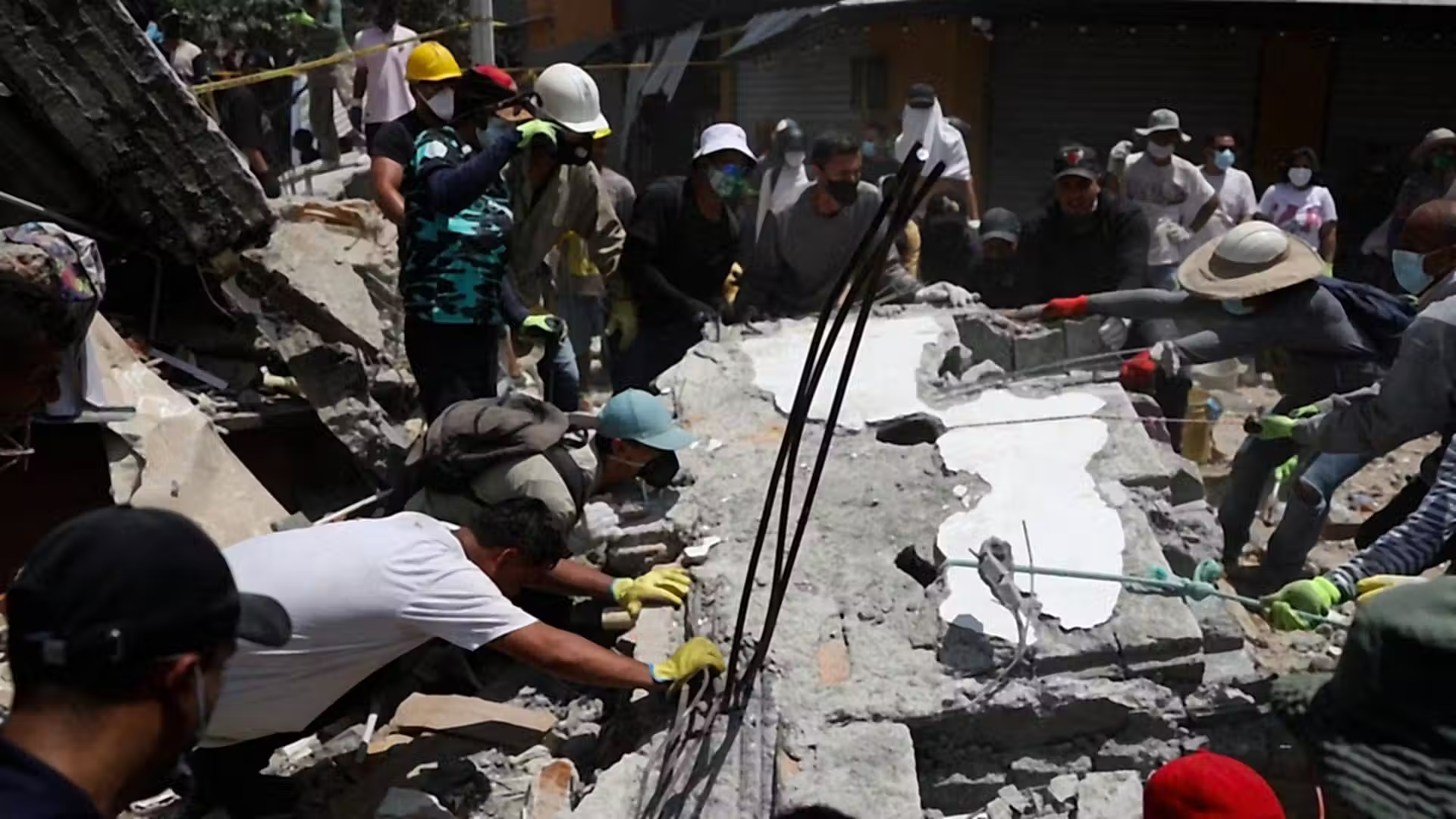
A magnitude 7.4 earthquake struck western Colombia on Monday at 7:34 a.m. local time, triggering a large-scale rescue operation as teams worked to locate survivors trapped in collapsed buildings. The quake was the strongest to hit the country since 1979.
At least 254 deaths have been reported as of Tuesday, with the death toll expected to rise further. More than 2,600 people have been injured, and nearly 200 remain missing, according to government figures. The majority of deaths occurred in the cities of Pereira and Cali, located in western Colombia's coffee region and Valle del Cauca department respectively.
The earthquake was felt across an enormous area stretching hundreds of miles across western Colombia. Fresh aftershocks continued to be recorded on Tuesday as rescue operations intensified.
President Abelardo de la Espriella declared a state of emergency following the disaster. A curfew was imposed in the affected region as authorities coordinated response efforts.
Rescue workers and volunteers worked against the clock on Tuesday to free survivors from the rubble of collapsed structures. In Cali, volunteers cleared wreckage from the Vanessa Building, an apartment complex that sustained significant damage. Luis Saenz, a 22-year-old journalism student from Cali, described the experience of the quake while at home. "For me, the earthquake felt eternal," he recalled of the Monday morning tremor.
Authorities continued to assess the full extent of damage and casualties throughout Tuesday, with preliminary figures expected to increase as rescue teams accessed more affected areas and completed searches of collapsed buildings.