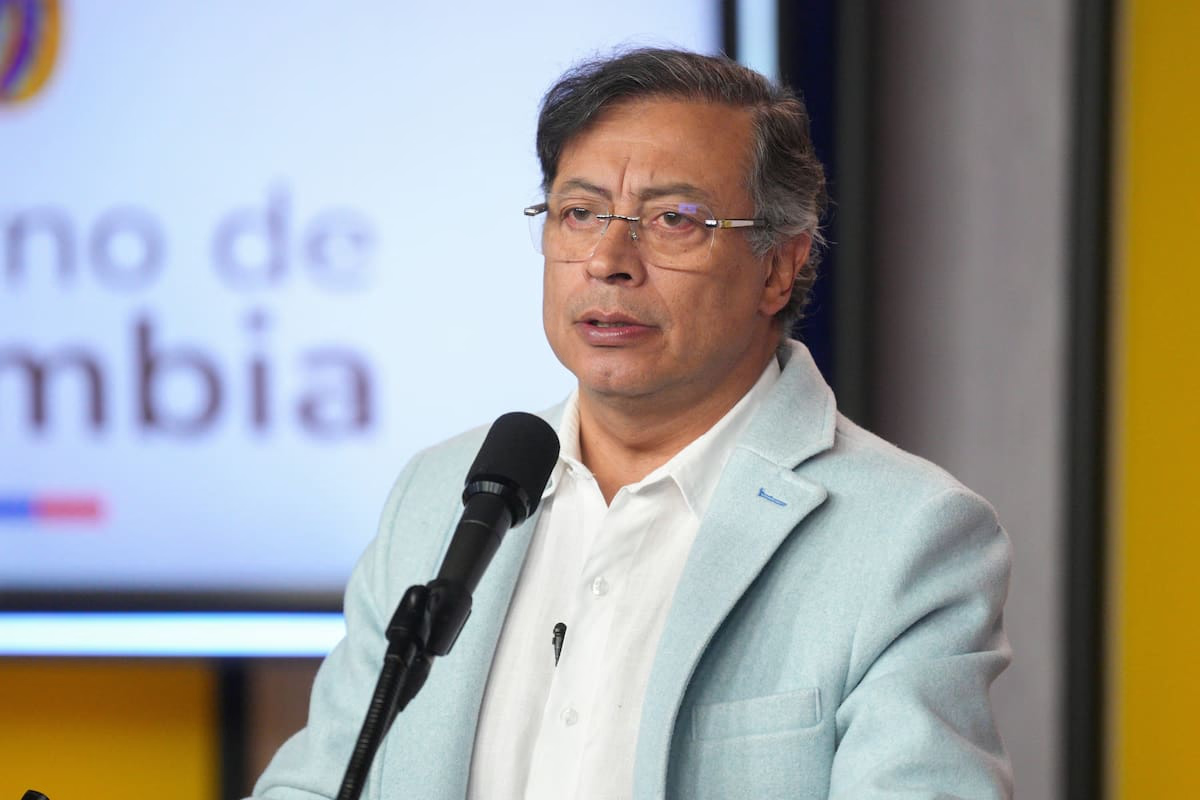
BOGOTÁ—The long-standing security and commercial alliance between the United States and Colombia faced its gravest crisis in decades this week after U.S. President Donald Trump announced the suspension of financial assistance and threatened new tariffs on Colombian goods.
Trump accused Colombian President Gustavo Petro of being a “lunatic” and an “illegal drug leader” who was doing nothing to stop production in the world’s largest cocaine exporter. He warned that Petro “better close up” drug operations “or the United States will close them up for him, and it won’t be done nicely,” according to statements made Sunday.
In response to the escalation, the Colombian government called its ambassador to the U.S., Daniel García Peña, back to Bogotá for immediate consultations. The Foreign Ministry (Cancillería) announced the government would pursue action in “international bodies” to defend national sovereignty.
Intervention Threat Denounced
Trump’s highly charged rhetoric included a direct threat of intervention. Interior Minister Armando Benedetti described the U.S. president’s warning to “close up” cultivation fields as a “threat to an invasion or a land or military action against Colombia.”
“I cannot imagine closing hectares [of crops] unless it is done that way, unless it is invading,” Benedetti told reporters, underscoring the severity of the language coming from Washington.
Colombia has historically been the top recipient of U.S. assistance in Latin America, receiving over $740 million in annual aid in 2023, with hundreds of millions dedicated to anti-narcotics efforts. Washington had already removed Colombia’s certification as a cooperative partner in the drug war last month, setting the stage for the aid cuts.
Trump confirmed aboard Air Force One that he would announce new tariffs, potentially 10%, on Monday, reinforcing a warning previously issued by Senator Lindsey Graham. For Colombia, which relies on the U.S. as its principal trading partner, the imposition of tariffs represents a serious economic challenge.
Clash Over Military Strikes
The crisis intensified amid ongoing U.S. military operations in the Caribbean, described by the administration as an “armed conflict” against drug cartels. Since August, U.S. naval ships have been deployed, resulting in at least seven attacks on vessels allegedly transporting drugs and resulting in the deaths of at least 27 people, according to Washington.
U.S. Defense Secretary Pete Hegseth reported a recent strike on October 17 against a vessel in international waters allegedly associated with the National Liberation Army (ELN) rebel group, killing three alleged rebels.
President Petro has aggressively criticized the U.S. operations, denouncing them as violations of national sovereignty and accusing the U.S. government of “assassination.” Petro pointed specifically to a September strike he claimed killed a humble fisherman, Alejandro Carranza, in Colombian waters.
In a message directed at Trump, Petro criticized the traditional U.S. anti-drug strategy as “failed,” arguing it has left “a million dead in Latin America and is only an excuse to control the region.” He wrote on social media, “You are rude and ignorant toward Colombia.”
Erosion of a Strategic Alliance
Analysts noted that the clash threatens an alliance that has been foundational for half a century, especially following the implementation of the U.S.-funded Plan Colombia, which significantly aided the country’s armed forces in combating insurgency and drug trafficking.
Elizabeth Dickinson, a senior analyst for the Andes region at the International Crisis Group, observed that it is “befuddling and profoundly unwise of the United States to alienate its strongest military partner in Latin America” at a time of high regional tension.
Despite the friction, the diplomatic community in Bogotá suggested the conflict was specifically directed at the current administration, noting, “The problem is not with the United States, but with Trump.” Colombian business leaders also appealed to U.S. officials to reconsider the tariff threats, warning that economic penalties would only harm the national economy, jobs, and the civilian population, rather than effectively combating drug trafficking.
The loss of financial support is substantial, especially given that Colombia is the largest cocaine producer globally, with coca cultivation reaching record figures last year, according to international reports.