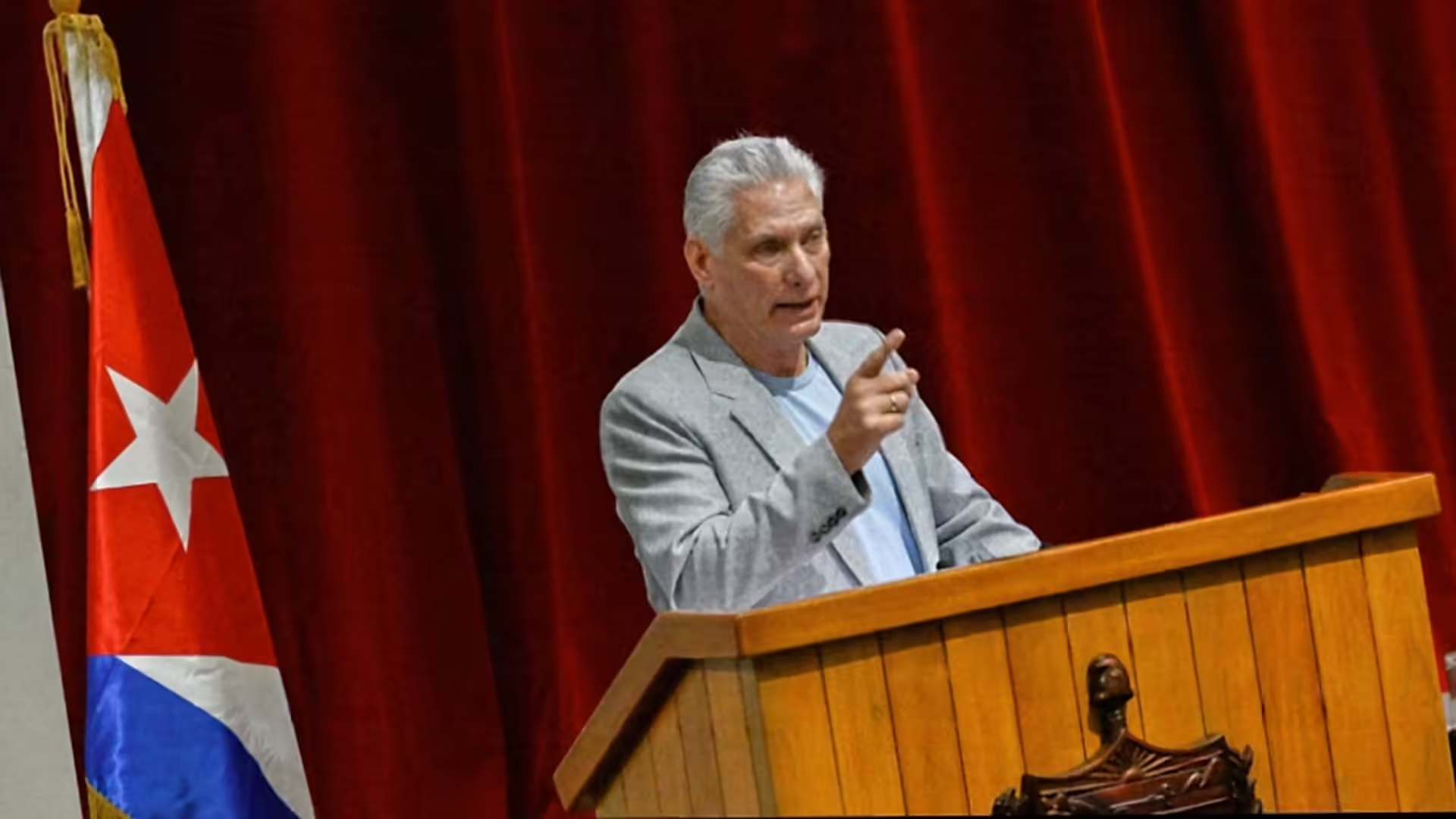
Cuba's Díaz-Canel vows to fight U.S. military action amid energy blockade
Cuban President Miguel Díaz-Canel said his nation is prepared to defend itself against potential U.S. military intervention, as the Trump administration's energy blockade deepens the island's economic crisis.
4:30 PM
Cuban President Miguel Díaz-Canel declared Sunday that his nation is bracing for a potential U.S. attack and said he is willing to die resisting President Trump, in his first interview on American television.
Speaking on NBC's "Meet the Press," Díaz-Canel said he did not believe there would be justification for the United States to launch military aggression against Cuba or to conduct what he called a "surgical operation" or "kidnapping of a president." He added that if such action occurred, Cuba would respond with force.
"If that happens, there will be fighting, and there will be a struggle, and we will defend ourselves, and if we need to die, we'll die, because as our national anthem says, 'dying for the homeland is to live,'" Díaz-Canel said, according to a translation.
The Cuban president's remarks come as the Trump administration has mounted what officials described as an aggressive pressure campaign against Cuba. Since December, the U.S. has imposed a blockade around Venezuela as part of Operation Southern Spear, using that action to cut off oil supplies to Cuba. The island nation has since experienced a deepening energy crisis.
Díaz-Canel blamed Cuba's economic difficulties on the United States during the interview. He said his administration and its people were prepared to fight back against any potential U.S. military intervention.
The Cuban leader said he was open to dialogue with the United States without conditions, but rejected any suggestion that he would step down if the United States ordered it. Though the Trump administration has reportedly been seeking to push him out, Díaz-Canel said it has not yet demanded that he resign.
Díaz-Canel also said he had not personally spoken to Secretary of State Marco Rubio, who is playing a lead role in hemispheric affairs under the Trump administration.