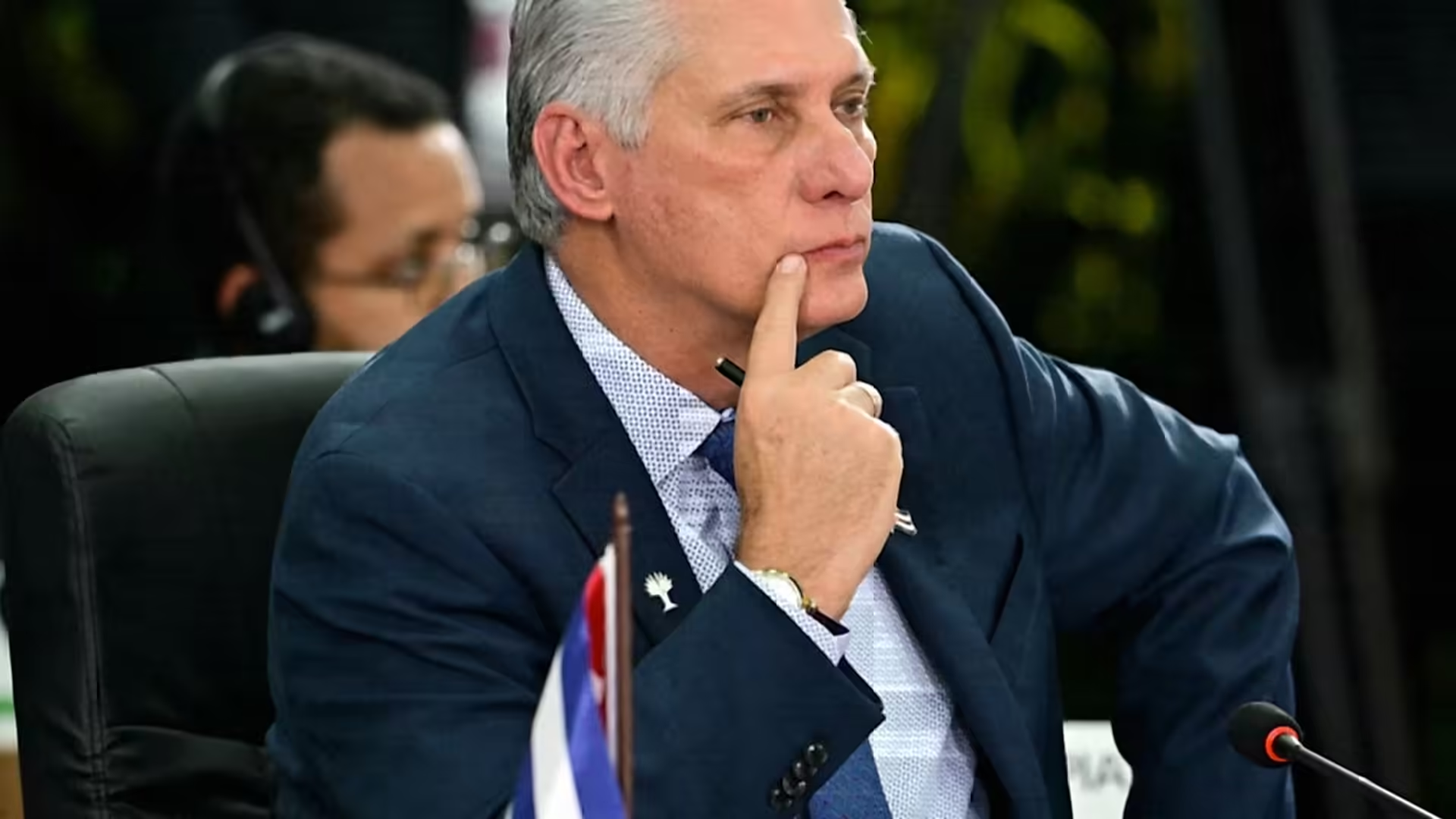
Cuban president confirms talks with US amid fuel crisis
Miguel Díaz-Canel said his government is in dialogue with the Trump administration to address bilateral differences as Cuba faces severe fuel shortages.
4:34 PM
Cuban President Miguel Díaz-Canel confirmed Friday that his government is holding talks with the United States, marking the first public acknowledgment by Havana of negotiations with the Trump administration.
"These talks have been aimed at finding solutions through dialogue to the bilateral differences we have between the two nations," Díaz-Canel said in a televised statement. He added that the discussions are being conducted "on the basis of equality and respect for both countries' political systems, sovereignty, and self-determination of our governments."
Díaz-Canel noted that "international factors have facilitated these exchanges" and characterized the talks as early-stage negotiations. He drew a parallel to similar discussions during the Obama administration, saying "This is not the first time we've had conversations like this. During the Obama era we had similar talks, and now we are having them again."
The Cuban leader cautioned that any potential agreement remains far off, describing such diplomatic processes as requiring discretion and time to develop. "These are processes that are carried out with great discretion. They are not easy," he said during a 90-minute news conference broadcast on state media.
The announcement came as Cuba faces an acute energy crisis. Díaz-Canel stated that no fuel has entered the country in three months, leaving the electrical grid "unstable." He attributed the shortage to what he described as a U.S. energy blockade, noting that critical oil shipments from Venezuela have been halted following U.S. pressure.
The talks were publicly acknowledged by Díaz-Canel shortly after the Cuban government freed 51 political prisoners in what was characterized as a conciliatory gesture. The move appeared timed to coincide with the diplomatic announcement.
The Trump administration had previously floated the prospect of a "friendly takeover" of Cuba, according to reports. The current negotiations represent an effort by the Cuban government to address the mounting economic pressures it faces as fuel supplies dwindle and the power crisis deepens.