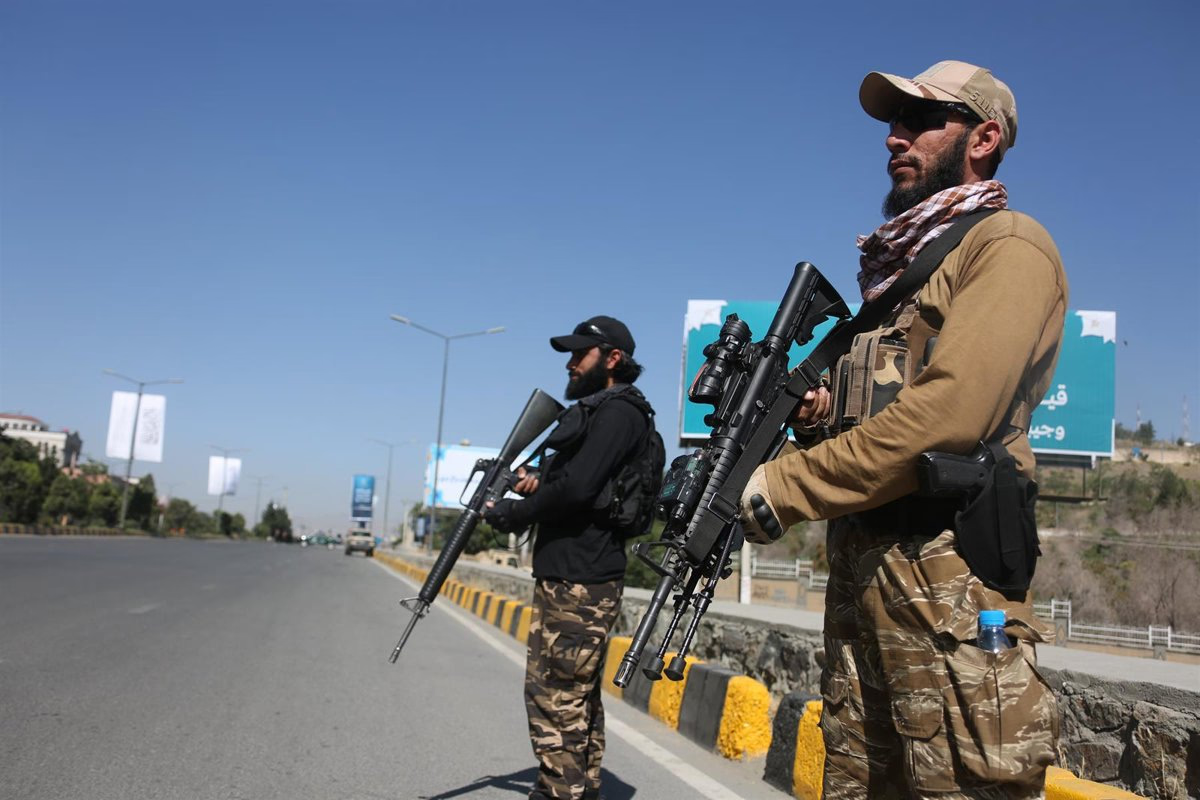
Kabul and Islamabad have accused each other of initiating new and intense clashes along their shared border, resulting in dozens of deaths and injuries, according to reports on Wednesday.
The most recent engagements centered around the Spin Boldak crossing, a crucial gateway between the two nations, and occurred days after similar violent exchanges. These confrontations mark the most significant border crisis since the Taliban returned to power in Afghanistan in August 2021.
Afghan officials, including Taliban spokesman Zabihullah Mujahid, stated that Pakistani forces launched attacks with light and heavy weaponry in Spin Boldak, located in Kandahar province. Mujahid claimed these attacks resulted in the deaths of twelve civilians and injured over a hundred others. He asserted that Afghan forces were compelled to retaliate, leading to the deaths of Pakistani soldiers and the capture of their posts and equipment.
Conversely, the Pakistani military alleged that Taliban forces initiated the conflict with an "unprovoked attack" on four points in the Spin Boldak area. The military reported that its forces effectively repelled the assault, resulting in 15 to 20 Taliban fighters killed and many more injured. Pakistan also accused the Taliban of destroying the "Friendship Gate" border crossing, an act they condemned as demonstrating a disregard for trade agreements and tribal rights.
Further clashes were reported in the Kurram district of Khyber Pakhtunkhwa province in Pakistan, where Pakistani forces claimed to have repelled attacks on border posts, causing significant losses to the Afghan side. The Pakistani military stated that between 25 and 30 Taliban fighters were killed in these engagements.
Both sides have dismissed the other's accusations of initiating the violence as "outrageous and blatant lies."
Residents in Spin Boldak described waking to explosions and heavy artillery fire overnight, with fighting eventually reaching the border crossing and a local market, prompting people to flee towards Kandahar, a major city in Afghanistan.
The Pakistani military has warned that it is prepared to respond with "full force" to any aggression, vowing to defend Pakistan's sovereignty and territorial integrity. They indicated that the attacks were not isolated incidents and that reinforcements were being observed on the Afghan side.
These escalating tensions follow an offensive launched by the Taliban days earlier, who accused Pakistan of carrying out several bombings within Afghanistan, including one in Kabul. Pakistan has neither confirmed nor denied responsibility for these alleged airstrikes.
Pakistan has long accused the Taliban government of harboring militant groups, particularly the Tehreek-e-Taliban Pakistan (TTP), which has been responsible for numerous attacks on Pakistani security forces. Afghanistan has denied these allegations, though analysts and United Nations experts have pointed to support and training for TTP militants within Afghanistan.
The border region has been a persistent source of insecurity, exacerbated by TTP attacks. Islamabad has previously conducted airstrikes into Afghan territory, citing the need to counter the TTP.
The recent surge in violence has led to the closure of several border crossings, disrupting trade and causing significant economic hardship for Afghanistan, a landlocked nation reliant on imports from Pakistan.
International reactions have begun to emerge, with China calling for the protection of its citizens and investments in the region, and Russia appealing for restraint. U.S. President Donald Trump has reportedly expressed willingness to mediate the conflict.
This latest crisis unfolds as the Taliban's acting foreign minister, Amir Khan Muttaqi, visits India, Pakistan's main regional rival. The visit has seen an announcement from New Delhi to reopen its embassy in Kabul, signaling a strengthening of diplomatic ties between India and the Taliban administration.