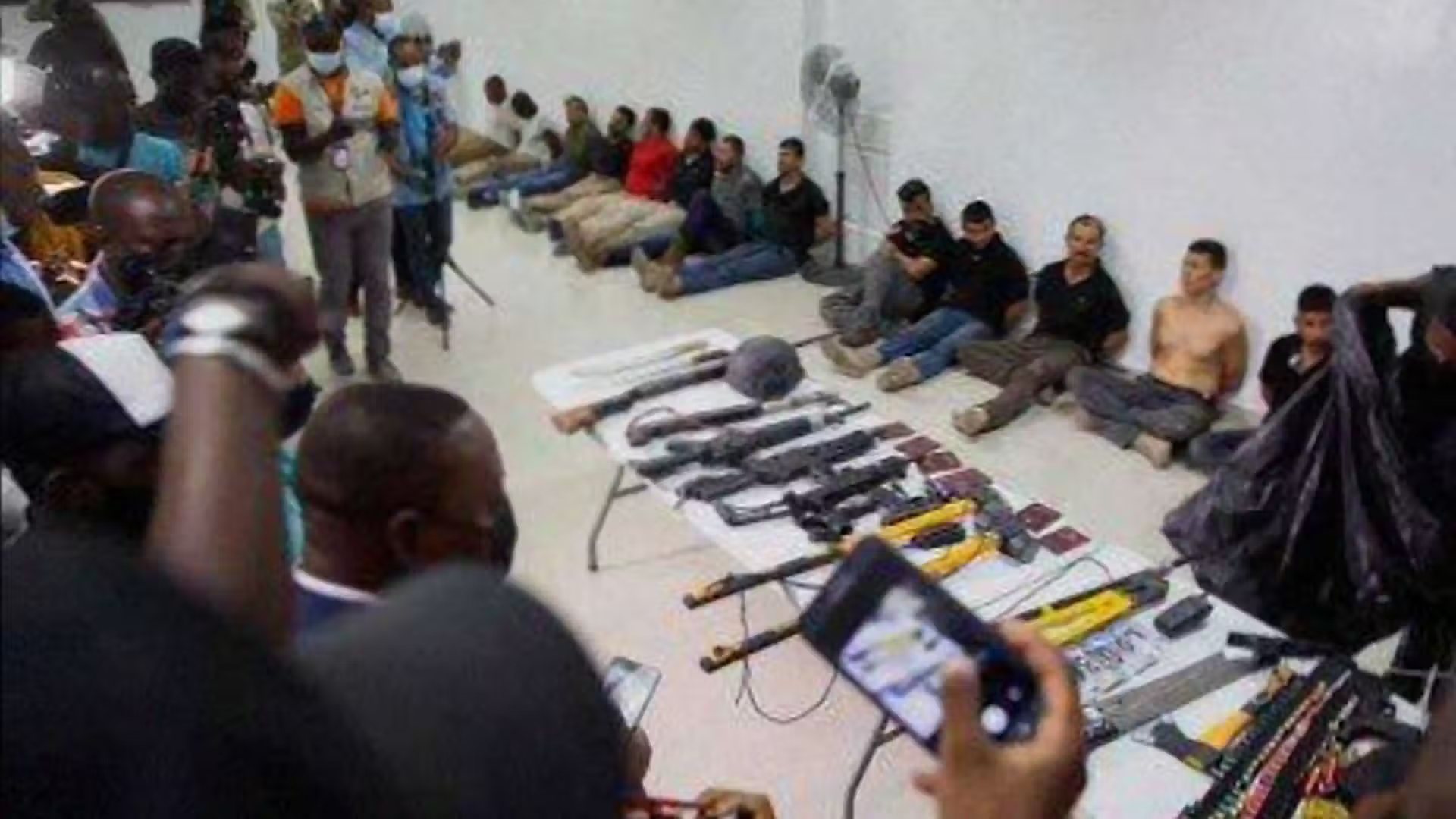
Eighteen suspects in the 2021 assassination of Haitian President Jovenel Moïse have been transported to Florida to stand trial, US officials said Sunday.
Moïse, 53, was shot dead on July 7, 2021, at his private residence in Port-au-Prince by a hired group of about 20 military-trained Colombian mercenaries. His security detail did not intervene to protect him.
A military flight transported the suspects from the Haitian capital to the US state of Florida, where they are set to stand trial for their alleged involvement in the transnational plot to kill the former leader. The defendants will face charges in the US Attorney's Office for the Southern District of Florida.
"Today's multi-location and international arrests underscore the FBI's continued commitment to bringing all participants in this plot to justice," FBI special agent Brett Skiles said on Sunday.
Federal prosecutor Jason Reding Quinones, an appointee of US President Donald Trump, stated: "18 transported in military plane from Haiti to face American justice in the Southern District of Florida." He added that the development "marks the next major phase in our pursuit of accountability for the assassination of President Jovenel Moïse."
Quinones noted that 30 suspects in total have been charged in connection with the case. "Five years later, we are still bringing defendants before American courts, and we are not finished," he wrote.
The major development follows federal prosecutors' successful convictions in May against what they described as "gang leaders" and "co-conspirators" implicated in the scheme. During a nine-week trial in Miami federal court, prosecutors argued that the defendants recruited more than 20 Colombian former military personnel and provided them with funding, firearms, ammunition, and tactical vests to carry out the assassination.
According to FBI special agent Brett Skiles, Moïse "was murdered by individuals seeking to benefit from illicit financial opportunities and business contracts."
The assassination of Moïse created a significant political vacuum in Haiti and contributed to the strengthening of powerful gang forces in the Caribbean nation. The case has prompted multiple investigations and prosecutions in both Haiti and the United States, with various theories emerging regarding the masterminds and motivations behind the killing.
In Haiti, human rights activist Pierre Espérance, executive director of the National Human Rights Defense Network, criticized the transfer of the 18 suspects to the United States as "a disgrace to Haiti's judicial system." Espérance called for comprehensive reform of the judicial system to enable complex cases of this nature to be tried in Haiti.