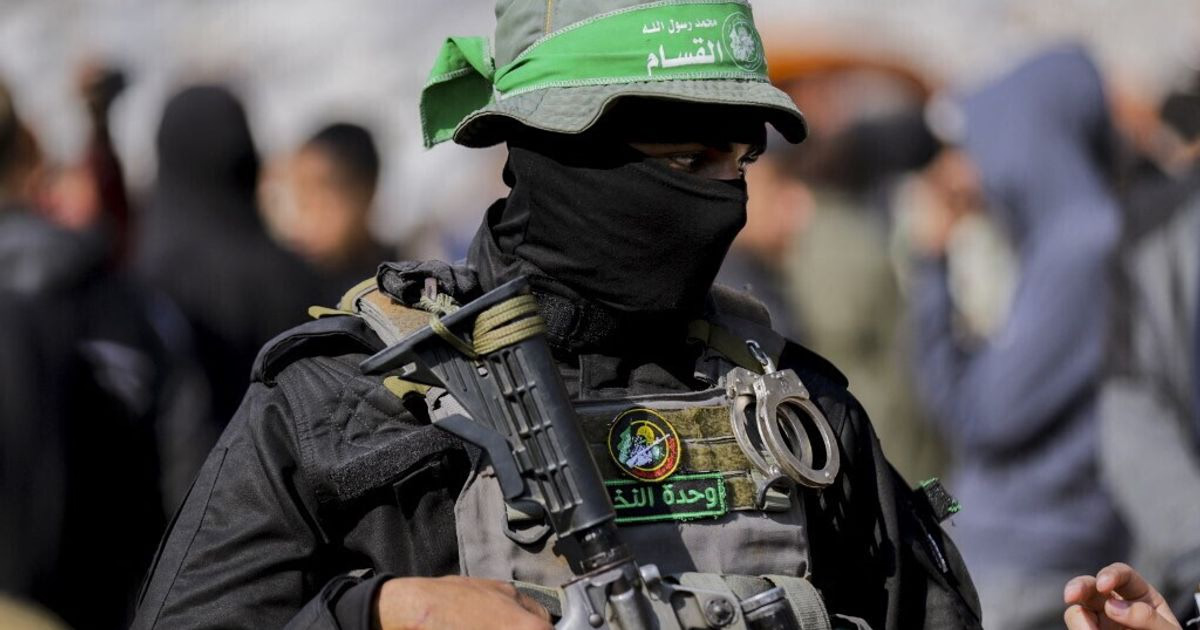
Gaza City – Hamas fighters have intensified efforts to re-establish their authority across the Gaza Strip, employing violent purges and public executions against rival militias and individuals accused of collaboration with Israel in the wake of a ceasefire agreement. The crackdown signals Hamas's determination to consolidate power and suppress any opposition within the territory.
Following the partial withdrawal of Israeli troops, Hamas has deployed armed combatants and police units to strategic locations, including routes used for humanitarian aid delivery. This redeployment has coincided with a surge in internal violence, with reports of clashes and executions across the enclave.
Prominent among the targets are various militias operating within Gaza. These include the Doghmush clan, a group led by Yasser Abu Shabab in eastern Rafah, a faction in Khan Younis headed by Hussam al-Astal, and another militia active in northern Gaza under the leadership of Ashraf al-Mansi.
Hamas has accused these groups of maintaining undisclosed ties with Israel, a claim none of the accused factions have directly addressed. The group's interior ministry has emphasized its commitment to restoring "security and stability," announcing a general amnesty for "members of criminal gangs" who have not committed murder during the recent conflict. Those eligible have been given one week to surrender to security services.
The push for order has been met with defiance from some quarters. Hussam al-Astal, a vocal opponent, posted on social media, directly challenging Hamas and asserting that the group's influence is diminishing.
Violent confrontations have been reported between Hamas and these rival factions. In one particularly deadly incident in Gaza City's Sabra neighborhood, clashes between the Doghmush clan and Hamas resulted in at least 27 deaths, including eight Hamas members and 19 from the clan. A Palestinian journalist covering the events was also killed in the crossfire.
Media reports and verified videos have depicted public executions carried out by individuals identified as Hamas militiamen. These executions, often performed in public squares, target individuals accused of collaborating with Israeli forces. One video reportedly shows seven such individuals being executed by firing squad.
The Doghmush clan, a powerful local entity with a history of sporadic violence against Hamas since the latter's takeover in 2007, has denied any collaboration with Israel. However, they acknowledged that some clan members had committed "transgressions" and accused Hamas security services of indiscriminate targeting.
Asharq Al-Awsat, a Saudi newspaper, reported that Hamas security forces have been actively pursuing, arresting, and in some instances, killing members of al-Mansi's militia in Jabaliya following the Israeli withdrawal.
International reactions have underscored the complex situation. The European Union expressed concern over the reported casualties and urged all parties to exercise restraint. An EU spokesperson reiterated that Hamas should not have a future role in Gaza's governance and must disarm in accordance with a plan proposed by U.S. President Donald Trump.
President Trump, while acknowledging Hamas's efforts to restore order, has indicated a temporary approval for the group to maintain internal security. This stance, however, faces scrutiny amid concerns about Hamas's continued armament and its potential impact on future peace initiatives. The ongoing violence and Hamas's aggressive assertion of control present significant challenges to long-term stability and any proposed peace or governance frameworks for Gaza.