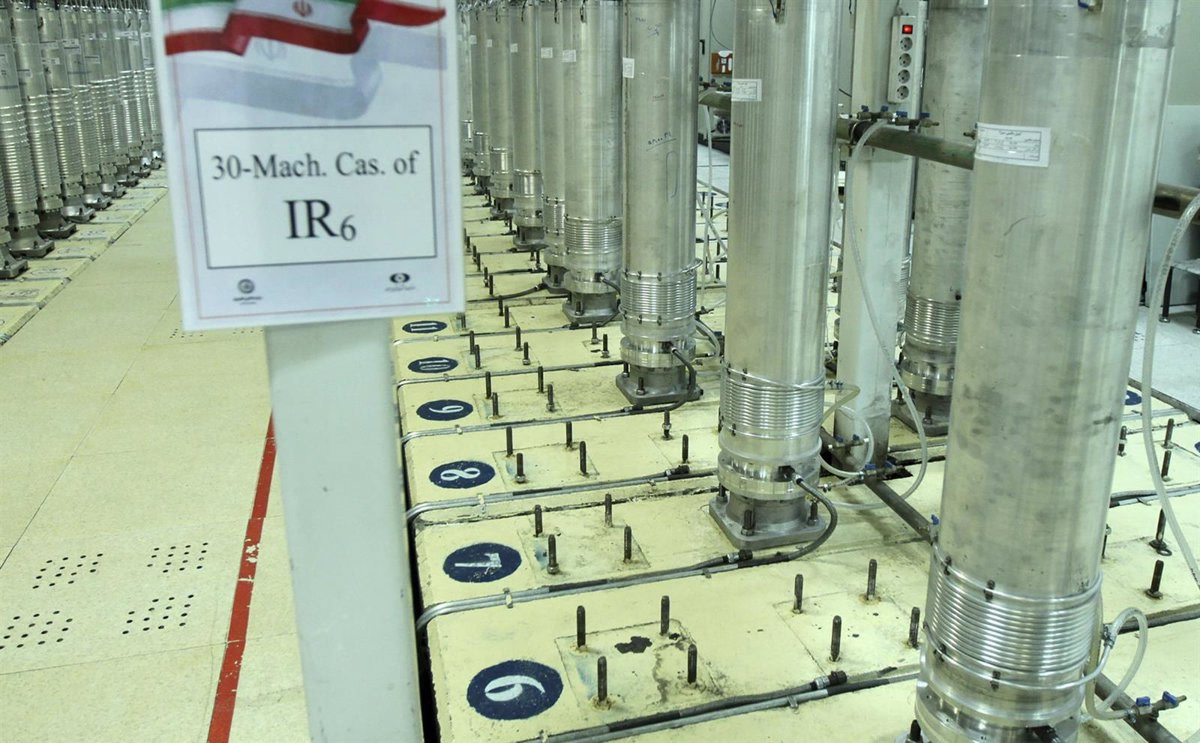
The Iranian government announced Saturday that the Joint Comprehensive Plan of Action (JCPOA)—the landmark 2015 nuclear agreement—is definitively expired and terminated, marking the formal conclusion of the ten-year period established under UN Resolution 2231.
Foreign Minister Abbas Araqchi informed UN Secretary-General António Guterres that Tehran would now limit its international nuclear commitments exclusively to the Nuclear Non-Proliferation Treaty (NPT), asserting Iran's sovereign right to peaceful nuclear energy without limits on scale.
Agreement Deemed Moribund
The JCPOA was signed by Iran and the five permanent members of the UN Security Council (China, France, Russia, the UK, and the U.S.), plus Germany and the European Union. The deal offered Iran access to international markets in exchange for severely restricting its atomic program.
However, the agreement had been failing since the U.S. unilaterally withdrew in May 2018 under the Trump administration, reimposing and expanding sanctions. Attempts to restore the pact have been unsuccessful, leading to increased tensions.
In the letter to the UN, Araqchi accused the U.S. of violating its obligations and condemned European parties (the E3: France, Germany, and the UK) for failing to meet their own commitments and subsequently imposing illegal sanctions on Iranian entities and citizens.
Recent Escalations
Crisis surrounding the nuclear program intensified over the past year. In June, a resolution passed by the International Atomic Energy Agency (IAEA) Board of Governors held that Iran was violating its obligations, which Tehran described as a "biased report" instrumentally used by Western powers.
These diplomatic crises were rapidly followed by military conflict between Iran and Israel in June, including an offensive launched by Israel and subsequent Iranian missile responses. Days later, the U.S. launched aerial attacks against three Iranian nuclear facilities, including Fordo, Natanz, and Isfahan.
In September, the E3 formally restored sanctions, citing a complete lack of cooperation between Tehran and the IAEA. Prior to these events, Iranian officials had already reported enriching uranium up to 60% after previous UN resolutions restored restrictions on enrichment and ballistic activities.
Limiting Future Oversight
With the expiration of the agreement and UN Resolution 2231, Iran considers any sanctions imposed under its framework to have "no legal effect." Tehran also announced the termination of all previous sanctions derived from the resolution.
Iranian officials stressed that cooperation with the IAEA will now be restricted only to the Comprehensive Safeguards Agreement derived from the NPT, in line with recent domestic legislation adopted by the Iranian Parliament.
Araqchi concluded that the "sovereign rights of Iran are not negotiable nor subject to political pressures," stating that nations insisting on distorting reality will only isolate themselves further.