Jerusalem - Israel announced Sunday it anticipates the release of all living hostages held in Gaza on Monday as part of a ceasefire agreement with Hamas. The deal also paves the way for the release of hundreds of Palestinian prisoners held in Israel and a significant influx of aid into the besieged territory, which has been described as famine-stricken.
"In a few hours, we will all be reunited," stated Lt. Gen. Eyal Zamir, Israel's military chief of staff, in a release. U.S. President Donald Trump was scheduled to visit Israel and Egypt on Monday to commemorate the ceasefire, which ended a two-year conflict. "The war is over," Trump told reporters before departing, expressing confidence that the ceasefire would hold.
Under the terms of the agreement, all 20 living hostages are expected to be transferred to the Red Cross and then to a military base for reunification with families or immediate hospital care if necessary. Following the hostage release, Israel is prepared to release approximately 2,000 Palestinian detainees and receive 28 hostages believed to be deceased.
An international task force will be established to locate any deceased hostages not returned within 72 hours, according to Gal Hirsch, Israel's coordinator for hostages and the missing. U.S. Vice President JD Vance acknowledged the potential for some hostages to be permanently lost.
Israeli Prime Minister Benjamin Netanyahu described Monday as a "path of healing," though he has faced accusations of prolonging the war for political gain, which he denies. The timing for the release of Palestinian prisoners has not yet been announced. Among those Hamas is reportedly pressing for release are Marwan Barghouti, a prominent Palestinian leader, and several individuals serving life sentences.
International efforts are also focused on a surge of humanitarian aid into Gaza. The United Nations reported "real progress" on this front, with distribution of hot meals and bread already underway. Cooking gas has entered the territory for the first time since March, and Israel has approved an increase in the total amount of aid to enter Gaza.
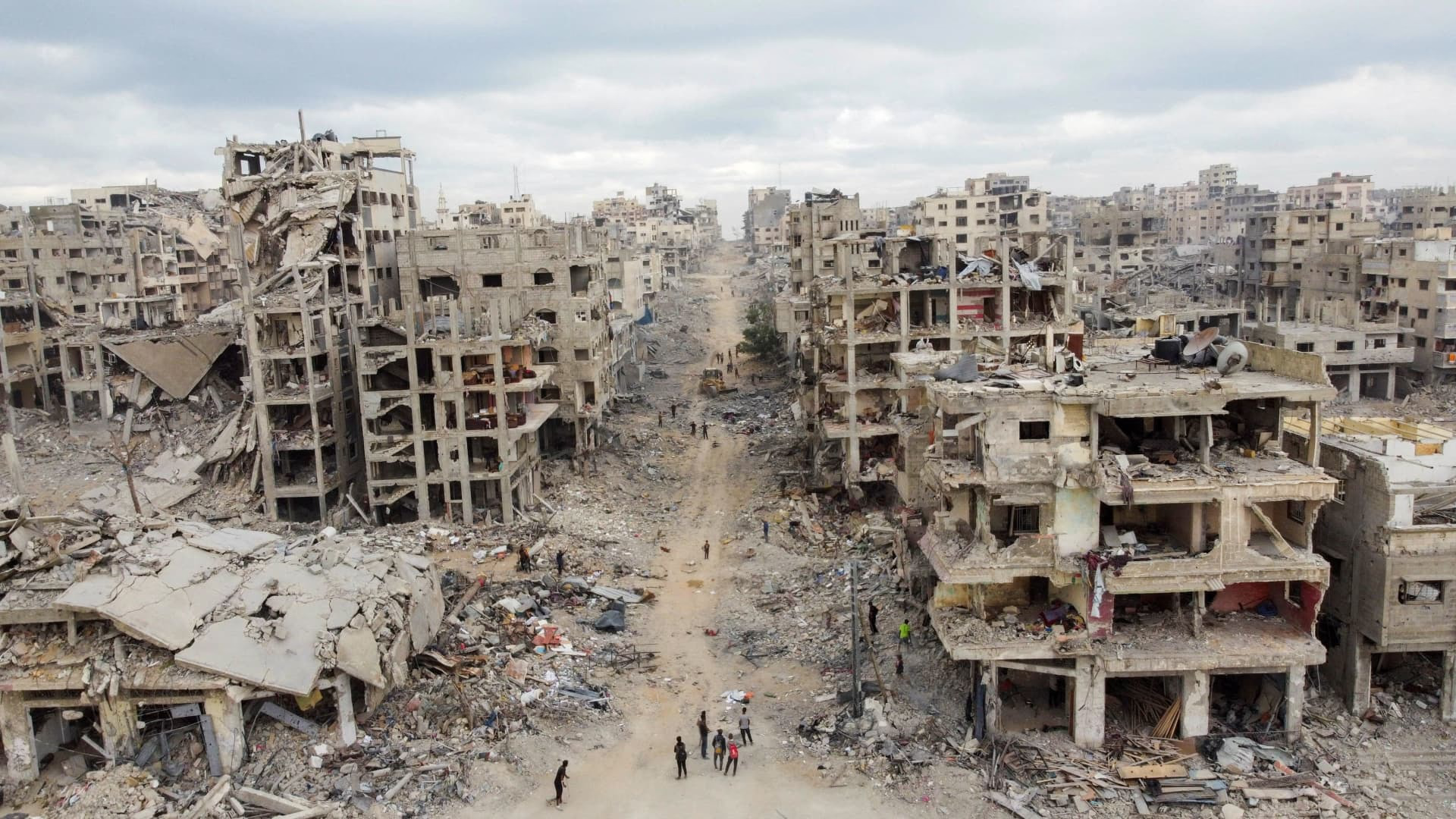
The U.N. humanitarian chief described much of Gaza as a "wasteland" and outlined a two-month plan to restore basic services and clear rubble. Preparations are also being made for President Trump's visit, during which he is expected to meet with hostage families and address Israel's parliament. He is also scheduled to attend a "peace summit" in Egypt with regional and international leaders.
Key unresolved issues include the governance of Gaza and the post-war fate of Hamas. Israel's Defense Minister has instructed the military to prepare for the destruction of Hamas-built tunnels under Gaza.
Gaza residents have begun returning to areas vacated by Israeli forces, with many finding their homes destroyed. First responders have been searching previously inaccessible areas for bodies, with hundreds recovered in recent days.
The conflict began with an attack by Hamas militants on October 7, 2023, resulting in approximately 1,200 deaths and the taking of 250 hostages. Israel's subsequent offensive in Gaza has led to a significant loss of life, according to Gaza's Health Ministry.
Separately, participants in the Global Sumud Flotilla, a civilian international coalition attempting to establish a humanitarian corridor to Gaza, reported being intercepted by Israeli forces approximately 150 nautical miles from the coast. The flotilla, comprising 51 vessels, was reportedly surrounded by Israeli ships, and participants described an aggressive boarding process. Several individuals, including a Mexican and Colombian national, were detained and taken to Ashdod port, where they reported experiencing violence and humiliation by Israeli police and security forces. Among those present was Itamar Ben-Gvir, Israel's National Security Minister, whose interactions with the detainees were described as a political spectacle. The detainees, refusing to sign documents admitting to illegal entry, were subsequently transferred to Ktzi'ot prison in the Negev desert. Following international pressure and diplomatic intervention, some detainees, including the reporter of this account, were processed for deportation to Jordan.