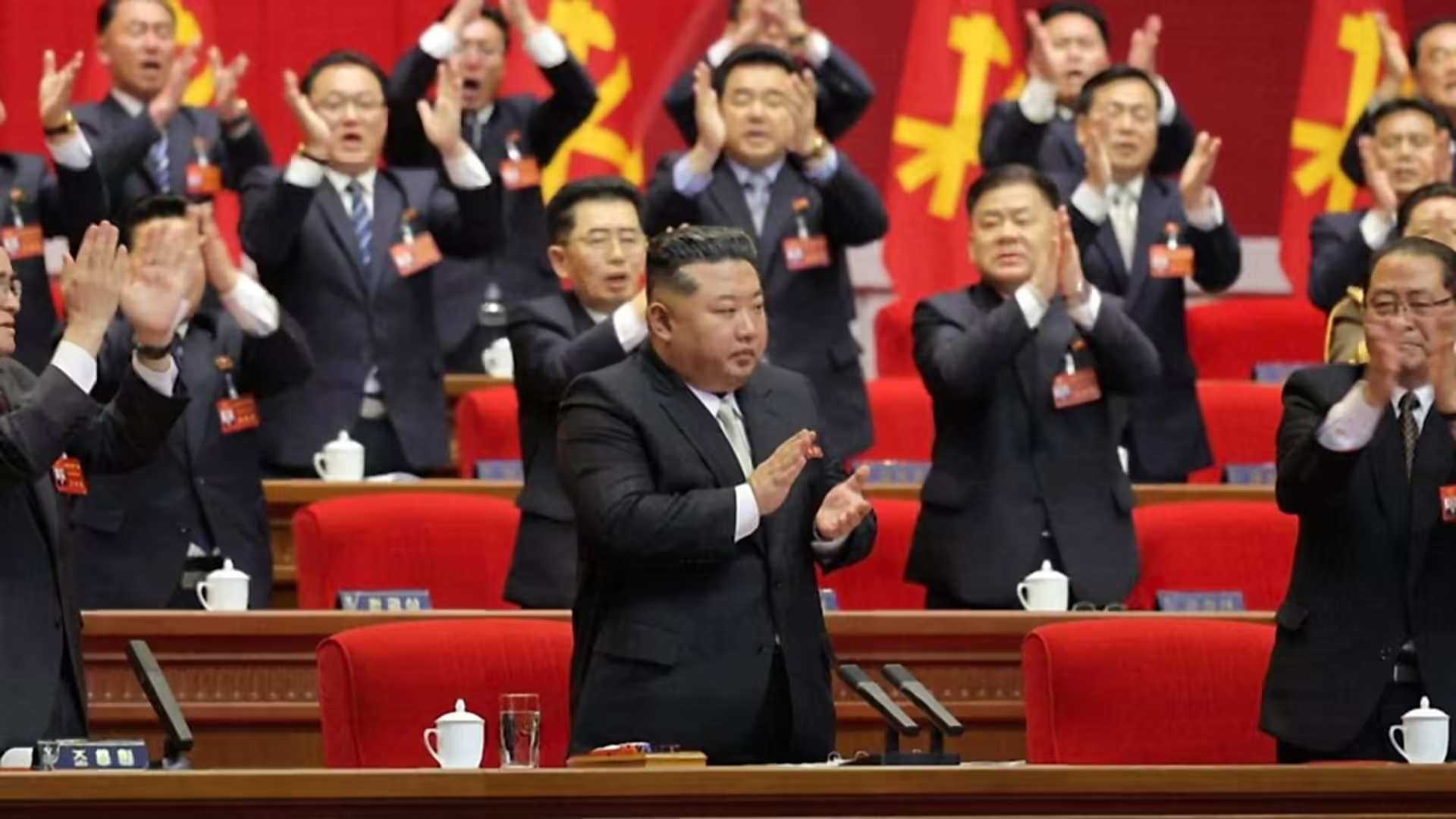
Kim Jong-un declares North Korea's nuclear status "irreversible"
North Korea's leader reaffirmed the country's nuclear arsenal as permanent while labeling South Korea the "most hostile" state.
10:42 AM
North Korea reaffirmed its status as a nuclear-armed state on Tuesday, with leader Kim Jong-un declaring the country will never abandon its atomic arsenal.
Speaking before the Supreme People's Assembly in Pyongyang after his reelection as head of the State Affairs Commission, Kim stated that North Korea will continue strengthening its nuclear capability on an "irreversible" path while intensifying its struggle against hostile forces.
"We will continue to consolidate firmly our status as a State with nuclear weapons as an irreversible path, while intensifying aggressively our struggle against hostile forces," Kim said, according to state media accounts of the address.
In his wide-ranging speech covering defense, economic, and diplomatic matters, Kim characterized South Korea as the most hostile state and pledged to respond without mercy to any violation of North Korea's sovereignty. He also accused the United States of practicing "state terrorism" and aggression on a global scale, with implicit reference to recent international conflicts.
Despite international sanctions and diplomatic isolation, North Korea is considered a consolidated nuclear power today, possessing dozens of warheads and the capacity to produce many more. The regime has also invested in more advanced launch systems, including ballistic missiles.
Kim's remarks signal a further hardening of relations on the Korean peninsula. In his address, the leader—reelected as general secretary at the ninth congress of the Workers' Party—positioned Pyongyang as ready to strengthen its role in a front opposed to Washington amid growing anti-American tensions. However, Kim avoided direct attacks on U.S. President Donald Trump, leaving what observers described as a diplomatic opening by suggesting that the choice between confrontation or peaceful coexistence depends on others' decisions.