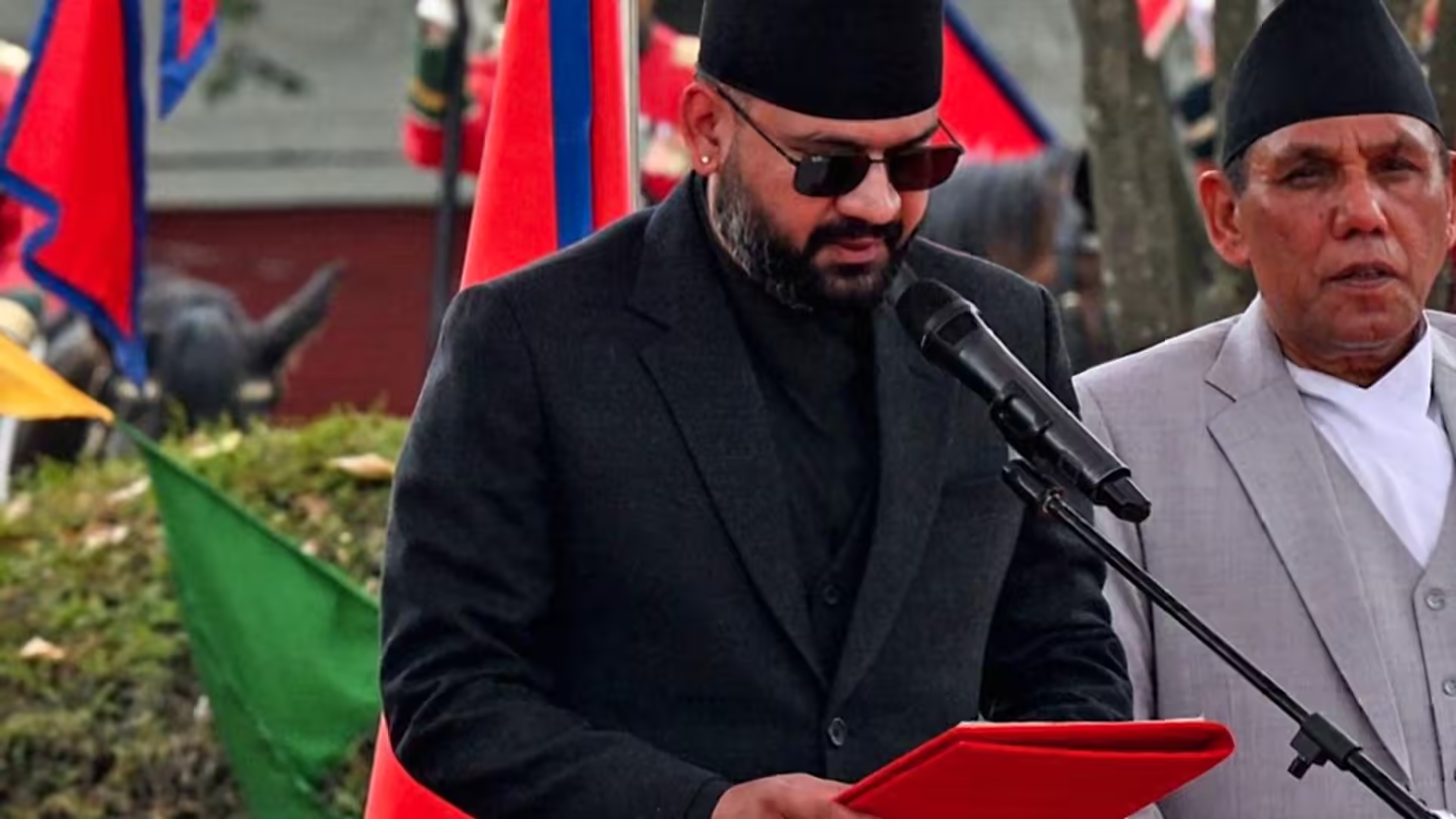
Nepal's ex-rapper Balendra Shah sworn in as prime minister
The 35-year-old, Nepal's youngest PM in decades, took office Friday after his party won a landslide election victory in March.
11:54 AM
Balendra Shah, a 35-year-old rapper-turned-politician, was sworn in as Nepal's prime minister on Friday at 12:34 p.m. local time. The ceremony was attended by Hindu priests and Buddhist monks, with President Ram Chandra Poudel administering the oath.
Shah, popularly known as Balen, is the youngest person to serve as prime minister of the Himalayan nation in decades and the first from the Madhesi community, an Indigenous group with strong cultural and linguistic ties to India. During the ceremony, he pledged loyalty to the constitution while dressed in black and wearing his trademark dark sunglasses.
The swearing-in time of 12:34 p.m. was selected for its numerical pattern, deemed auspicious by Hindu priests. With an 80% Hindu population, astrology and numerology are deeply embedded in Nepal's culture.
Shah's ascent to power follows a landslide victory for his Rastriya Swatantra Party (RSP) in elections held on March 5, 2026. The party, barely four years old, swept the vote after a Gen Z-led uprising ousted then-prime minister KP Sharma Oli months earlier. Shah's only prior political experience was serving as mayor of Kathmandu for three years.
His campaign centered on promises to create jobs and restore political stability. His messaging resonated with voters frustrated by corruption, nepotism, and elite rule. Before taking office, Shah released a song titled "Undivided Nepali, this time history is being made," which garnered more than two million views within hours. The track reflected his roots in Nepal's underground rap scene, where he used music to address corruption and social problems.
Nepal had experienced significant political instability in the 18 years following the end of monarchy rule, with 14 prime ministers serving during that period. Leaders frequently changed office, with several taking power, being forced out, and then returning years later. The March 5 election appeared to mark a shift in this pattern, with voters granting Shah and the RSP a decisive mandate to lead the nation.