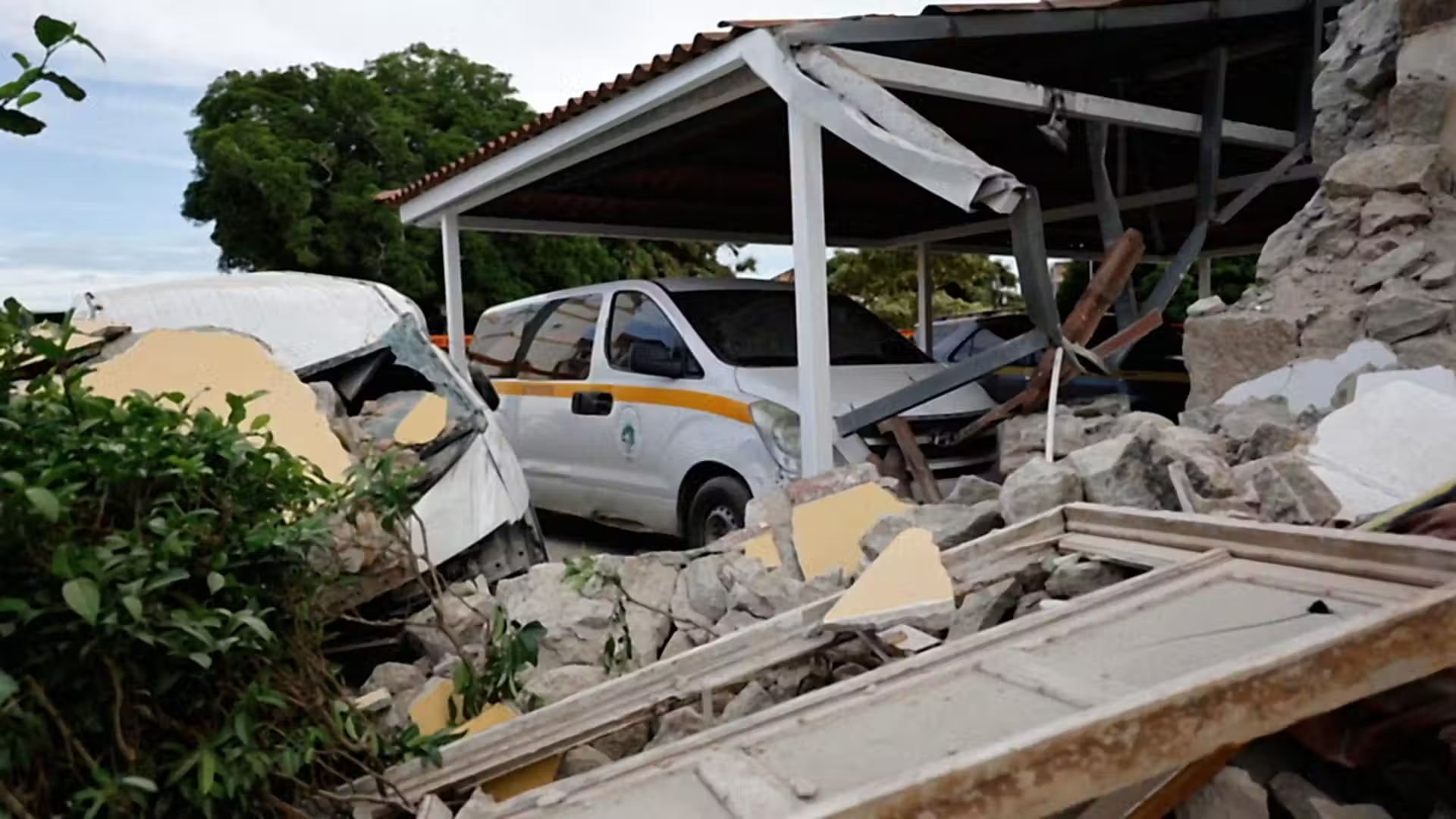
A magnitude 7.7 earthquake struck southern Panama on Friday, with the U.S. Geological Survey locating the epicenter approximately 7 miles southwest of Pitaloza Arriba at a depth of about 7 miles. The initial quake struck at 1:56 p.m. ET and was felt across Panama City and in San José, Costa Rica, shaking buildings more than 100 miles away from the epicenter.
A second powerful earthquake measuring 6.6 magnitude followed approximately two and a half hours later, with its epicenter about 8 miles west of Río Grande on Panama's Pacific coast at a depth of about 6 miles. The USGS initially measured the first earthquake at magnitude 8.0 before revising the estimate downward to 7.7. A 5.5 magnitude aftershock also occurred, with its epicenter approximately 50 miles east of the initial earthquake. According to reports, 45 aftershocks were recorded, with some exceeding magnitude 5.
Structural damage was widespread across the country. Verified footage showed several damaged buildings in Penonome, approximately 70 miles from the epicenter, including a church with a partially collapsed steeple and another building with a crumbled facade. In the resort town of Playa Venao, a multi-story building collapsed and crushed several cars beneath it. Various homes, roads, hotels, government buildings, businesses, and churches sustained structural damage, according to the civil protection system. The Centennial Bridge spanning the Panama Canal was observed with suspension cables shaking as vehicles drove through.
Panamanian President José Raúl Mulino stated that authorities had not documented anyone killed or injured as of Friday evening, though he cautioned that the situation could change in the coming hours or days. Mulino acknowledged that the country was experiencing a "disaster" following the strong seismic movements and requested that citizens remain calm, urging them not to spread messages that could generate alarm or disorder. He ordered his cabinet and emergency agencies to report on the consequences of the earthquake.
The U.S. Pacific Tsunami Warning Center initially warned of a potential tsunami threat following the initial earthquake. The U.S. Geological Survey stated that some casualties were possible and extensive damage was probable. However, U.S. authorities later excluded the risk of a significant tsunami. Several Central American and South American countries issued tsunami alerts for their coastal areas.
The Panama Canal Authority announced that operations were continuing normally following the earthquake, with emergency protocols activated and technical teams inspecting facilities for possible damage. Officials stated their priority was ensuring the safety of workers, vessels, crews, and nearby communities as assessments continued. The canal, through which approximately 5 percent of international maritime commerce passes, maintained normal operations.
Panama's Ministry of Education ordered schools closed following the earthquake. Residents evacuated buildings and gathered in streets as the tremors were felt throughout the country.