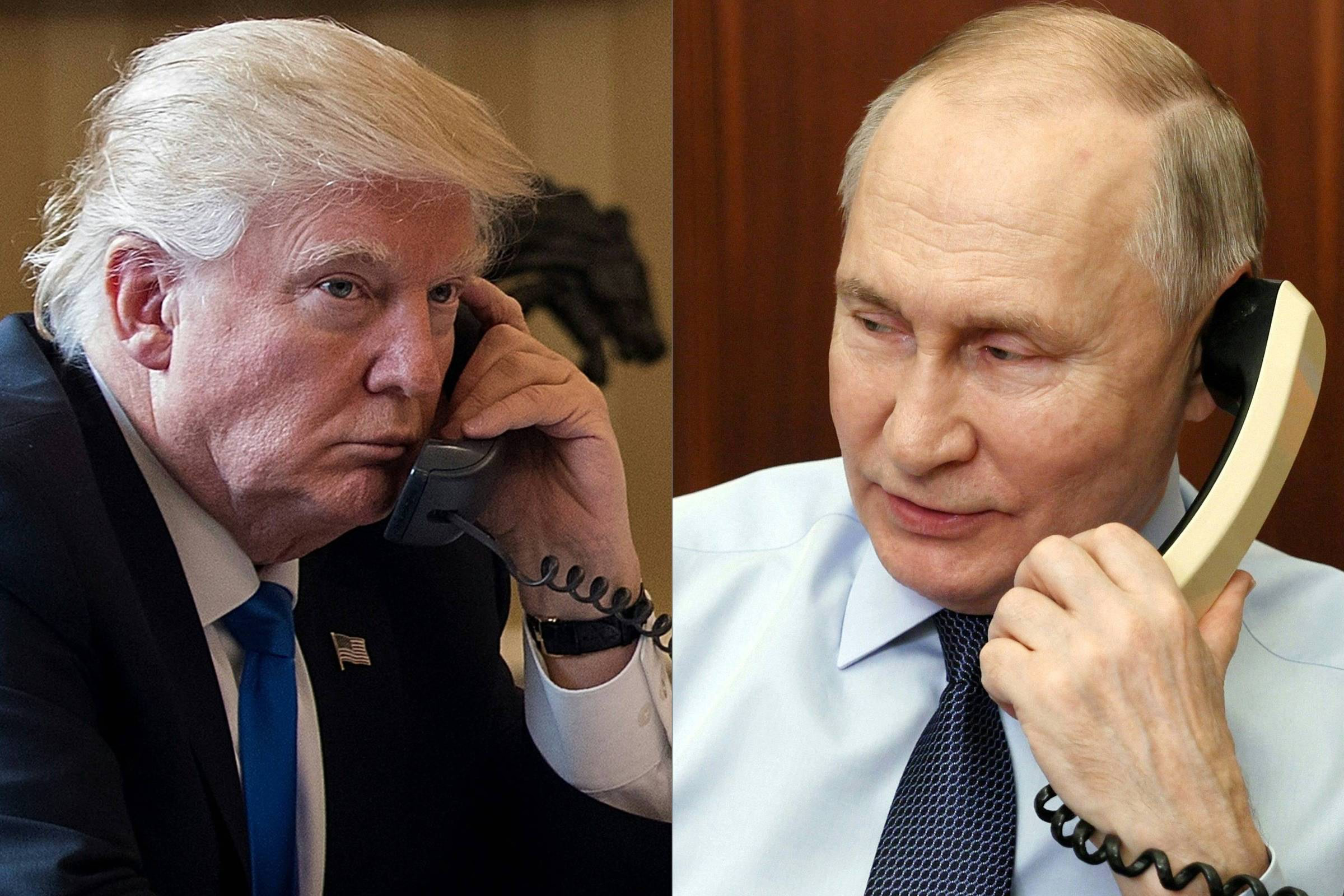
President Donald Trump and Russian President Vladimir Putin held a nearly two-hour phone call on Thursday, which the U.S. leader described as “very productive.” The conversation, which occurred just hours before Ukrainian President Volodymyr Zelenskyy was due to visit the White House, paved the way for a proposed summit between the two leaders in Budapest soon.
Trump announced the positive outcome of the call on social media, emphasizing his renewed focus on ending the conflict in Eastern Europe. The call took place one day before Zelenskyy’s crucial meeting in Washington, where he is expected to request long-range military assistance, including the BMG-109 Tomahawk cruise missile systems.
Zelenskyy’s persistent plea for Tomahawks has become a central point of leverage in the ongoing diplomatic efforts. If supplied, the missiles would put Moscow and other major Russian cities within striking range of Ukrainian forces.
Trump has reportedly used the possibility of supplying these offensive weapons to pressure Putin into returning to the negotiating table with Kyiv. Putin, however, has maintained that transferring Tomahawks would be a “red line” and would negate the recent diplomatic rapprochement promoted by the American administration since January, suggesting the weapons are highly feared by the Kremlin.
Despite previously expressing disappointment with his Russian counterpart, Trump stated last week that he had given Zelenskyy an ultimatum: either Putin agrees to serious peace talks, or Kyiv would receive the Tomahawks. Asked about the conflict, the U.S. president said Tuesday, “I don’t know why he continues with this war.”
Shifting Diplomatic Winds
The phone call with Putin follows intense efforts by the Trump administration to secure peace in major conflicts globally, including the recent brokering of a tentative ceasefire between Israel and Hamas in Gaza.
Ending the war in Ukraine has become a cornerstone of the president’s agenda. He has expressed frustration over Putin's continued resistance to direct talks with Zelenskyy, leading to a gradual shift in tone toward Russia, which he has called the “aggressor.” Defense Secretary Pete Hegseth warned on Wednesday that Washington "will impose costs on Russia for its continued aggression" unless the war concludes.
Relations between Trump and Zelenskyy, initially tumultuous following an Oval Office encounter earlier in the year, have seen a noticeable thawing. The U.S. President recently called Zelenskyy a “brave man,” expressing respect for the fight Ukraine is putting up.
Ukrainian officials have sought to capitalize on this improved relationship. On Monday, Zelenskyy congratulated Trump on the Middle East peace plan, stating that the same global determination could bring peace to Ukraine.
Economic Pressure Campaign
Parallel to the arms negotiations, the White House continues to push economic measures aimed at weakening Moscow’s ability to fund the war. Trump said Wednesday that Indian Prime Minister Narendra Modi had committed to stopping the purchase of Russian oil “within a short time,” adding that he now needs “to get China to do the same thing.” While India has not confirmed such a commitment, reports suggest some Indian refineries are preparing to gradually reduce imports of Russian crude.
The administration is also seriously considering draft legislation in the U.S. Senate that would introduce hefty tariffs on countries—including major customers like China and Turkey—buying Russian energy exports. White House officials have been deeply engaged in reviewing the bill and making technical edits, a sign that the president may be serious about enacting the law.
A Kremlin official responded to such pressure by stating that preventing countries from buying Russian oil would violate “the principles of free trade.”
Meanwhile, the conflict remains deadly. According to Zelenskyy, Russia launched more than 300 drones and 37 missiles against critical infrastructure across Ukraine during the night leading up to Thursday. Kyiv has simultaneously intensified its own attacks on Russian territory, including a recent strike on an oil refinery in the Saratov region.