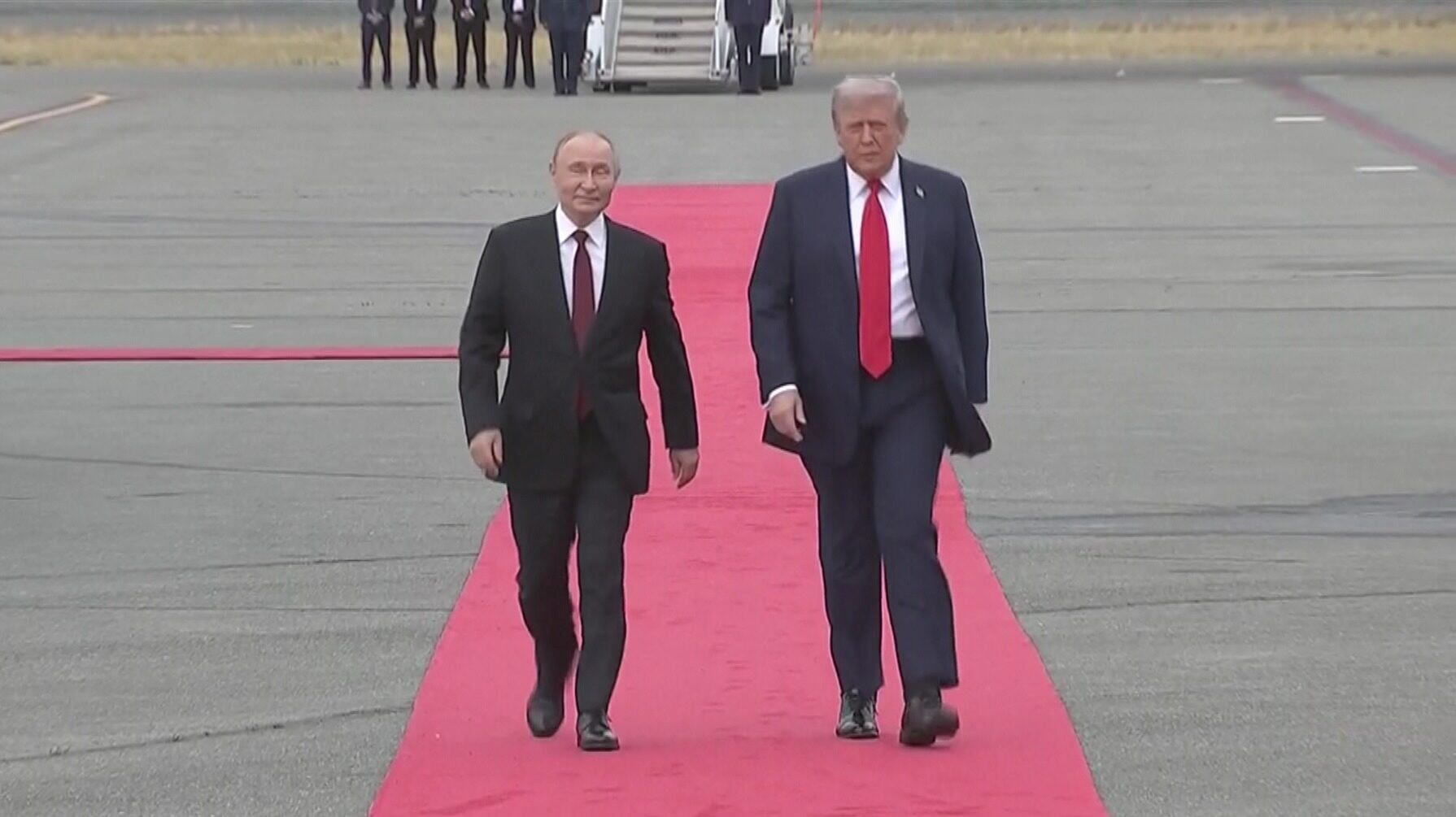
A planned summit between US President Donald Trump and Russian President Vladimir Putin to discuss the war in Ukraine has been postponed, with a White House official confirming there are “no plans” for a meeting in the immediate future.
President Trump had announced last Thursday that he expected to meet with the Russian leader in Budapest, Hungary, within two weeks. However, the postponement comes amid deep disagreements over the basis for a potential peace agreement, particularly regarding the status of occupied Ukrainian territory.
The White House official also noted that a planned preparatory meeting between U.S. Secretary of State Marco Rubio and Russian Foreign Minister Sergey Lavrov was deemed “not necessary” following a “productive call” between the two envoys on Monday. The State Department confirmed that the conversation focused on “advancing a durable resolution” in line with President Trump’s vision.
However, the Kremlin indicated that preparations for such a high-level summit require serious effort. Kremlin spokesperson Dmitry Peskov stated that there was “not an understanding” on the timeline, noting that the meeting could not be hurried.
Beyond diplomatic hurdles, the planned location in Hungary presented significant logistical challenges. Poland, a key NATO ally strongly opposed to Russian aggression, declared that it would not grant overflight rights to Putin’s presidential plane, threatening to force the aircraft to land and arrest the Russian president based on outstanding war crimes charges issued by the International Criminal Court. This complicates travel to landlocked Hungary.
Disagreement Over Ceasefire Lines
The shelving of the summit follows tense discussions in Washington and Moscow over how to initiate a ceasefire.
President Trump recently advocated for an immediate cessation of hostilities, suggesting that the war should be “cut the way it is” along the current battle lines, allowing Russia to maintain control over the territory it currently occupies, primarily in the eastern Donbas region. Trump’s push for a ceasefire along the line of contact was echoed by European leaders, including Germany, France, and the UK, who issued a joint statement supporting a truce and using the current front line as the “starting point for negotiations.”
However, Russia quickly rejected the notion of simply freezing the conflict. Foreign Minister Lavrov stated that Moscow was interested only in “long-term, sustainable peace” and required addressing the “root causes of the conflict.” Officials interpret this as Kremlin shorthand for maximalist demands, including the formal recognition of Russian sovereignty over occupied territories and the demilitarization of Ukraine.
Conflicting reports emerged regarding Trump’s recent discussions with Ukrainian President Volodymyr Zelensky at the White House last Friday. Anonymous Ukrainian sources described the meeting as “tense and difficult,” alleging that President Trump pressured Zelensky to withdraw troops from territories still under Ukrainian control—a key demand of Russia.
Separately, European states and Ukraine are reportedly collaborating on an alternative 12-point peace plan, according to sources familiar with the matter. The proposal aims to establish a ceasefire along the current front lines, secure the return of deported Ukrainian children, arrange prisoner exchanges, and provide Ukraine with security guarantees and reconstruction funds, as well as a fast track to European Union membership. Crucially, the plan insists that neither Europe nor Kyiv would legally recognize any occupied territory as belonging to Russia.
Reports suggest that the issue of long-range weaponry factored into the diplomatic maneuvering. Trump reportedly refused Zelensky’s request for Tomahawk long-range missiles during their meeting. Zelensky has previously suggested that the possibility of Ukraine receiving such weapons was the only topic that could compel Moscow to engage in diplomatic discussions.