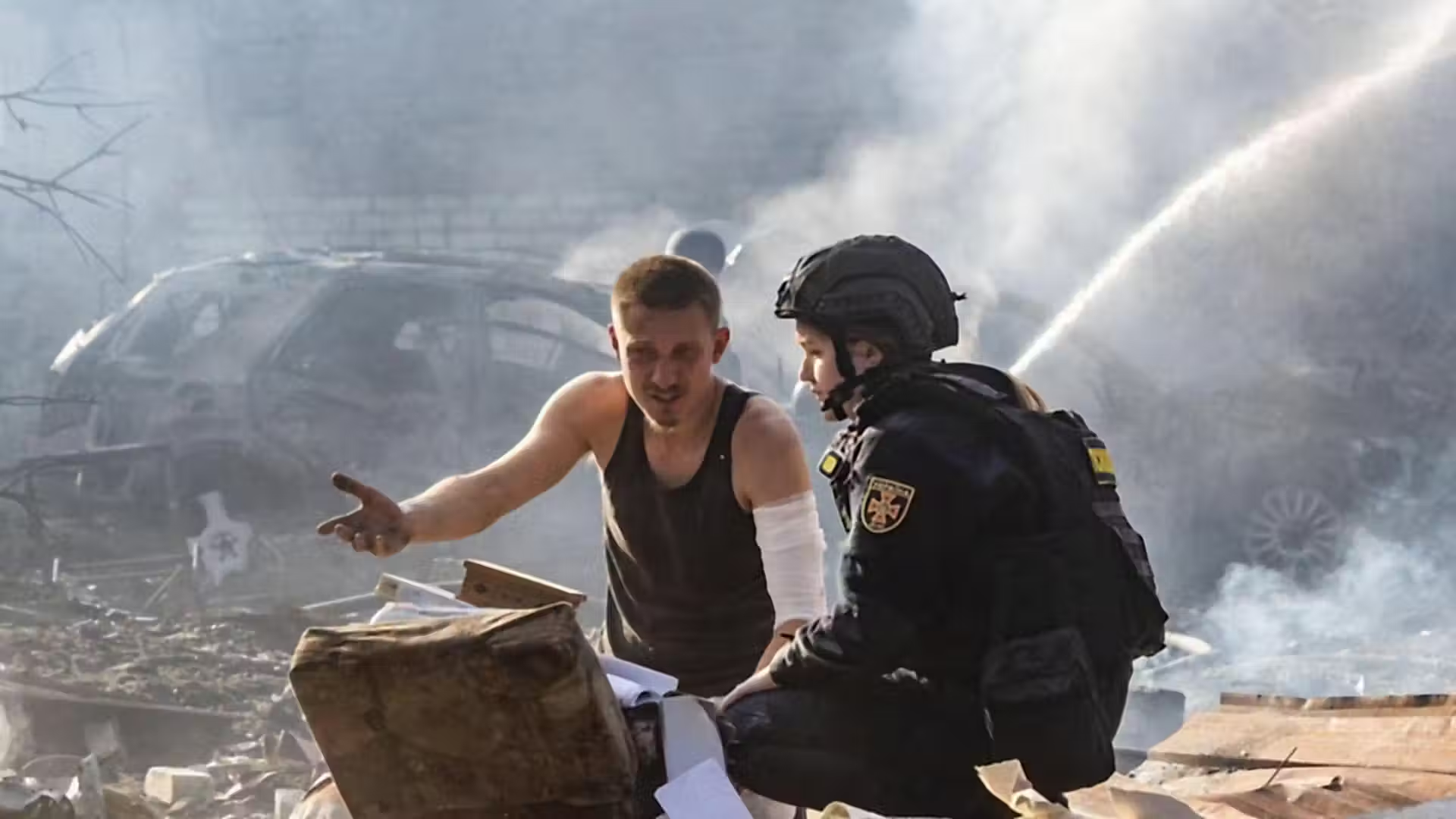
President Donald Trump announced an agreement between Ukraine and Russia to halt attacks on each other's energy infrastructure over the weekend, coupled with a separate arrangement to increase Russian diesel supplies to global markets. The initiative immediately faced a critical test when Ukrainian President Volodymyr Zelenskyy reported that Russia had violated the ceasefire within hours of its announcement.
Speaking at the Warsaw Security Forum in Poland on Monday, Zelenskyy said Ukraine had been "horribly surprised" by Russian strikes on a power plant in Kharkiv, a gas production facility, and a civilian gas station—all occurring shortly after Trump's declaration. According to Zelenskyy, Russia struck six Ukrainian energy facilities on Monday alone. He attributed the continued attacks to Moscow's pursuit of higher revenues for its war effort and stated it was "increasingly clear" that Russia was unwilling to accept the U.S.-proposed ceasefire.
Zelenskyy said Ukraine learned of the ceasefire agreement through media reports rather than direct communication and is awaiting details of the conditions agreed between American and Russian officials. He expressed conditional support for Trump's proposal, saying Ukraine "immediately supported this idea," but called on Washington to intervene to ensure Moscow complies. "This ceasefire in the energy sector can succeed and can become a major step toward ending the war if the Americans really intervene now and ensure the Russians respect it," he said.
The Ukrainian president warned of retaliation if Russia continues attacks. "This winter, if Russia does not agree to an energy truce, we will give a response," Zelenskyy said, stating that Russia must stop strikes on Ukrainian energy infrastructure if it wants Ukraine to halt long-range attacks against Russian refineries and oil exports. He noted that during the previous week alone, Russia carried out more than 200 attacks against Ukrainian energy production and distribution facilities, plus 16 additional strikes on gas and oil installations.
Russia has not formally confirmed agreement to the energy truce. Kremlin spokesman Dmitry Peskov told reporters that communications are ongoing, saying "Once we have something to say on this matter, we will make sure to inform you." Russian Foreign Minister Sergei Lavrov stated that Russia does not intend to grant Ukraine a pause on the battlefield and said he does not believe Zelenskyy deserves a truce. The Kremlin responded separately that it seeks a lasting peace.
Trump's diesel agreement proposed that Russia supply more than 300,000 metric tonnes of diesel—equivalent to 2.25 million barrels—to U.S. and global markets immediately, with an additional 500,000 tonnes in November and 1 million tonnes thereafter. The announcement prompted oil markets to react sharply, with Brent crude futures falling $1.54 to $103.18 a barrel and U.S. West Texas Intermediate crude declining $1.54 to $90.31 a barrel.
Trump defended the diesel agreement on Monday, citing European energy purchases from Russia. In a post on Truth Social, he wrote: "The European Union paid Russia $250 billion for energy, and the Fake News Media doesn't want to get near that story. I made the right choice for the American People — ALWAYS, AMERICA FIRST!" U.S. Treasury Secretary Scott Bessent characterized European criticism as hypocritical, stating that European countries have paid Russia more money since the beginning of the conflict than they have sent to Ukraine.
The European Union responded by adopting nearly 1,600 new sanctions targeting Russia's military-industrial complex, according to EU High Representative Kaja Kallas. She described it as the largest expansion of the EU's sanctions list since Russia began the war, with more than half of the new entries targeting ballistic missile production chains. Kallas said the measures aim to make it significantly more difficult, slower, and costlier for Russia to produce weapons used against Ukrainians.
Market participants expressed skepticism about the ceasefire's durability, with questions remaining about the stability of the agreement between the two nations, particularly given Zelenskyy's immediate claims of Russian violations.