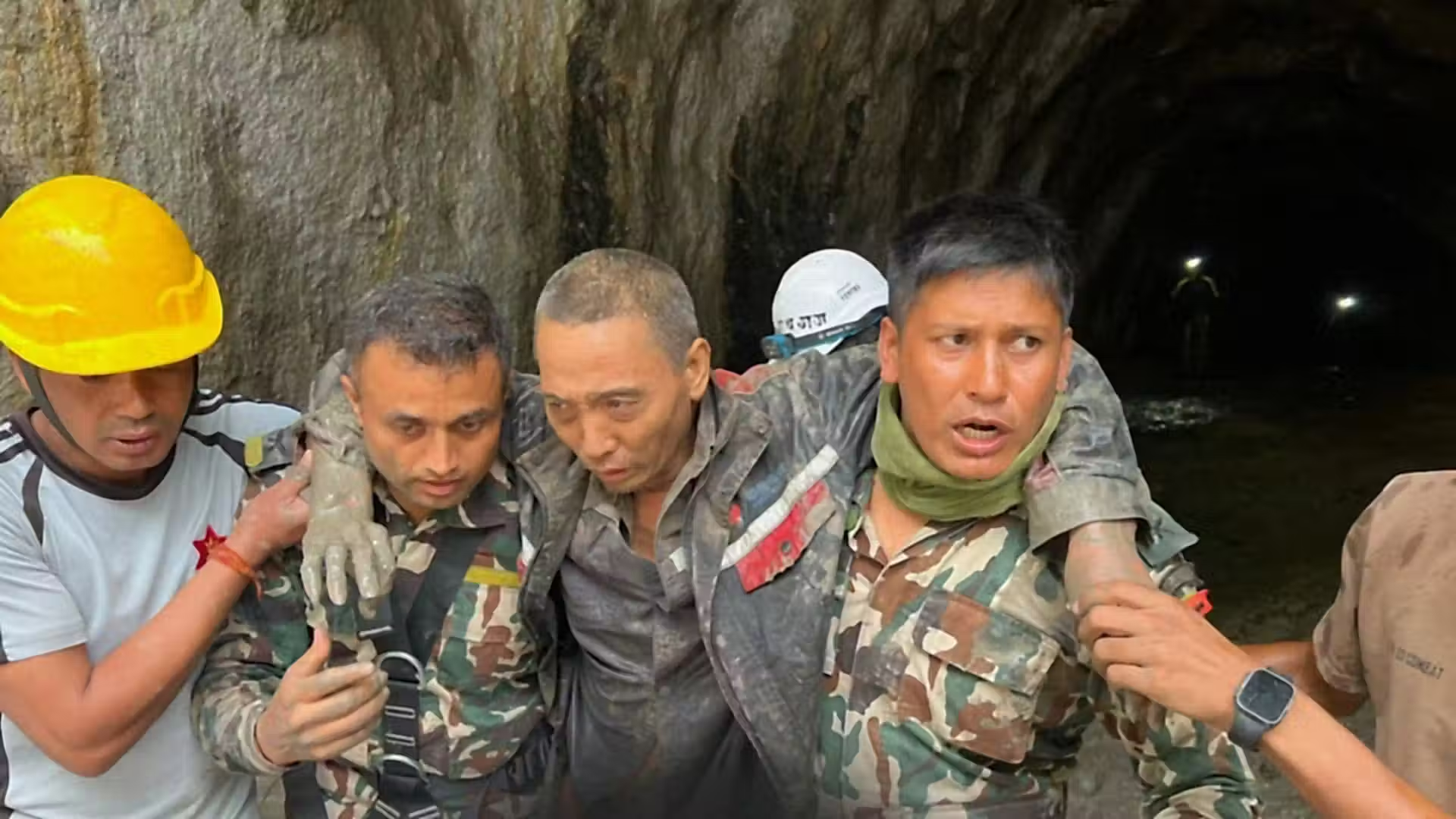
Rescuers in Nepal pulled two survivors from separate locations Saturday, 10 days after catastrophic floods swept through the Himalayan nation, offering a rare glimmer of hope amid ongoing search operations for thousands of missing people.
A Chinese national identified as Lu Haitao was extracted alive from a 225-meter tunnel at the Upper Trishuli-1 hydropower project in Rasuwa district. A joint rescue team comprising Nepalese military personnel and South Korean disaster experts conducted the operation. Haitao was found conscious inside Audit Tunnel 4 of the flood-affected facility and was evacuated by helicopter for medical assessment.
In a separate operation, a 60-year-old woman named Chandika Shrestha was rescued from the upper floor of a four-story house buried under debris in Betrawati, Nuwakot district. She was found unconscious and airlifted by helicopter to Kathmandu for treatment. According to local officials, Shrestha's family had begun ceremonial last rites and funeral preparations, believing she had died in the disaster.
Haitao's rescue marked the third worker pulled alive from the Trishuli hydropower complex. Two Nepalese workers were rescued from a tunnel at the Trishuli 3A hydropower plant on Friday.
The flash floods struck August 26, triggered by a massive ice and mud avalanche in the Himalayan region near the Nepal-China border. The disaster destroyed entire riverside communities and caused widespread destruction across infrastructure and settlements.
Authorities said at least 1,362 people have been confirmed dead across Nepal and China. More than 5,000 people remain unaccounted for. About 900 workers are missing from 12 hydropower projects across Nepal, with authorities estimating roughly 500 are believed trapped in various tunnels.
Rescue teams have intensified focus on hydropower facilities throughout the region. International specialists from India, China, and South Korea are supporting Nepalese forces in search and rescue operations. The government declared September 7 a national day of mourning.
Preliminary damage assessments across infrastructure, settlements, and energy sectors are estimated at approximately 1.8 billion pounds. Aid agencies have warned that tens of thousands of children urgently need clean water and emergency support, with severe infrastructure damage complicating relief distribution efforts.