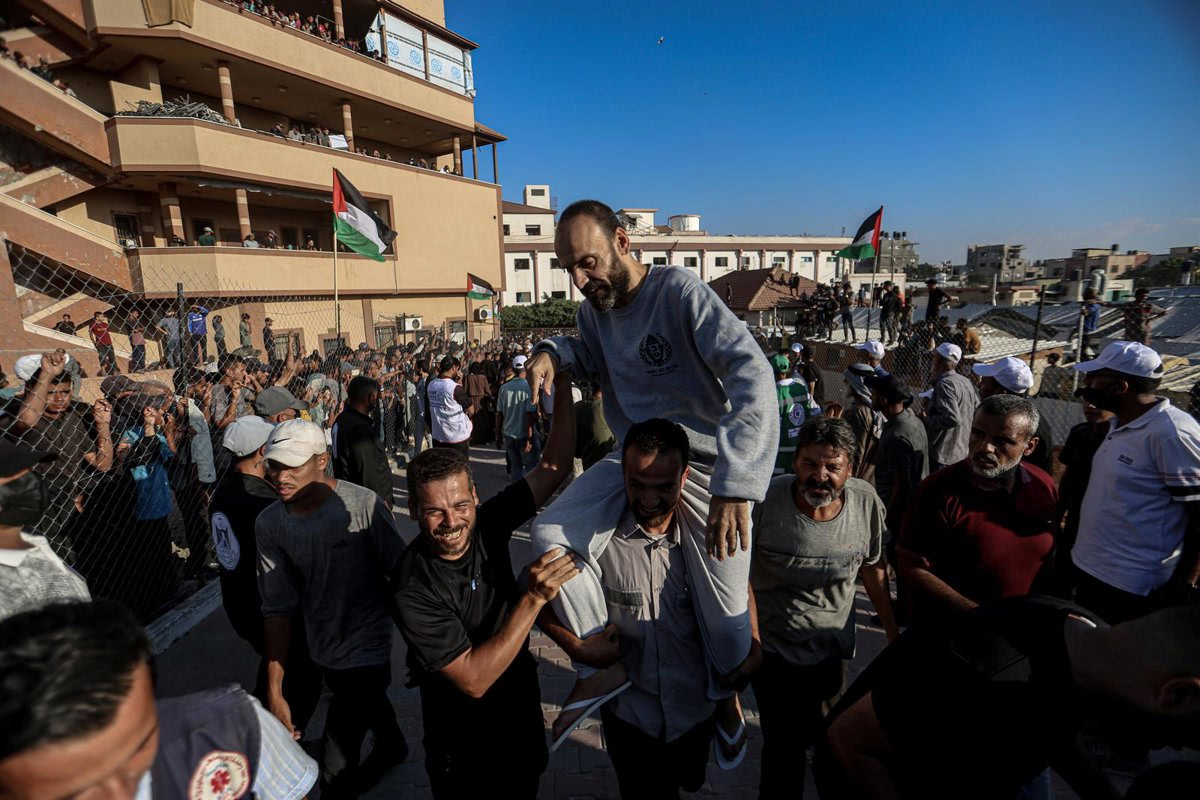
United Nations officials have voiced grave concerns over continued violations of civilian rights in the Gaza Strip, even as a ceasefire agreement between Israel and Hamas largely holds. The UN Office for Human Rights warned that both Israeli military actions and retaliatory measures by Hamas against rival factions could constitute war crimes.
According to a UN report, clashes involving Hamas and other groups have escalated, with instances of "extrajudicial executions" cited. While acknowledging the "dismantled" public administration and security structures in Gaza due to two years of intense Israeli bombardments, the UN stressed that any efforts to restore order must adhere strictly to international human rights standards. The organization has called on Hamas to prevent and repress abuses by its members.
Furthermore, the UN has documented at least 15 Palestinian deaths in areas near Israeli military presence. Israel maintains control over more than half of the Gaza Strip, and the proposed peace plan from the U.S. does not specify a timeline for its withdrawal.
Israeli forces are reminded of their obligation to apply principles of "distinction, proportionality, and precaution" when responding to potential threats. The UN emphasized that attacking civilians not engaged in hostilities is a war crime, regardless of the location or proximity to agreed-upon deployment lines.
Adding to the precarious situation, Israel has kept a crucial border crossing from Egypt to Gaza closed and has halved the amount of humanitarian aid allowed to enter. This decision is reportedly a retaliation for delays in the handover of bodies of dead hostages by Hamas.
The exchange of hostages and detainees, along with the handover of bodies, is central to the U.S.-brokered ceasefire. An Israeli security official stated that the Rafah crossing, which Israel seized last year, did not open as reported by some media outlets.
Israel had pledged to allow 600 truckloads of humanitarian aid daily, a figure aid organizations deem the minimum necessary to prevent famine. However, Israel has informed the UN that only 300 aid trucks will be permitted per day, with continued restrictions on fuel and gas shipments.
The Israeli military stated that these restrictions are a consequence of Hamas violating the agreement regarding the release of hostage bodies. The UN's humanitarian chief urged both sides to adhere to the deal, emphasizing Hamas's obligation to return all deceased hostages urgently and Israel's to allow a massive influx of humanitarian aid.
Hamas has so far handed over eight bodies to the International Committee of the Red Cross for transfer to Israel, citing difficulties in locating all burial sites due to intense airstrikes. Israeli authorities are working to identify the remains received.
Meanwhile, a worker from Doctors Without Borders (MSF) in Gaza described the enclave as a "mountain of rubble," stating that "normal life is still very far away." Nadia Eid, who coordinates medical aid for MSF, witnessed the "level of destruction" and lamented that "lives we once enjoyed will not return, at least not in the near future." She highlighted that thousands continue to live in "inhumane conditions" in tents with limited access to essentials and a "practically collapsed" healthcare system.
Eid also spoke of the pervasive "uncertainty" and a "deep fear" of the war resuming, calling the ceasefire a step towards a "true end" of the conflict.