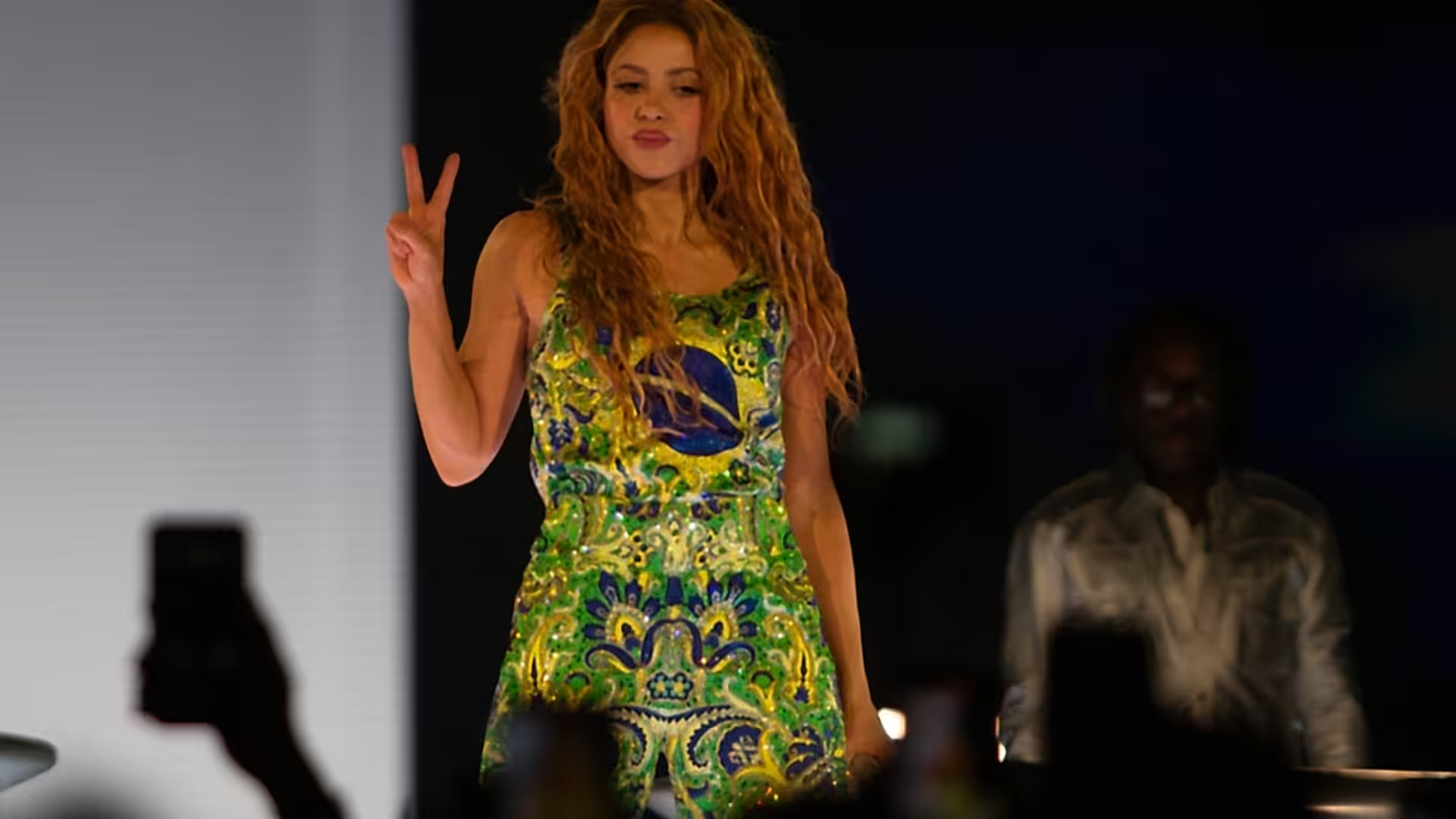
Shakira spoke publicly for the first time about the personal difficulties she faced hours before performing at Copacabana beach in Rio de Janeiro in early May, describing how she managed to deliver what she called one of the most iconic moments of her career.
In an interview with Colombian broadcaster Noticias Caracol aired Friday, the singer disclosed that she received troubling news about her father's health on the day of the show. "It was a little difficult to do a show under those conditions, because I knew my father was a little sick that day," Shakira said. "But I managed to do the show, and I managed it because of the public that was there present, giving me all their strength."
The artist emphasized the role of the audience in sustaining her performance. "It was one of the most iconic moments of my career," she added, reflecting on how the crowd's energy helped her overcome the personal challenge she was facing.
Shakira has repeatedly described the Copacabana performance as one of the most memorable of her career, citing not only the record-breaking attendance but also the emotional support she received from the public during a difficult personal moment.
Security operations during the show were extensive. The Military Police reported that six people were arrested and three adolescents were apprehended during the event. Officers also confiscated 185 sharp or potentially dangerous objects at the event's access points.
The state police deployed more than 3,700 agents for the special policing operation, representing a 14 percent increase compared to the previous major show held on Rio's waterfront. Personnel were stationed on the beach, access roads, and public transportation stations. Security resources included facial recognition cameras, license plate readers on patrol vehicles, observation towers, all-terrain vehicles on the sand, motorcycles, and aerial monitoring via drones and helicopters.