The World Health Organization raised the public health risk assessment for the Ebola outbreak in the Democratic Republic of the Congo from "high" to "very high" on Friday, citing rapid spread of the disease across the country.
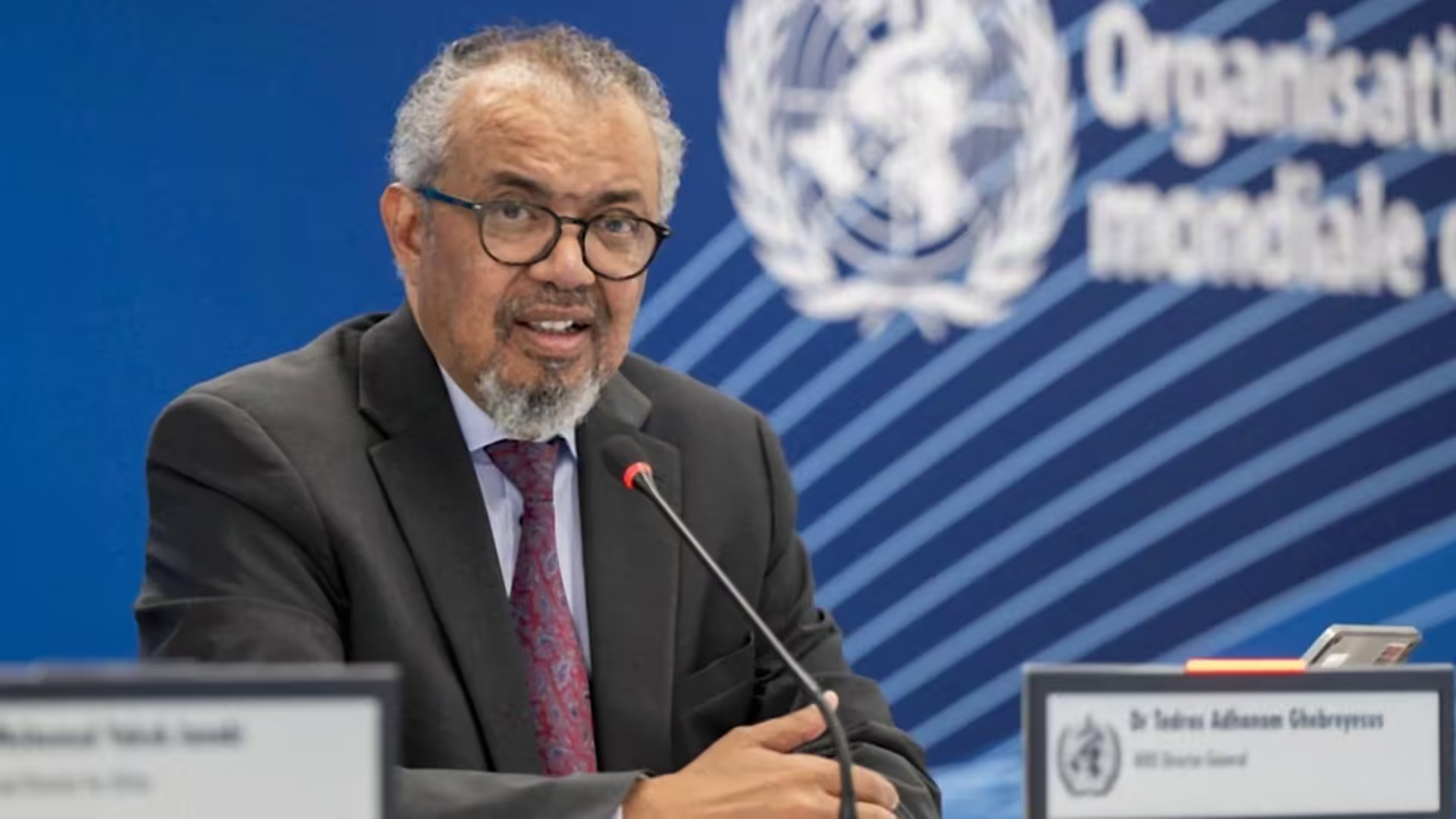
WHO Director-General Tedros Adhanom Ghebreyesus announced the upgraded risk level at the national level, while assessing the regional risk in Africa as "high" and the global risk as "low." He described the situation as "deeply worrisome."
The outbreak has grown substantially in the past week. As of Friday, authorities reported almost 750 suspected cases and 177 suspected deaths, compared with 246 cases and 65 deaths when the outbreak was first reported a week earlier. Among these, 82 cases and seven deaths have been confirmed through laboratory testing.
The strain involved is Bundibugyo Ebola, a rare species with no proven vaccine that kills approximately one-third of those infected. Ghebreyesus said the actual scale of the epidemic in the DRC is likely larger than currently known figures suggest.
Violence and insecurity in the affected regions are hampering response efforts, according to WHO officials. Surveillance activities and laboratory testing capacity are improving, but these obstacles continue to impede containment measures.
In Uganda, a neighboring country, the situation remains more contained. Authorities reported two confirmed cases and one death as of Friday, with officials characterizing the situation there as currently stable.
An American citizen working in the DRC tested positive for Ebola and was transferred to Germany for treatment, according to WHO reports. A second American citizen identified as a high-risk contact was transferred to the Czech Republic.
Scientists at Oxford University in the United Kingdom are developing a new vaccine based on the same technology used for the AstraZeneca Covid vaccine. The vaccine could be ready for clinical trials within two to three months, though there are no guarantees of effectiveness and additional time will be required for full development.
The WHO declared the outbreak an emergency of international concern on Sunday, though officials stated it does not currently meet the criteria for classification as a pandemic.