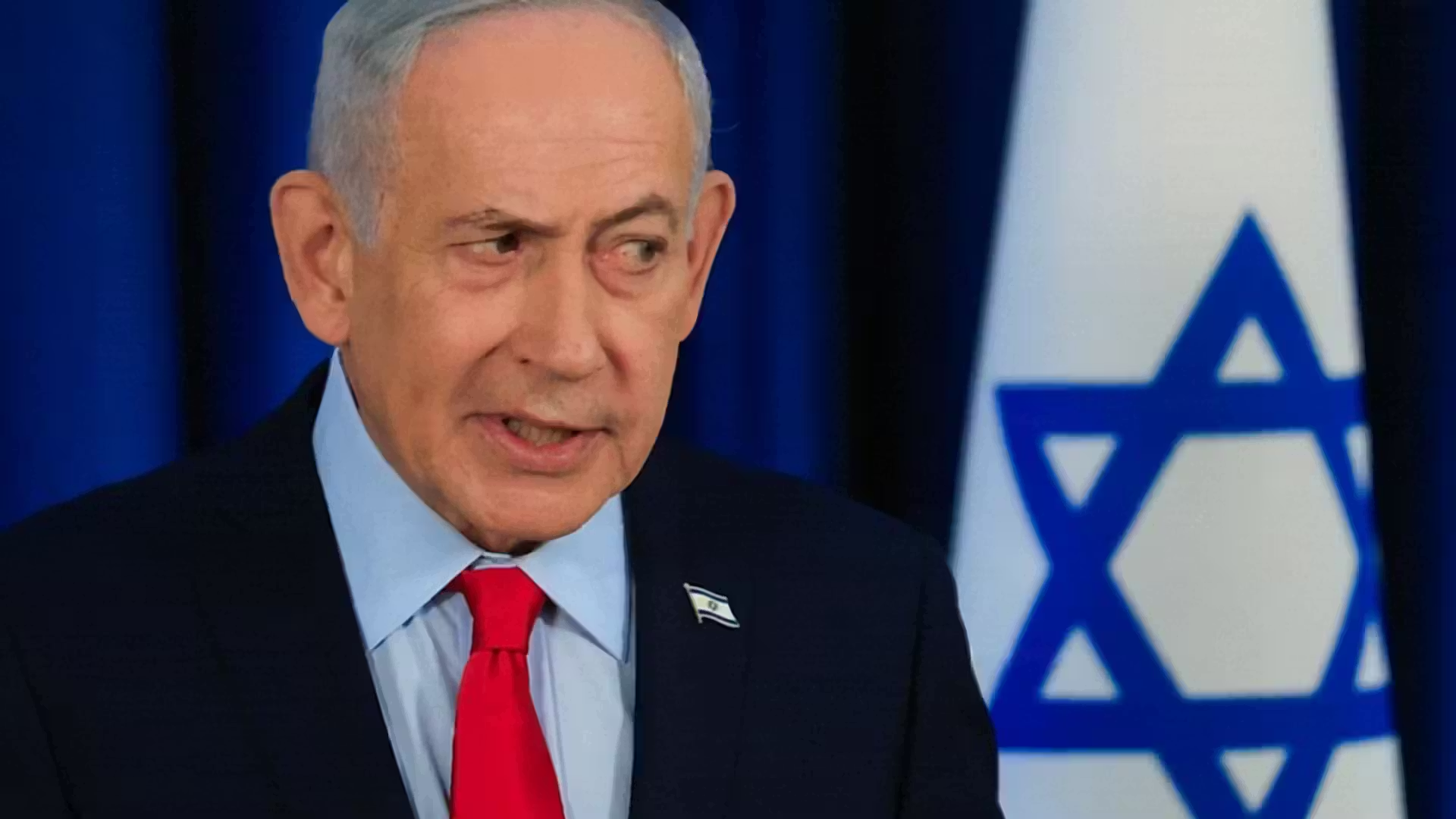
Israeli Prime Minister Benjamin Netanyahu said Sunday that the war with Iran remains unresolved, despite a fragile U.S. ceasefire between the two nations.
In an interview with CBS News chief Washington correspondent Major Garrett set to air on "60 Minutes," Netanyahu stated that highly enriched uranium must be removed from Iran and the country's enrichment facilities must be dismantled before the conflict can be considered concluded.
"There's still nuclear material, enriched uranium that has to be taken out of Iran," Netanyahu said. "There is still enrichment sites that have to be dismantled, there's still proxy forces that Iran supports, and ballistic missiles that they still want to produce."
Netanyahu acknowledged that some progress has been made. "Now, we've degraded a lot of it," he said, referring to Iran's nuclear capabilities, proxy forces in other countries, and missile-making capacity. "But all that is still there, and there's work to be done."
International monitors estimate that Iran currently possesses approximately 970 pounds of nearly bomb-grade uranium. When asked how the removal would be accomplished, Netanyahu declined to discuss military means but indicated that an agreement-based approach would be preferable.
"If there is an agreement and you enter and you take it out, why not? That is the best way," Netanyahu said. He noted that President Donald Trump has expressed willingness to pursue such an approach, stating that the physical removal of the material is feasible.
Netanyahu did not specify what actions would be taken if an agreement could not be reached with Iran regarding its nuclear material. His comments come as the Wall Street Journal reported details of Iran's response to the latest U.S. proposal aimed at ending the conflict. Trump is scheduled to travel to China later this week, where he is expected to meet with Chinese President Xi Jinping.