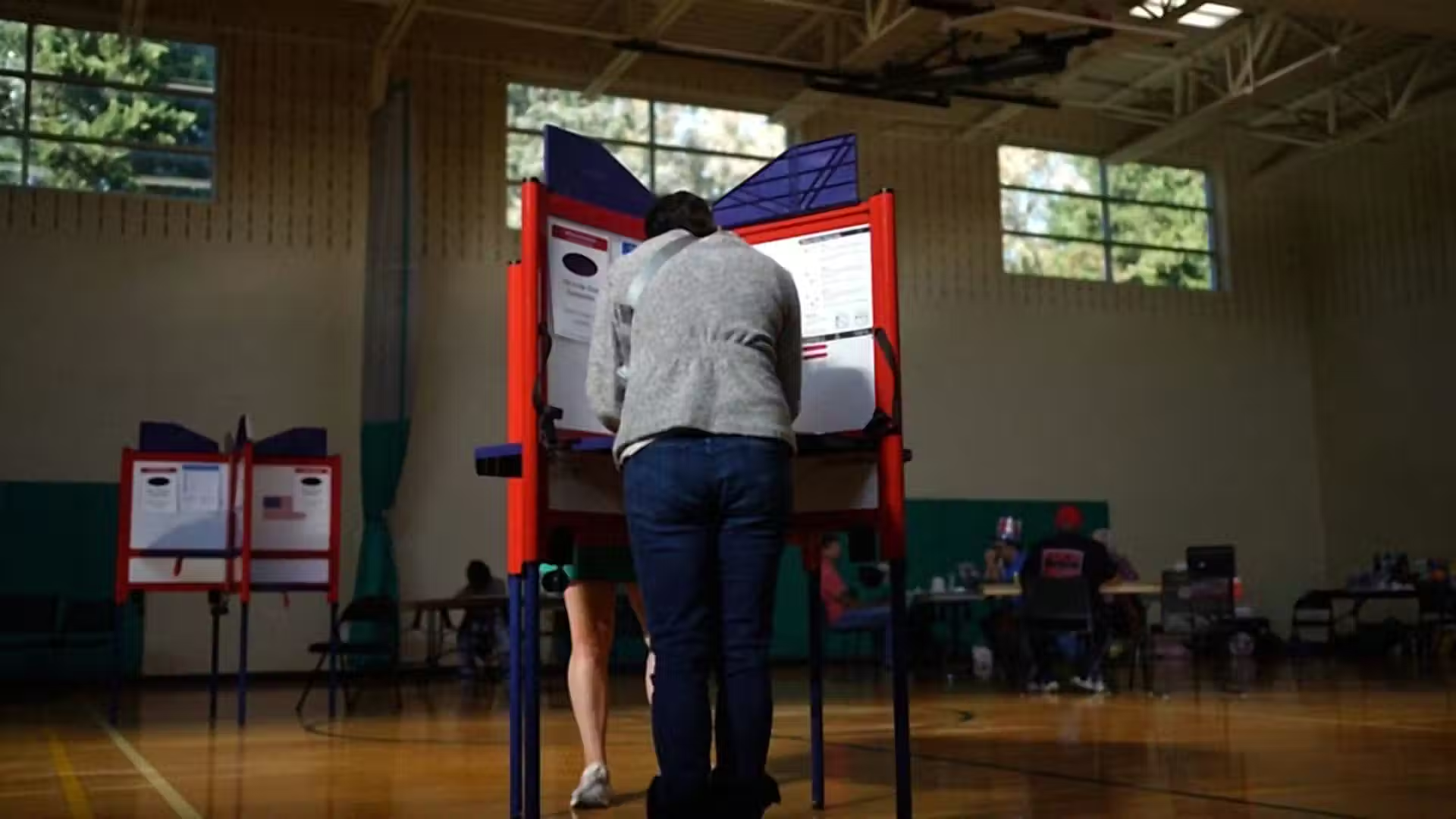
The U.S. Supreme Court on Monday agreed to hear a case challenging Arizona's voting restrictions, setting up a high-stakes dispute over the state's efforts to tighten its election requirements.
The case centers on two Arizona laws adopted by the state legislature in 2022. The first requires prospective voters registering on a state form to provide documentary proof of citizenship. The second involves procedures for state election officials to review voter rolls and cancel voter registrations.
The central legal question before the Court is whether federal law prohibits Arizona from imposing these requirements when voting in state elections. The justices will hear arguments during the next term, which begins in October.
It is already illegal for non-U.S. citizens to vote in federal and state elections. Some municipalities allow noncitizen voting in local elections. Arizona and other states have sought to implement new voting restrictions aimed at ensuring noncitizens are not on their voter rolls, citing concerns about election integrity.
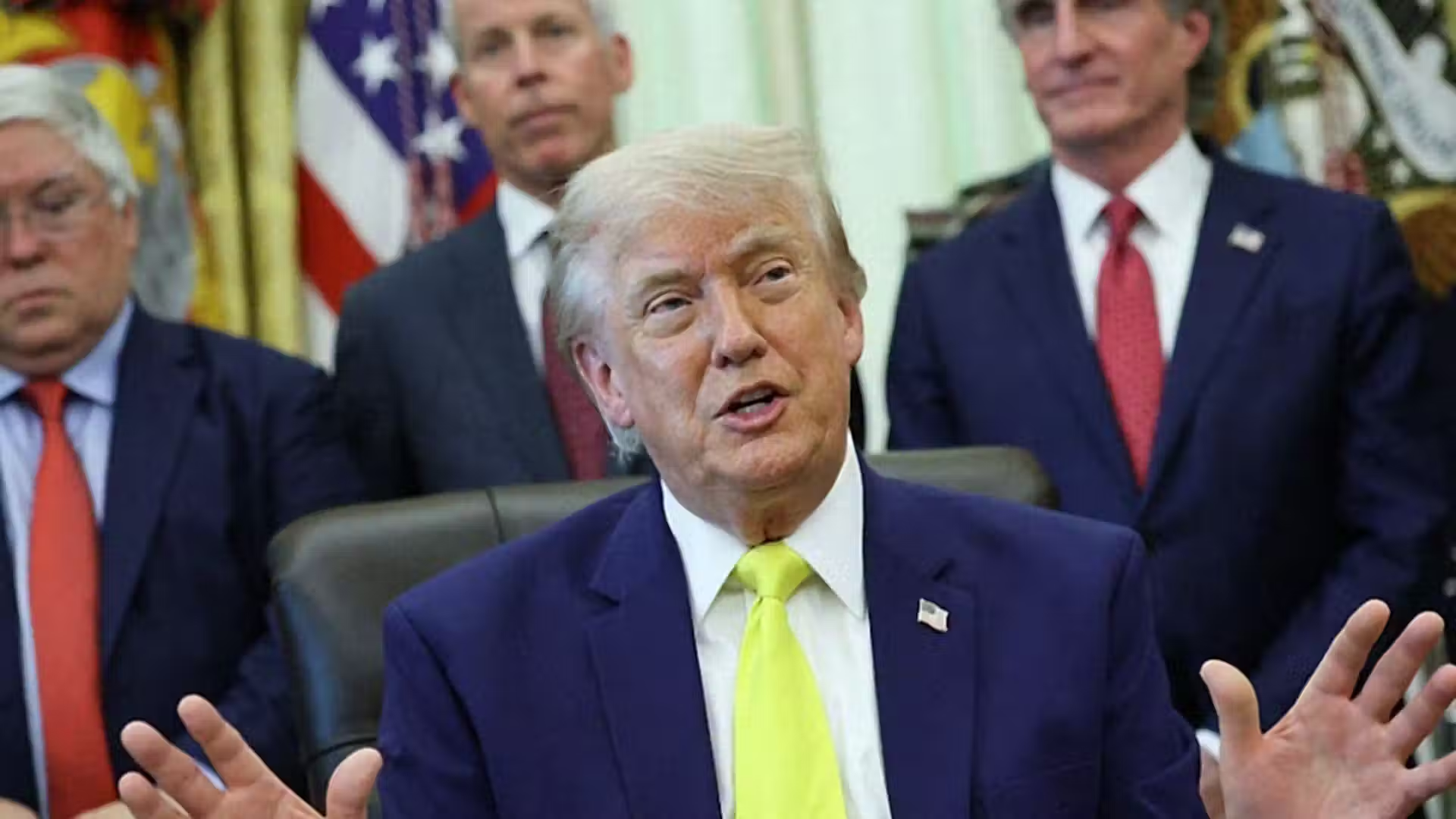
President Donald Trump has called for a national proof-of-citizenship requirement in elections. The SAVE Act, a bill being considered by Congress that Trump supports, includes a proof-of-citizenship requirement. Trump has also continued to repeat unfounded claims of election fraud.
The case represents a significant moment in the ongoing debate over voting access and election security. The Supreme Court's decision will determine whether states can impose citizenship verification requirements on voters registering through state forms, potentially affecting voting procedures across the country.
The dispute involves competing interests over election administration. Supporters of the Arizona laws argue they are necessary safeguards to prevent noncitizens from registering. Opponents contend that federal law preempts such state-level requirements.
The Court's next term begins in October, when oral arguments in the case are expected to be scheduled.