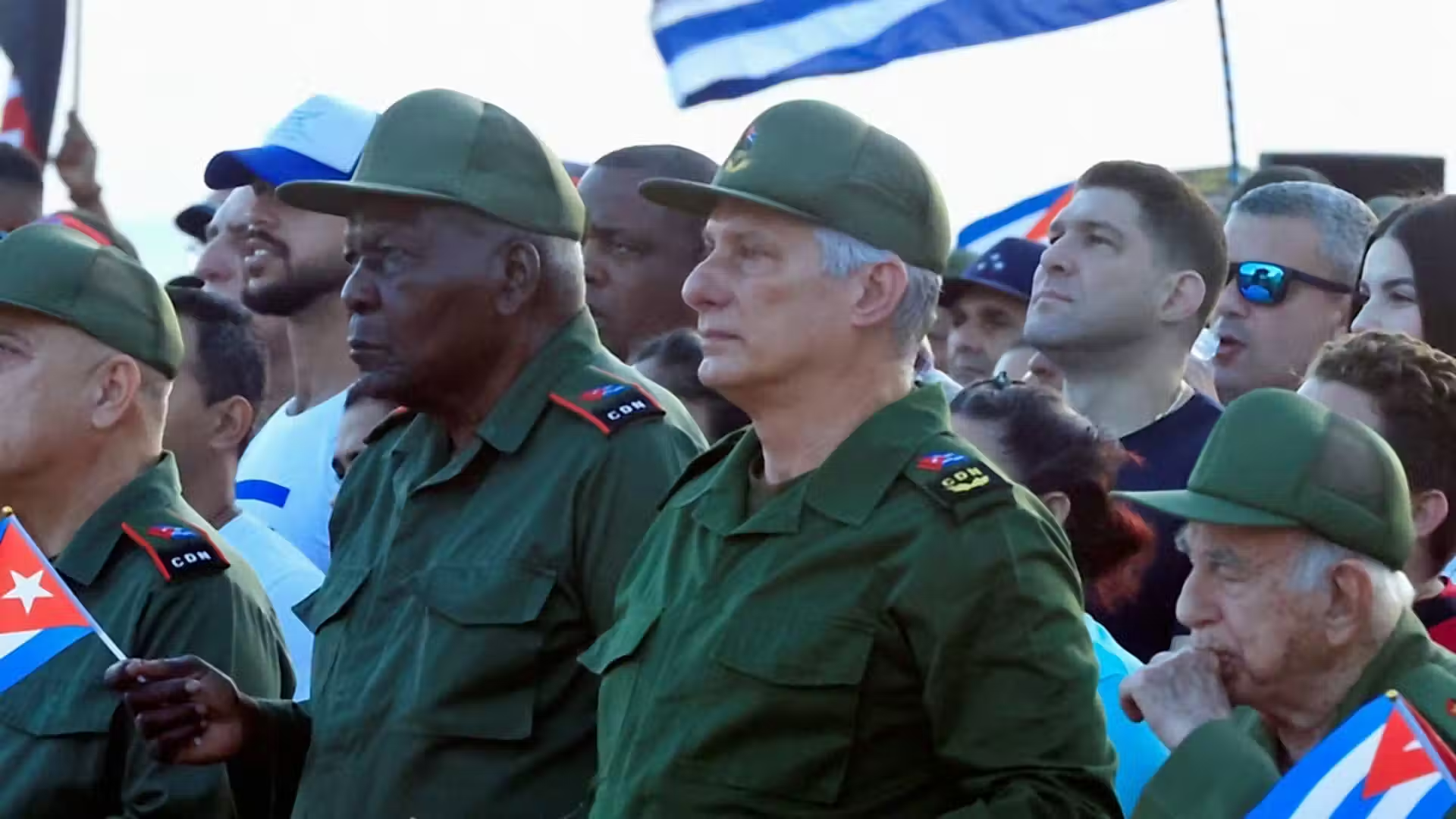
The United States Treasury Department announced Thursday new economic sanctions against Cuban President Miguel Díaz-Canel, his wife, and members of the Castro family, as part of the Trump administration's escalating pressure on the island's leadership.
The Office of Foreign Assets Control (OFAC) added five individuals and five entities to its Specially Designated Nationals List. The sanctions freeze any property or bank accounts held in the United States and restrict transactions with American persons or companies.
Among those targeted were Díaz-Canel; his wife Lis Cuesta Peraza; his stepson Manuel Anido Cuesta, who resides in Madrid; Alejandro Castro Espín, the sole son of former President Raúl Castro; and Raúl Alejandro Castro Calis, grandson of the former leader. Alejandro Castro Espín previously served as an adviser to Cuba's Defense and National Security Commission and was present when Raúl Castro greeted then-President Barack Obama in Havana during a historic March 2016 meeting.
Five Cuban entities were also sanctioned: the Ministry of the Revolutionary Armed Forces, the Committees for the Defense of the Revolution, Amistur Cuba S.A. travel agency, the Cuban Institute of Friendship with the Peoples, and the mining company La Victoria.
U.S. Secretary of State Marco Rubio stated that anyone providing services to listed entities "is at risk of sanctions themselves."
The announcement came one day before an executive order signed by President Trump on May 1 was set to take effect. That order threatened to freeze U.S. assets of foreign companies or individuals with business ties to Cuba, particularly the opaque military conglomerate Gaesa, which controls approximately 40 percent of the island's economy.
Díaz-Canel had previously been sanctioned in July 2025 due to the repression of citizen protests in 2021. The latest sanctions follow Trump's January ouster of Venezuelan leader Nicolás Maduro and an energy blockade that has choked off fuel shipments to Cuba, leading to severe blackouts and food shortages.
In response, Díaz-Canel wrote on social media that the "aggressiveness and perversity" of the U.S. government would conflict with Cuba's decision to "face the worst scenarios and resist the imperialist attack," adding that the sanctions "reinforce the blockade."