The United Arab Emirates announced Tuesday it will leave OPEC and the wider OPEC+ group, effective May 1, dealing a significant blow to the oil producer alliances during a period of global energy turbulence.
The UAE's Ministry of Energy and Infrastructure said the decision reflects the emirates' long-term strategic and economic priorities. "This decision follows a comprehensive review of the UAE's production policy and its current and future capacity and is based on our national interest and our commitment to contributing effectively to meeting the market's pressing needs," the ministry stated.
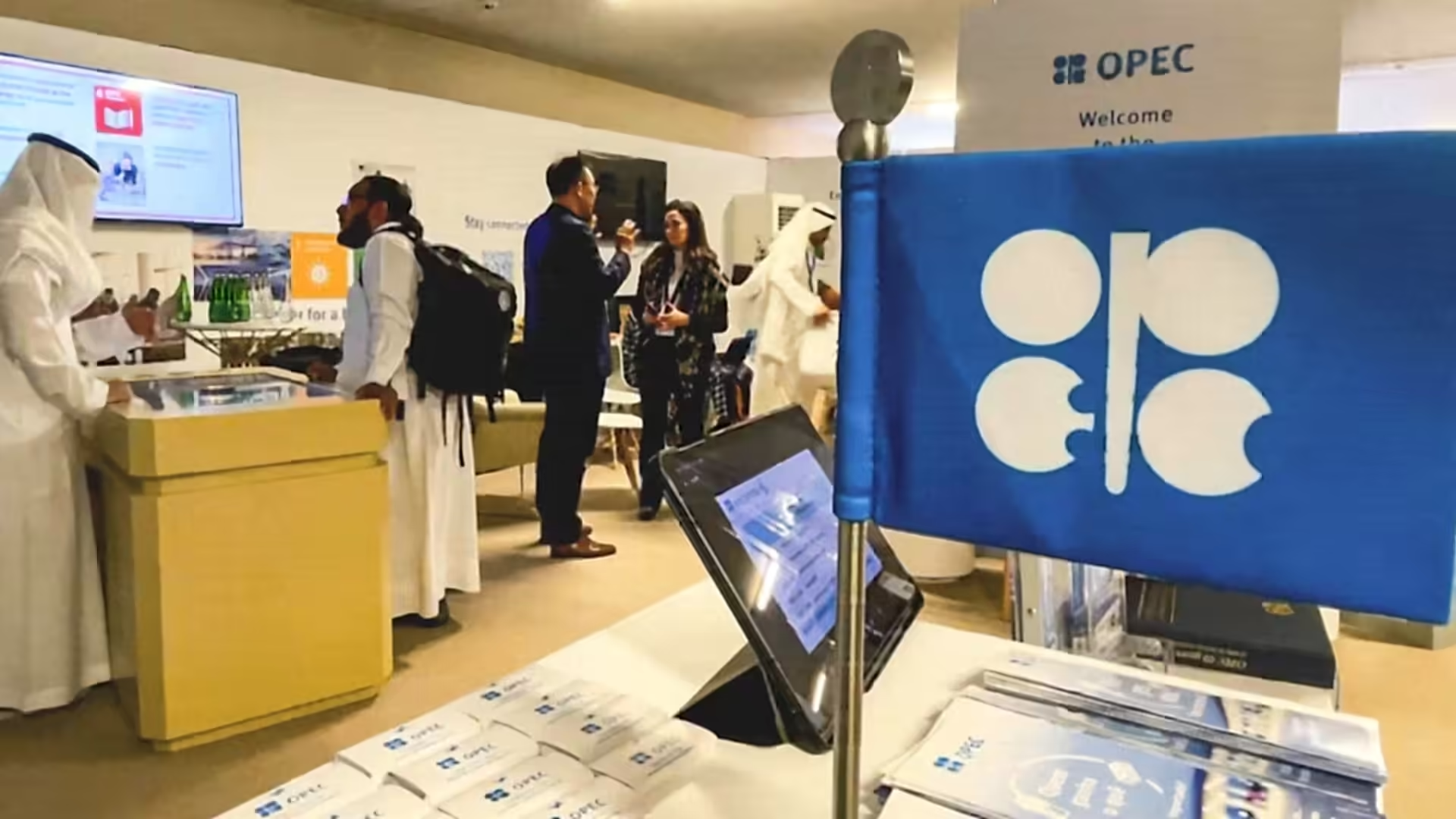
The withdrawal marks the end of the UAE's membership in OPEC, which the country has held for six decades. The organization, created in 1960, coordinates and unifies petroleum policies among member states to ensure price stability in international markets and efficient supply.
According to the UAE's state news agency WAM, the departure will allow the country to satisfy changing demand by gradually increasing its production. The ministry said the UAE would continue to act responsibly while bringing additional production to market.
The loss of the UAE, a longstanding member, threatens to weaken unity within OPEC, which has historically masked internal divisions over geopolitics and production quotas. The move also represents a blow to Saudi Arabia, the de facto leader of the oil exporting groups.
The announcement comes amid a broader energy crisis stemming from conflict in the region. The UAE's decision to pursue independent production policy reflects evolving energy investments and acceleration of national energy production capacity, according to WAM.
OPEC+ includes not only OPEC members but also Russia and other non-OPEC oil-producing nations. The UAE's departure from both organizations signals a significant shift in the country's energy strategy and its relationship with the broader oil producer alliance.