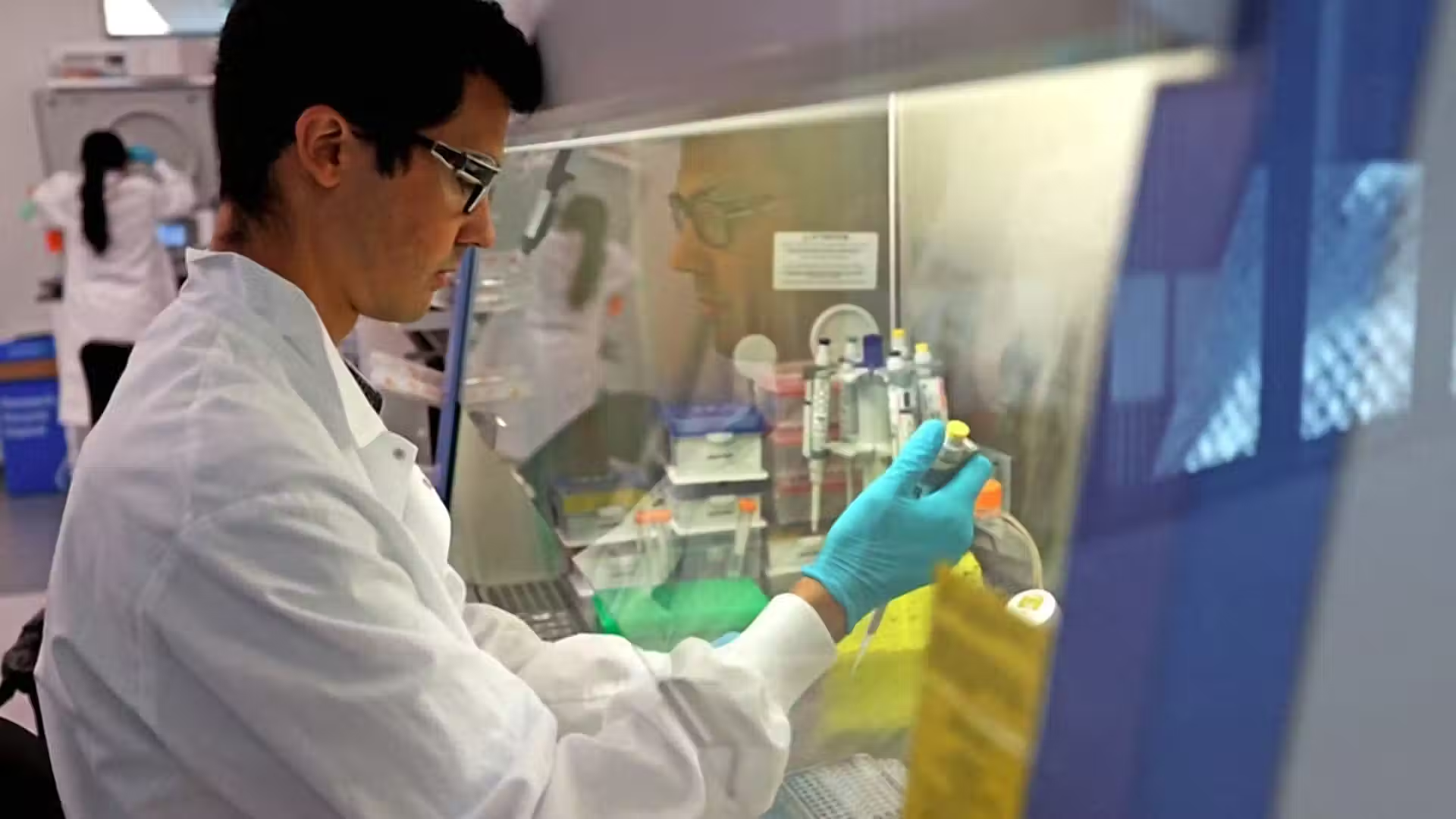
Moderna and Merck announced that their experimental personalized melanoma vaccine has achieved success in phase 3 clinical testing, marking the first time a messenger RNA-based cancer vaccine has met primary endpoints at this advanced stage of development.
The trial evaluated intismeran autogene, a custom vaccine designed for individual patients based on their specific tumor characteristics, combined with pembrolizumab (known as Keytruda), an established immunotherapy drug. The combination met the trial's primary objective of significantly extending disease-free survival—the time patients lived without melanoma recurrence—compared with immunotherapy alone. The treatment also achieved a secondary goal of reducing the risk of cancer spreading to distant parts of the body.
The companies did not disclose specific numerical data on the magnitude of survival improvement or reduction in recurrence risk in their initial announcement. The trial remains ongoing, with the disclosed results coming from an interim analysis. Further details about patient numbers, specific survival improvements, and safety information are expected to be presented at medical conferences or published in peer-reviewed journals.
The announcement triggered substantial market movement. Moderna's stock price surged as much as 87 percent following the news, while Merck's shares rose approximately 8 percent. The companies indicated the results bring them closer to filing for regulatory approval, though they did not specify timelines or which regulatory agencies they would approach first.
The trial represents a historic milestone in cancer treatment development. Melanoma is one of the deadliest forms of skin cancer, and the personalized vaccine approach represents a different strategy from traditional one-size-fits-all treatments. The vaccine works by combining customized tumor-specific elements with immunotherapy to enhance the body's immune response against cancer cells.
Phase 3 trials are the final step required before a drug can be submitted for regulatory approval, making this success a significant advancement toward bringing the treatment to patients.
Related Articles
Trump signs order cutting childhood vaccine recommendations to 11
President Trump signed an executive order Monday reducing recommended childhood vaccines from 18 to 11 and splitting MMR shots into separate doses.

The Office actor Lucy Davis announces stage four incurable breast cancer
Davis, 53, disclosed the diagnosis on Instagram, saying the disease has metastasised to her bones and chemotherapy is no longer an option.

Suffolk nurse ordered to pay $544K penalty for falsifying vaccine cards
State health officials imposed the largest vaccination fraud penalty in agency history after the nurse practitioner falsified records for 162 children.
Kenyan protester shot dead during rally against US Ebola quarantine centre
Police fired tear gas and live rounds at demonstrators in Nanyuki opposing a planned 50-bed facility for Americans exposed to Ebola.