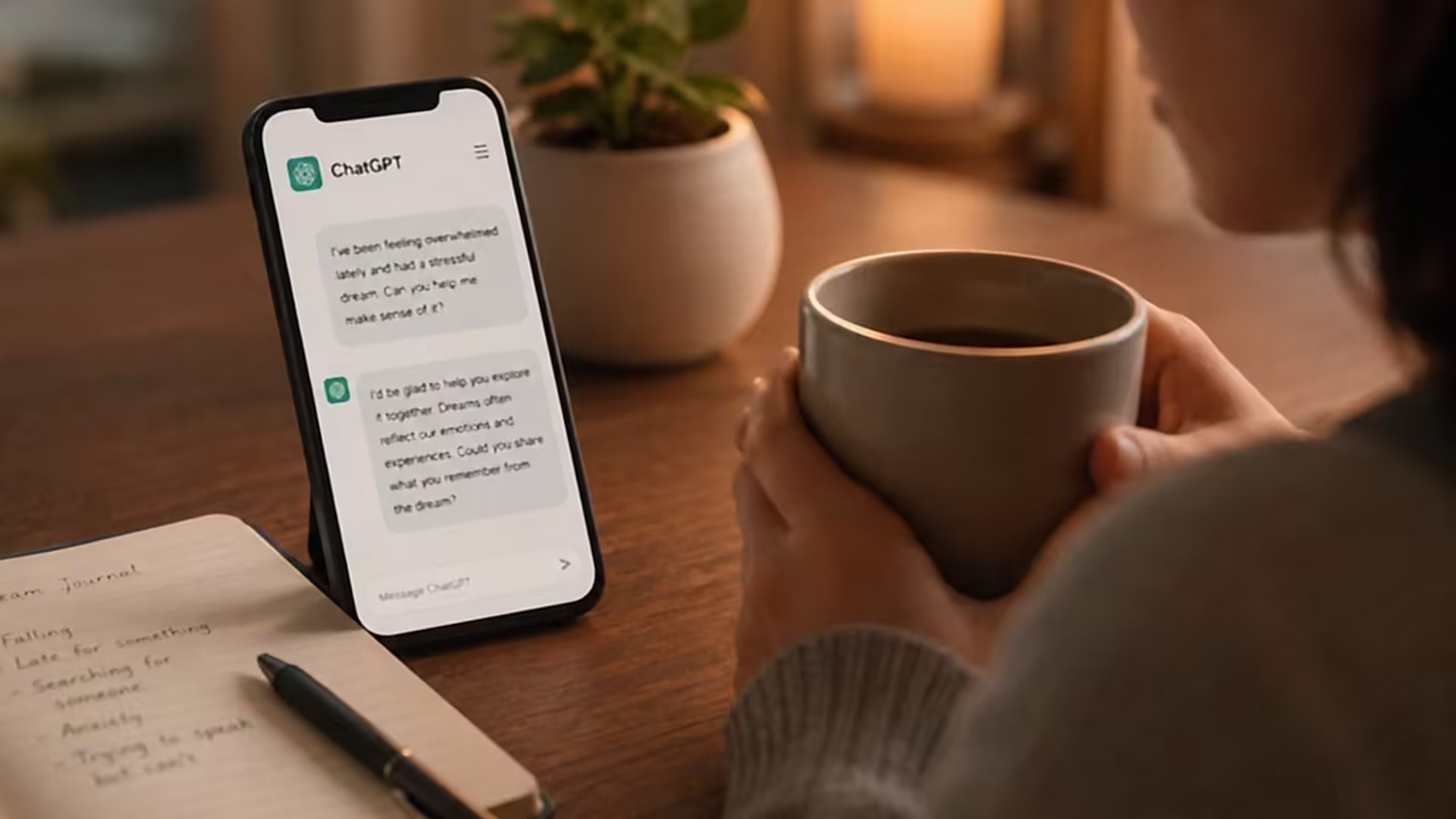
Some mental health professionals are using artificial intelligence chatbots to support their own emotional well-being, even as experts caution that such tools cannot substitute for human therapeutic care.
Jack Worthy, a therapist in Manhattan, began using ChatGPT daily about a year ago for recipes and research support. During a stressful family period, he asked the chatbot for something different: emotional assistance. He requested that the bot analyze his dream journals, a common practice in therapy. With some guidance, Worthy said he received conclusions he found useful, including the recognition that his coping mechanisms were overwhelmed. "It was analyzing my dreams with ChatGPT that I recognized: I am really under great stress," Worthy said.
His experience reflects a growing trend among both professionals and patients who are turning to AI for emotional support and to combat loneliness. The technology has become increasingly accessible for mental health inquiries and personal assistance.
However, experts from the National Autonomous University of Mexico, the University of Castilla-La Mancha, and the University of A Coruña in Spain have written that AI chatbots cannot replace friendship or therapy. In an article for The Conversation, researchers in education, learning, and psychology stated that these tools may "serve as 'occasional support' or a space to vent—with nuances—but never replace a human relationship or professional clinical judgment."
The experts identified at least ten reasons why AI cannot function as a friend or psychiatrist. While acknowledging that some people have sought AI assistance for emotional support, they emphasized that chatbots lack the capacity to provide genuine therapeutic relationships or clinical expertise.
Therapists reinforce that AI cannot substitute for human help but may be useful in certain limited contexts. The debate centers on whether relying on AI for emotional support is healthy and whether it can provide real emotional assistance. Experts maintain that it cannot.
Many people are now using AI technology for consultations, work tasks, and emotional support, but the consensus among mental health professionals is that such applications require careful consideration of their limitations and appropriate boundaries.