Iranian officials said Friday that the United States and Israel have betrayed diplomatic efforts, undermining trust in ongoing nuclear negotiations.
Iranian Ambassador to Belarus Alireza Sanei told TASS that Tehran believes in negotiations and diplomacy but cannot proceed under current conditions. "We are not running away from it, we are not dodging it," Sanei said. "But if the other side wants everything in their favor, in their own interests, practically wants you to give up everything, then this no longer can be called negotiations."
Sanei said that during February talks, Iran presented "very good proposals regarding the nuclear program," but the United States and Israel "betrayed diplomacy and negotiations." He stated that as a result, "we don't trust Israel and the Americans in any way."
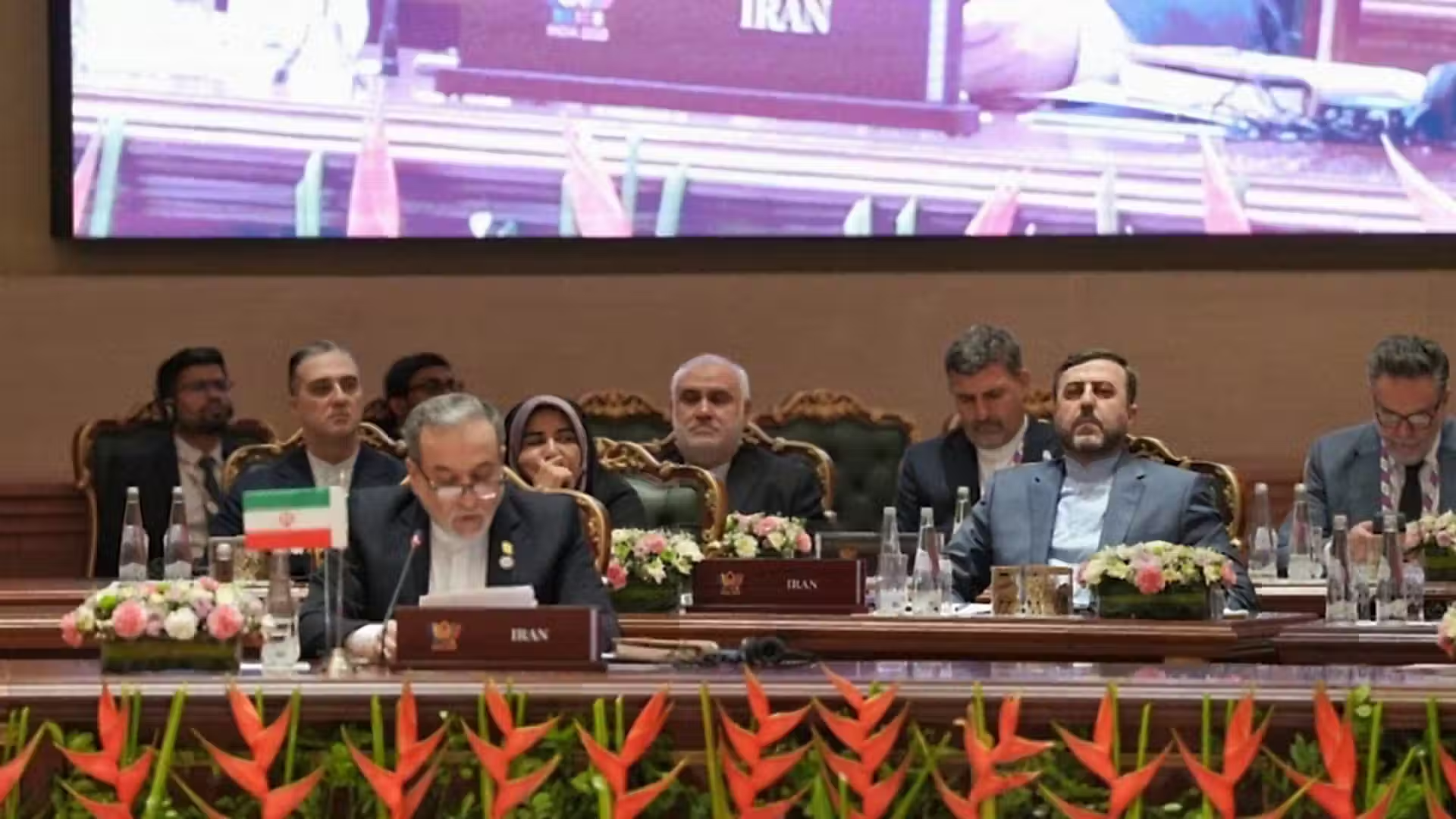
Iran's Foreign Minister Abbas Araghchi said Friday that his country "cannot trust the Americans at all." Araghchi said Iran is "trying to maintain" the "shaky" ceasefire "to give diplomacy a chance." He claimed that Iran "must be viewed differently – as a power capable of confronting the world's greatest powers."
President Trump said Friday that the United States, not Iran, controls the Strait of Hormuz, stating "We wiped out their armed forces, essentially."
German Chancellor Friedrich Merz called for Iran to return to negotiations. In a post on X following a phone call with Trump, Merz said he and the president agreed that "Iran must come to the negotiating table now. It must open the Strait of Hormuz." Merz added that "Tehran must not be allowed to have nuclear weapons."
The statements reflect deepening divisions between Iran and Western powers over the terms and conditions for resuming nuclear talks.