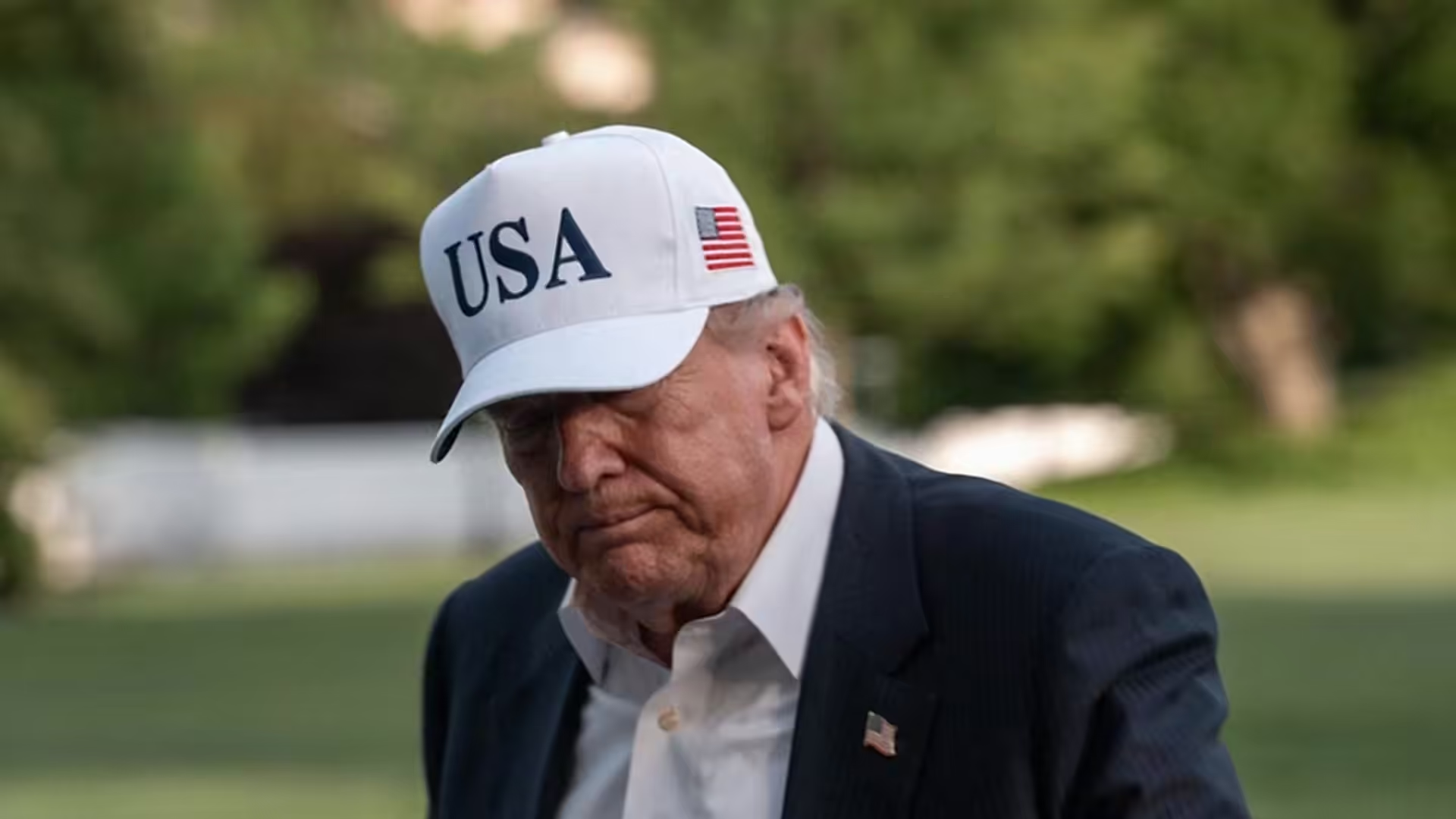
President Donald Trump escalated rhetoric toward Iran on Saturday, warning Tehran it will have a "very bad time" if bilateral peace negotiations mediated by Pakistan do not conclude successfully.
In an interview with French broadcaster BFM TV, Trump stated he had no certainty whether Iran would sign an agreement. "If they don't, they're going to have a very bad time, very bad. They better make a deal," he said. The warning came after Trump rejected Iran's latest peace proposal last weekend, describing it as unacceptable.
Trump posted an AI-generated video on his Truth Social account showing him ordering a military strike on an Iranian vessel. In the clip, Trump says "Okay, we have it in our sight. Fire – boom!" as a US-flagged destroyer destroys a ship bearing the Iranian flag. He also posted an image depicting himself with US military vessels and an Iranian-flagged boat in the background, captioning it "It was the calm before the storm."
In separate remarks to Fox News, Trump discussed the extent of damage already inflicted on Iranian infrastructure. "We hit them unbelievably hard. Look — we left their bridges. We left their electricity capacity. We can knock that all out in two days. Two days — everything," he told Fox News Special Report host Bret Baier.
The Pentagon has begun making plans for a potential resumption of military strikes on Iran should peace talks fail, according to officials.
Pakistan's Interior Minister Mohsin Naqvi arrived in Tehran on Saturday in an unannounced visit, underscoring Islamabad's role as the primary mediator between Washington and Tehran. The Strait of Hormuz remains effectively closed despite the ceasefire that began in early April, following the initial conflict that started February 28. Iran announced it will soon reveal plans to manage traffic through the strait, including the charging of tolls.
Iran's Foreign Minister Abbas Araghchi stated that Tehran remains ready to resume direct military conflict with the United States if negotiations fail to produce acceptable results. Araghchi also warned that the conflict has impacted American households, noting that US energy and inflation costs have increased significantly since the war began. He pointed to rising yields on US Treasury bonds and stated that "Americans are told that they must absorb rocketing costs of war of choice on Iran."
Iranian Parliament Speaker Mohammed Bagher Ghalibaf declared that the world "stands at the cusp of a new order," while a senior advisor to Iran's Supreme Leader, Mohammad Mokhber, warned that Iran's patience could run out if Persian Gulf Arab countries continue to serve US interests in the region.
On Saturday evening, the Lebanese militant group Hezbollah announced it had struck a military target in northern Israel. In a statement, Hezbollah said its fighters targeted "the Ya'ara barracks with a swarm of attack drones," following earlier announcements of multiple operations against Israeli forces deployed in southern Lebanon near the border between the two countries. The fragile ceasefire between Lebanon and Israel has failed to halt fighting that began March 2.
The Strait of Hormuz closure has destabilized global energy markets, with approximately one-fifth of the world's oil and gas normally transiting through the waterway.