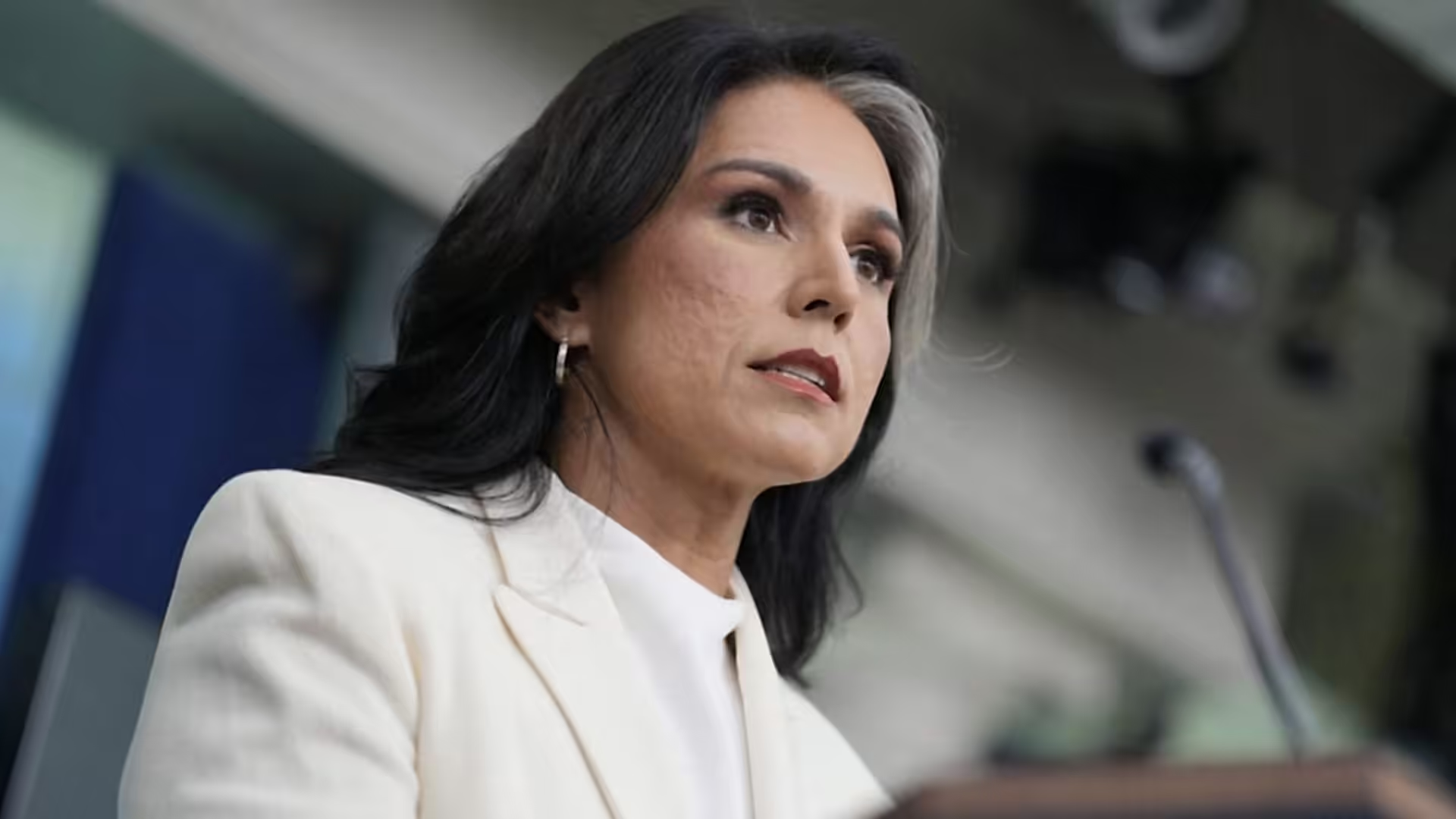
Tulsi Gabbard announced Friday that she is resigning as the director of national intelligence, effective June 30. In a resignation letter addressed to President Donald Trump, Gabbard said her husband, Abraham Williams, has recently been diagnosed with an extremely rare form of bone cancer.
"My husband, Abraham, has recently been diagnosed with an extremely rare form of bone cancer. He faces major challenges in the coming weeks and months. At this time, I must step away from public service to be by his side and fully support him through this battle," Gabbard wrote in the letter obtained by multiple news outlets.
"I cannot in good conscience ask him to face this fight alone while I continue in this demanding and time-consuming position," she added.
Gabbard, a former Hawaii Democratic congresswoman, was confirmed as director of national intelligence weeks after Trump returned to the White House in 2025. In the role, she coordinates between America's multiple intelligence agencies.
In her resignation letter, Gabbard described her husband as her "rock" during their 11-year marriage. She cited his support through her military deployment to East Africa in 2021, her multiple political campaigns, and her service in the Trump administration.
"His strength and love have sustained me through every challenge," she wrote.
Gabbard also thanked Trump for "the trust you placed in me" in the letter.
Principal Deputy Director of National Intelligence Aaron Lukas will assume the role in an acting capacity following Gabbard's departure, Trump announced in a Truth Social post.
According to reporting, Gabbard has largely been out of public view this year as the U.S. has taken military action against Iran and pursued other military operations. She was not frequently present in national security team meetings regarding the Iran conflict and military operations in other regions, with CIA Director John Ratcliffe appearing more prominently in such discussions.